THE ADVENTURE COLLECTIVE® · Independent discovery and booking for outdoor travel

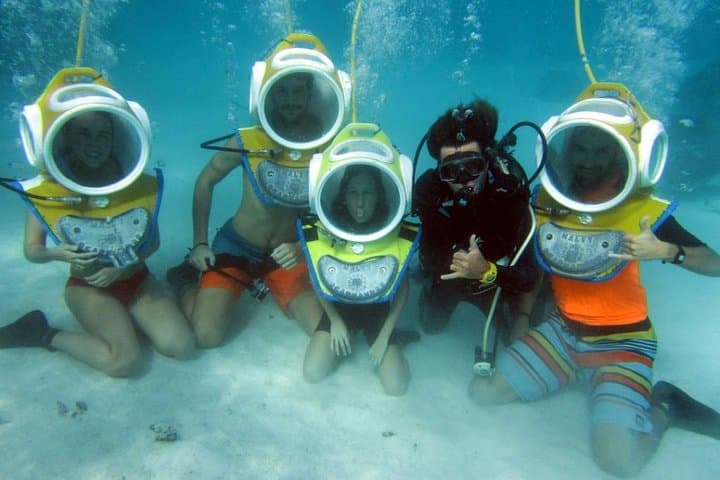
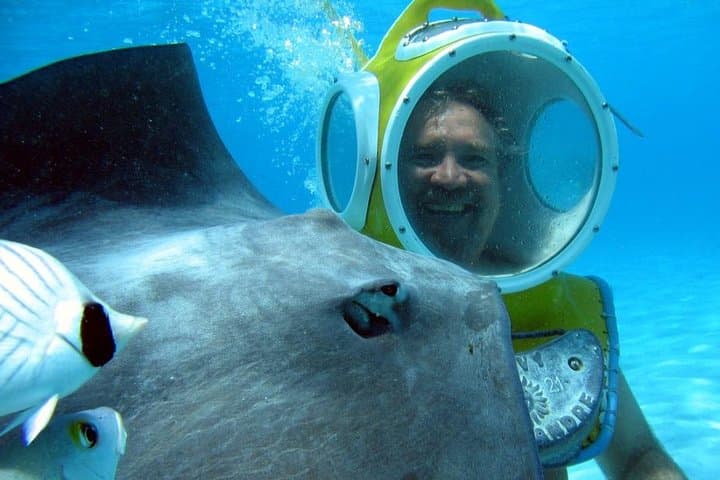
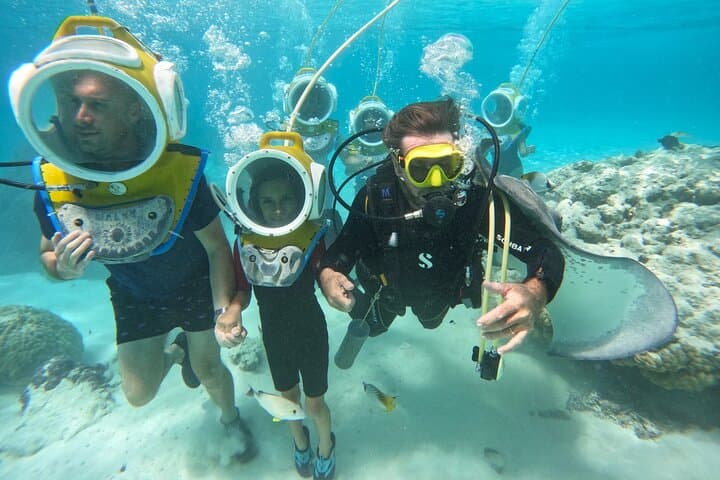
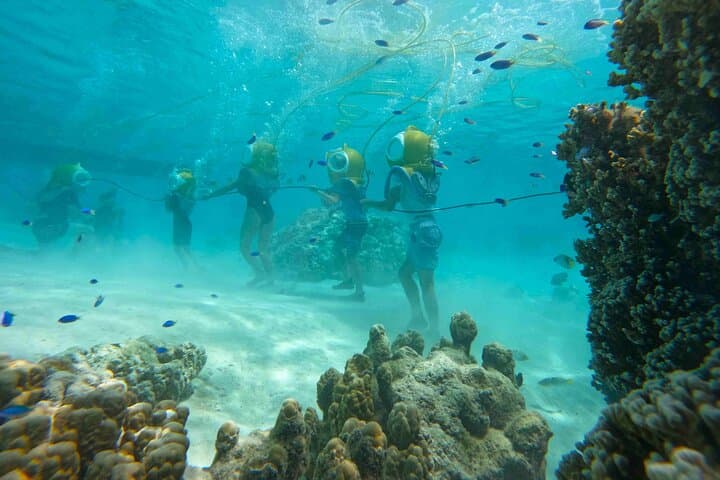
Step into a bright yellow helmet and walk across Moorea's lagoon floor among colorful reef fish and rays — no swimming required. This guided helmet-walk offers up-close reef viewing with low physical demands, ideal for families and non-swimmers.
Step into a bright yellow helmet and walk across Moorea's lagoon floor among colorful reef fish and rays — no swimming required. This guided helmet-walk offers up-close reef viewing with low physical demands, ideal for families and non-swimmers.
The lagoon breathes around you: warm turquoise water presses at the edges of the boat while bright parrotfish sketch quick arcs through coral. You step into a yellow helmet, and suddenly the surface is a distant ceiling. The guide taps your shoulder, you inhale normally, and the world of the reef settles into clear focus — multicolored fish weaving through staghorn and brain coral, rays gliding like shadows across white sand.
Verified experiences and guided adventures in the surrounding area.
Operated by Aquablue Moorea · Maharepa, Moorea
The lagoon breathes around you: warm turquoise water presses at the edges of the boat while bright parrotfish sketch quick arcs through coral. You step into a yellow helmet, and suddenly the surface is a distant ceiling. The guide taps your shoulder, you inhale normally, and the world of the reef settles into clear focus — multicolored fish weaving through staghorn and brain coral, rays gliding like shadows across white sand.
Moorea sits on an eroded volcanic mountain of the Society Islands; its lagoons formed as the volcanic cone subsided and reef growth kept pace. The island's beaches and bays were once central to Polynesian voyaging and settlement, with marae sites around the island bearing witness to long-standing local culture. Today, small motus and shallow passes shape how currents move, concentrating marine life in predictable spots for guided helmet walks.
Practical guidance is straightforward. Aquablue's helmet system removes the need to swim or wear a snorkel mask — participants from age six can stand on the sandy bottom while instructors manage buoyancy and safety. Expect roughly 2–3 hours from pickup to return, including briefing and transit. The experience is low-impact physically but requires basic mobility to step on and off small boats and into shallow water. Bring reef-safe sunscreen, a rashguard, and a waterproof bag for essentials. Protect the reef: do not touch coral and follow your guide's instructions when photographing.
Morning sessions usually have the calmest water and best light for photos; the guides are experienced in local currents and species behaviors, so listen for tips on approaching turtles and rays. This is a rare way to meet Moorea's reef on familiar footing — the ocean inviting rather than demanding.
easy.
2–3 hours.
Suitable for people with basic mobility; requires ability to step on/off small boats and stand in shallow water for short periods.
No — the helmet walk is designed for non-swimmers; you remain upright on the sandy bottom and breathe normally inside the helmet.
Participants as young as 6 years old can join, though children must meet the operator’s safety and supervision requirements.
You may encounter reef fish, rays, and often turtles; sightings of larger animals like sharks are possible but not guaranteed and depend on local conditions.
It is not recommended for travelers with serious spinal, cardiovascular issues, or for pregnant guests; check medical restrictions before booking.
Moorea formed as a volcanic island in the Society Islands chain; local bays and reefs have long supported Polynesian settlements and traditional fishing practices.
Respectful tourism is vital — avoid touching coral, use reef-safe sunscreen, and follow guides to minimize disturbance to sensitive habitats.
Aquablue Moorea operates guided outdoor trips and adventures with an emphasis on safety, stewardship, and memorable experiences.
The lagoon breathes around you: warm turquoise water presses at the edges of the boat while bright parrotfish sketch quick arcs through coral. You step into a yellow helmet, and suddenly the surface is a distant ceiling. The guide taps your shoulder, you inhale normally, and the world of the reef settles into clear focus — multicolored fish weaving through staghorn and brain coral, rays gliding like shadows across white sand.
The lagoon breathes around you: warm turquoise water presses at the edges of the boat while bright parrotfish sketch quick arcs through coral. You step into a yellow helmet, and suddenly the surface is a distant ceiling. The guide taps your shoulder, you inhale normally, and the world of the reef settles into clear focus — multicolored fish weaving through staghorn and brain coral, rays gliding like shadows across white sand.
Moorea sits on an eroded volcanic mountain of the Society Islands; its lagoons formed as the volcanic cone subsided and reef growth kept pace. The island's beaches and bays were once central to Polynesian voyaging and settlement, with marae sites around the island bearing witness to long-standing local culture. Today, small motus and shallow passes shape how currents move, concentrating marine life in predictable spots for guided helmet walks.
Practical guidance is straightforward. Aquablue's helmet system removes the need to swim or wear a snorkel mask — participants from age six can stand on the sandy bottom while instructors manage buoyancy and safety. Expect roughly 2–3 hours from pickup to return, including briefing and transit. The experience is low-impact physically but requires basic mobility to step on and off small boats and into shallow water. Bring reef-safe sunscreen, a rashguard, and a waterproof bag for essentials. Protect the reef: do not touch coral and follow your guide's instructions when photographing.
Morning sessions usually have the calmest water and best light for photos; the guides are experienced in local currents and species behaviors, so listen for tips on approaching turtles and rays. This is a rare way to meet Moorea's reef on familiar footing — the ocean inviting rather than demanding.