THE ADVENTURE COLLECTIVE® · Independent discovery and booking for outdoor travel

Make the most of one long day: drive from Aqaba through desert folds to Petra’s Siq, step into the Treasury’s light and explore Nabataean tombs, theaters and cliff views. Practical tips on timing, entry and what to pack for this desert archaeology day trip.
Make the most of one long day: drive from Aqaba through desert folds to Petra’s Siq, step into the Treasury’s light and explore Nabataean tombs, theaters and cliff views. Practical tips on timing, entry and what to pack for this desert archaeology day trip.
You leave the Red Sea at dawn and the road swallows Aqaba’s ports and hotels; the desert opens like a slow exhale as the highway threads low sandstone ridges toward Wadi Musa. By midmorning the Siq narrows: light thins, the gorge tightens and, suddenly, the Treasury steps into view — carved rock that reads like a city's memory.
Verified experiences and guided adventures in the surrounding area.
Operated by Enjoy Jordan - Day Tours · Wadi Musa, Ma'an Governorate
You leave the Red Sea at dawn and the road swallows Aqaba’s ports and hotels; the desert opens like a slow exhale as the highway threads low sandstone ridges toward Wadi Musa. By midmorning the Siq narrows: light thins, the gorge tightens and, suddenly, the Treasury steps into view — carved rock that reads like a city's memory.
Petra is carved from rose‑toned sandstone by the Nabataeans, a trading people who made this arid basin their capital from the 4th century BCE. Geology here is immediate — banded cliffs, wind‑smoothed alcoves and soft stone that holds both carvings and erosion marks. Locally, Bedouin traditions remain visible: tea offers at stalls, mule handlers, and stories handed down about the site’s rediscovery in the 19th century.
On a day tour from Aqaba expect roughly 7–9 hours total: a 1.5–2 hour drive each way and ~4 hours in the site. Walking distances vary — plan for 4–8 km on uneven paths, with steep stone steps to viewpoints like the Monastery or High Place of Sacrifice (several hundred meters of ascent if you climb). Temperatures swing fast; shade is rare on plateaus.
Practical guide: arrive early to avoid midday heat, bring 2–3 liters of water and high‑traction shoes, and budget extra time for the Siq and viewpoints. Admission requires a Petra entry ticket (the Jordan Pass can cover this). Guided walks make the archaeology and route choices far more efficient — and keep you on the paths that minimize impact on this fragile site.
moderate.
7–9 hours.
Moderate fitness: able to walk 4–8 km on uneven ground and climb several hundred steps if ascending to viewpoints
The drive typically takes about 1.5–2 hours each way depending on traffic, with scenic desert stretches en route.
You should buy entry in advance when possible; a local guide is recommended to cover history efficiently and navigate the larger site in a limited time.
Transfers can accommodate infants and strollers, but inside Petra many paths are uneven and some viewpoints require steps, so mobility varies by area.
This tour includes lunch, typically at a local restaurant near the Petra entrance or in Wadi Musa after your site visit.
Petra was the Nabataean capital and a key caravan hub from the 4th century BCE; its rock‑cut architecture reflects both local stonecraft and Mediterranean influences.
High visitor numbers stress archaeological surfaces; follow marked paths, avoid touching carvings and use local services to support community stewardship.
Enjoy Jordan - Day Tours operates guided outdoor trips and adventures with an emphasis on safety, stewardship, and memorable experiences.
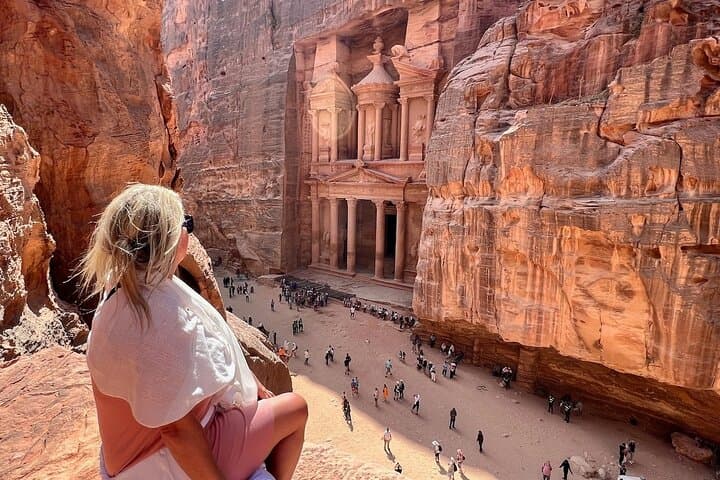
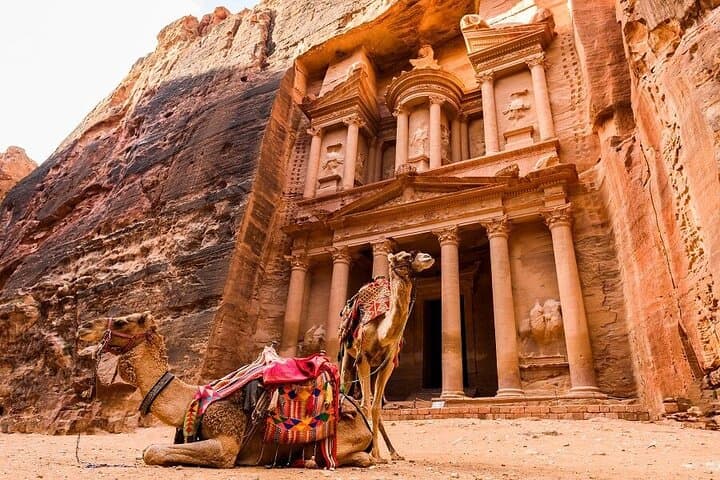
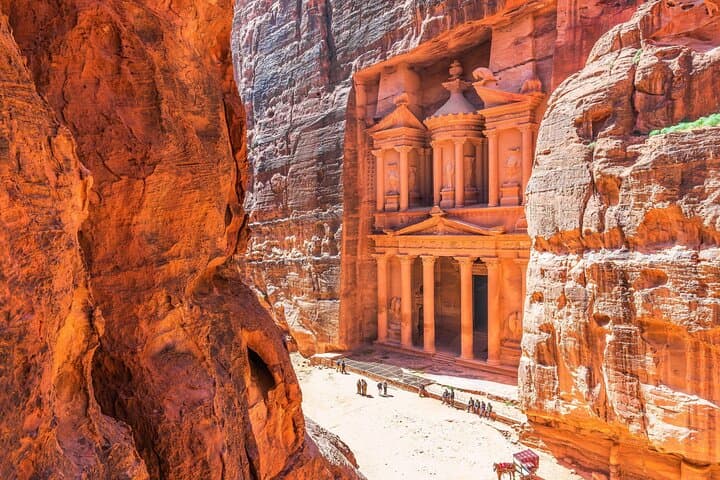
You leave the Red Sea at dawn and the road swallows Aqaba’s ports and hotels; the desert opens like a slow exhale as the highway threads low sandstone ridges toward Wadi Musa. By midmorning the Siq narrows: light thins, the gorge tightens and, suddenly, the Treasury steps into view — carved rock that reads like a city's memory.
You leave the Red Sea at dawn and the road swallows Aqaba’s ports and hotels; the desert opens like a slow exhale as the highway threads low sandstone ridges toward Wadi Musa. By midmorning the Siq narrows: light thins, the gorge tightens and, suddenly, the Treasury steps into view — carved rock that reads like a city's memory.
Petra is carved from rose‑toned sandstone by the Nabataeans, a trading people who made this arid basin their capital from the 4th century BCE. Geology here is immediate — banded cliffs, wind‑smoothed alcoves and soft stone that holds both carvings and erosion marks. Locally, Bedouin traditions remain visible: tea offers at stalls, mule handlers, and stories handed down about the site’s rediscovery in the 19th century.
On a day tour from Aqaba expect roughly 7–9 hours total: a 1.5–2 hour drive each way and ~4 hours in the site. Walking distances vary — plan for 4–8 km on uneven paths, with steep stone steps to viewpoints like the Monastery or High Place of Sacrifice (several hundred meters of ascent if you climb). Temperatures swing fast; shade is rare on plateaus.
Practical guide: arrive early to avoid midday heat, bring 2–3 liters of water and high‑traction shoes, and budget extra time for the Siq and viewpoints. Admission requires a Petra entry ticket (the Jordan Pass can cover this). Guided walks make the archaeology and route choices far more efficient — and keep you on the paths that minimize impact on this fragile site.