THE ADVENTURE COLLECTIVE® · Independent discovery and booking for outdoor travel

Escape central Rome for three hours along the Appian Way—drive in a golf cart to the Catacombs of San Callisto, the Villa of Maxentius and the Tomb of Cecilia Metella. Expect cool underground corridors, volcanic stone roads and compact, history-packed stops.
Escape central Rome for three hours along the Appian Way—drive in a golf cart to the Catacombs of San Callisto, the Villa of Maxentius and the Tomb of Cecilia Metella. Expect cool underground corridors, volcanic stone roads and compact, history-packed stops.
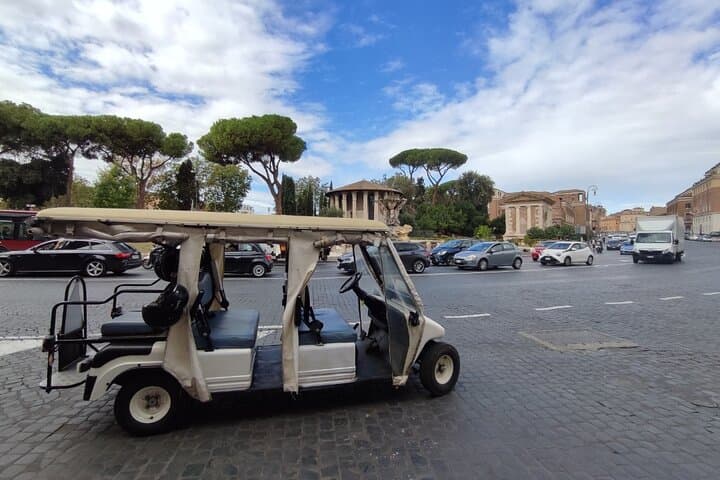
You pull away from a city of marble and traffic into a greener, quieter Rome where the road itself remembers soldiers and emperors. The golf cart hums along the Appian Way’s ancient basalt, pines casting striping shadows as the guide points out mile markers and lonely tombs.
Verified experiences and guided adventures in the surrounding area.
Operated by Xploringromegolfcart · Rome, Lazio
You pull away from a city of marble and traffic into a greener, quieter Rome where the road itself remembers soldiers and emperors. The golf cart hums along the Appian Way’s ancient basalt, pines casting striping shadows as the guide points out mile markers and lonely tombs.
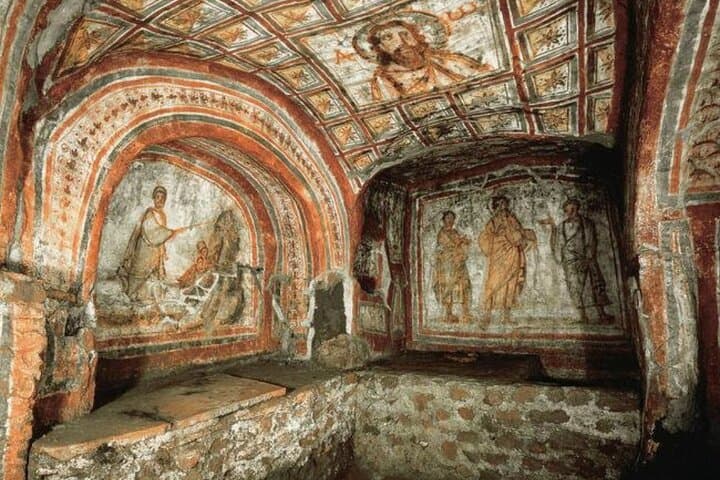
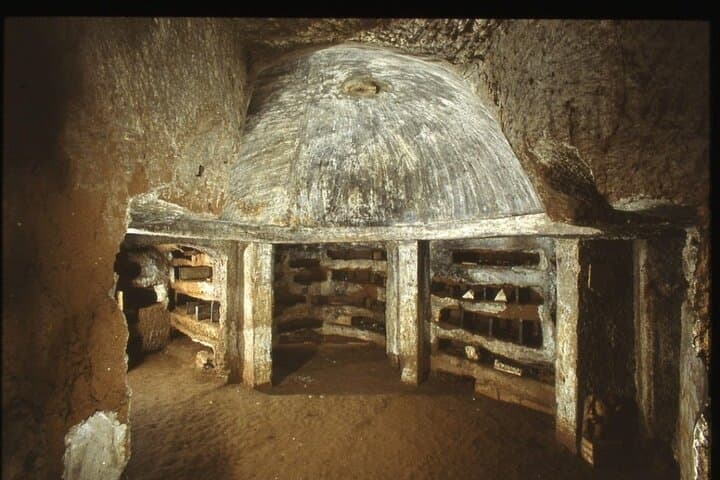
This three-hour loop pairs an underground visit to the Catacombs of San Callisto with surface archaeology: the vast ruins of the Villa of Maxentius, the cylindrical Tomb of Cecilia Metella and a stop to look over the Baths of Caracalla. The Appian Way—laid out in 312 BCE by Appius Claudius—was Rome’s arterial road; geology here is volcanic tuff and basalt paving that endured centuries of travel and weather. Catacombs date from the 2nd–4th centuries CE and show how early Christian burial practices adapted to Rome’s soft stone.
Expect cool, dim passageways in the catacombs with low ceilings and uneven steps; aboveground, the landscape opens to scrub, umbrella pines and olive saplings that give the park a pastoral edge. Local guides tie archaeology to Roman daily life—who paid for mausoleums, how chariot races shaped imperial politics—and point out reused marble blocks that later fed projects like the Trevi Fountain.
Practical guidance: pickup is typically at your hotel, the tour lasts about three hours, and most walking is short but on uneven surfaces. Wear closed shoes, bring water, dress modestly for burial chambers, and plan for sun or shade depending on season. Cameras are allowed on the surface; follow on-site rules underground. The tour is accessible for most fitness levels and returns you to central Rome by the end of the morning or afternoon.
easy.
3 hours.
Suitable for most travelers; involves short walks and some steps underground but most time seated in a golf cart.
The tour runs about three hours and includes hotel pickup within central Rome or a nearby meeting point when requested.
The catacombs have low ceilings, narrow passages and steps; they are not fully wheelchair accessible—contact the operator for alternatives or adjusted routes.
Photography rules vary by site and on-site guides; surface photography is generally allowed, while flash or tripod use underground may be restricted—follow the guide's instructions.
Yes—children can join, though the underground sections can be claustrophobic or dark for very young or sensitive kids; infants must sit on laps per operator policy.
The Appian Way was begun in 312 BCE by Appius Claudius Caecus as a paved military and commercial road; many tombs and villas along it later reused materials for imperial projects.
Parco Regionale dell'Appia Antica protects archaeological sites and habitats—stay on designated paths, avoid touching frescoes or masonry, and carry out trash to minimize impact.
Xploringromegolfcart operates guided outdoor trips and adventures with an emphasis on safety, stewardship, and memorable experiences.

You pull away from a city of marble and traffic into a greener, quieter Rome where the road itself remembers soldiers and emperors. The golf cart hums along the Appian Way’s ancient basalt, pines casting striping shadows as the guide points out mile markers and lonely tombs.
You pull away from a city of marble and traffic into a greener, quieter Rome where the road itself remembers soldiers and emperors. The golf cart hums along the Appian Way’s ancient basalt, pines casting striping shadows as the guide points out mile markers and lonely tombs.
This three-hour loop pairs an underground visit to the Catacombs of San Callisto with surface archaeology: the vast ruins of the Villa of Maxentius, the cylindrical Tomb of Cecilia Metella and a stop to look over the Baths of Caracalla. The Appian Way—laid out in 312 BCE by Appius Claudius—was Rome’s arterial road; geology here is volcanic tuff and basalt paving that endured centuries of travel and weather. Catacombs date from the 2nd–4th centuries CE and show how early Christian burial practices adapted to Rome’s soft stone.
Expect cool, dim passageways in the catacombs with low ceilings and uneven steps; aboveground, the landscape opens to scrub, umbrella pines and olive saplings that give the park a pastoral edge. Local guides tie archaeology to Roman daily life—who paid for mausoleums, how chariot races shaped imperial politics—and point out reused marble blocks that later fed projects like the Trevi Fountain.
Practical guidance: pickup is typically at your hotel, the tour lasts about three hours, and most walking is short but on uneven surfaces. Wear closed shoes, bring water, dress modestly for burial chambers, and plan for sun or shade depending on season. Cameras are allowed on the surface; follow on-site rules underground. The tour is accessible for most fitness levels and returns you to central Rome by the end of the morning or afternoon.