THE ADVENTURE COLLECTIVE® · Independent discovery and booking for outdoor travel

Cycle the Via Appia Antica by e‑bike, glide beneath arches of aqueducts and enter an underground Roman quarry. This guided 3–4 hour tour pairs easy electric-assist riding with a unique subterranean visit to Caffarella’s hand‑dug tunnels.
Cycle the Via Appia Antica by e‑bike, glide beneath arches of aqueducts and enter an underground Roman quarry. This guided 3–4 hour tour pairs easy electric-assist riding with a unique subterranean visit to Caffarella’s hand‑dug tunnels.
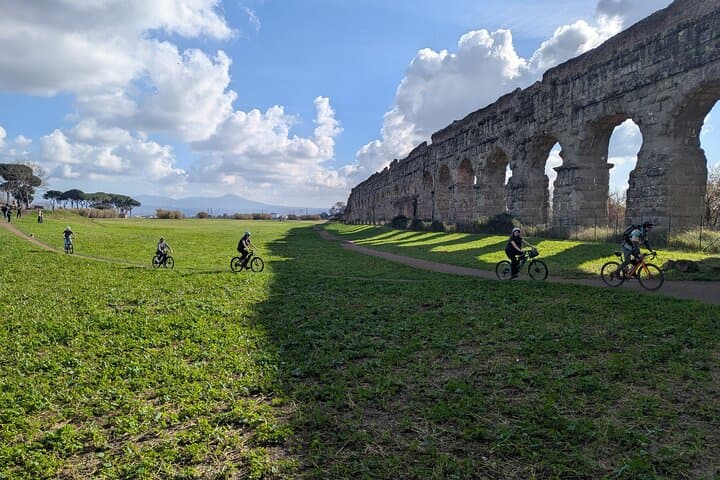
The ride starts with tires whispering over ancient basalt as the Appian Way opens ahead — broad, straight, and lined with tombs that keep watch. Cyclists move at the steady hush of e‑bikes, passing monumental mausoleums, mossed aqueduct arches, and stretches of countryside that feel improbably close to the city center.
Verified experiences and guided adventures in the surrounding area.
Operated by Bicycle Roma · Rome, Lazio
The ride starts with tires whispering over ancient basalt as the Appian Way opens ahead — broad, straight, and lined with tombs that keep watch. Cyclists move at the steady hush of e‑bikes, passing monumental mausoleums, mossed aqueduct arches, and stretches of countryside that feel improbably close to the city center.
This route follows a road laid by Roman engineers in the 4th century BCE and later shaped by imperial builders; the aqueducts you pass are medieval and ancient feats of stone that still channel the landscape. Geology is visible in the quarry cuts at Caffarella: soft pozzolana and tufa were hewn by hand, the scars revealing how Rome’s building stones were extracted and transported.
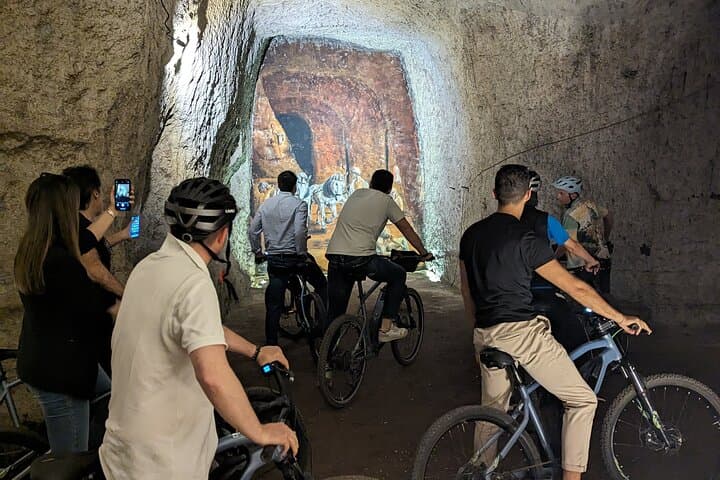
Local culture here is quietly rural — shepherded olive groves and weekend cyclists share a landscape that was once a conduit for armies and pilgrims. The underground quarry is stark: narrow galleries cut by laborers, cool air that feels deliberately patient, and walls that tell the city’s construction story.
Practical guidance: the route is mainly paved ancient stones with two short road crossings; a basic‑intermediate bike skillset is required. Expect about 3–4 hours on an e‑bike, moderate effort, and some uneven cobbles underfoot. Bring a water bottle, closed shoes, layers for variable shade, and a light rain jacket in spring or fall. Guides perform a short riding assessment before departure and limit groups for safety — ideal for those who want history at walking pace but with the range an e‑bike provides.
moderate.
3–4 hours.
Comfortable walking/riding fitness; able to balance and ride on uneven surfaces for several kilometers.
The full tour is about 3–4 hours (210 minutes); roughly an hour is allotted for the underground Roman quarry visit while the rest covers cycling and surface stops.
Yes — a basic to intermediate level of bike handling is required; guides perform a quick skills assessment and may refuse riders deemed unsafe.
Yes, helmets, e‑bikes, lights, and entrance to the Roman quarry are included; infant seats and tag‑along options are available for children under size limits.
No — the tour is not recommended for pregnant travelers, those with significant heart or spinal conditions, or severe claustrophobia due to the underground section.
The Appian Way was a strategic Roman road built in the 4th century BCE; nearby quarries supplied tufa and pozzolana that built major imperial projects.
The Appian Regional Park is protected to preserve archaeological remains and rural habitats; visitors are asked to stay on marked routes, avoid litter, and respect restricted zones to limit erosion and disturbance.
Bicycle Roma operates guided outdoor trips and adventures with an emphasis on safety, stewardship, and memorable experiences.
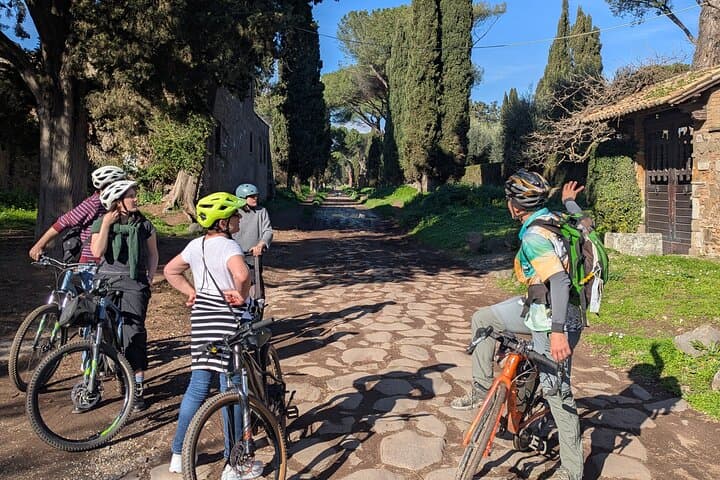
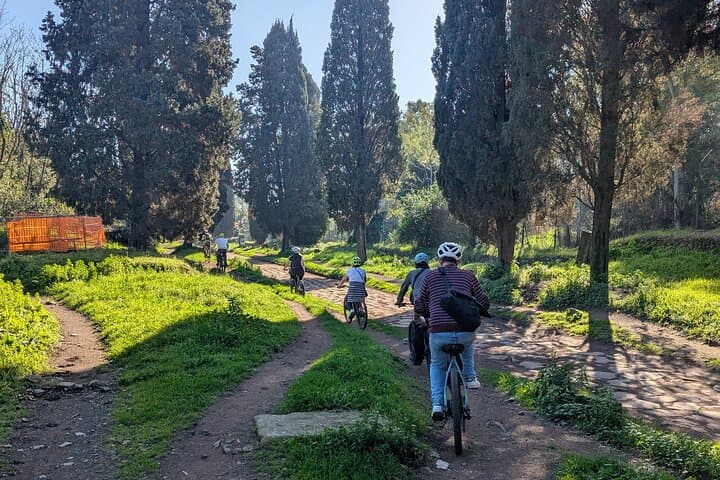
The ride starts with tires whispering over ancient basalt as the Appian Way opens ahead — broad, straight, and lined with tombs that keep watch. Cyclists move at the steady hush of e‑bikes, passing monumental mausoleums, mossed aqueduct arches, and stretches of countryside that feel improbably close to the city center.
The ride starts with tires whispering over ancient basalt as the Appian Way opens ahead — broad, straight, and lined with tombs that keep watch. Cyclists move at the steady hush of e‑bikes, passing monumental mausoleums, mossed aqueduct arches, and stretches of countryside that feel improbably close to the city center.
This route follows a road laid by Roman engineers in the 4th century BCE and later shaped by imperial builders; the aqueducts you pass are medieval and ancient feats of stone that still channel the landscape. Geology is visible in the quarry cuts at Caffarella: soft pozzolana and tufa were hewn by hand, the scars revealing how Rome’s building stones were extracted and transported.
Local culture here is quietly rural — shepherded olive groves and weekend cyclists share a landscape that was once a conduit for armies and pilgrims. The underground quarry is stark: narrow galleries cut by laborers, cool air that feels deliberately patient, and walls that tell the city’s construction story.
Practical guidance: the route is mainly paved ancient stones with two short road crossings; a basic‑intermediate bike skillset is required. Expect about 3–4 hours on an e‑bike, moderate effort, and some uneven cobbles underfoot. Bring a water bottle, closed shoes, layers for variable shade, and a light rain jacket in spring or fall. Guides perform a short riding assessment before departure and limit groups for safety — ideal for those who want history at walking pace but with the range an e‑bike provides.