THE ADVENTURE COLLECTIVE® · Independent discovery and booking for outdoor travel

Explore Tahiti’s first educational forest on a private valley trail that blends interactive games with hands-on conservation. This accessible two-hour walk highlights native plants, reintroduction projects, and Polynesian plant knowledge.
Explore Tahiti’s first educational forest on a private valley trail that blends interactive games with hands-on conservation. This accessible two-hour walk highlights native plants, reintroduction projects, and Polynesian plant knowledge.
You step through a low gate into a private valley on Tahiti’s west coast, where warm, humid air carries the scent of crushed leaves and distant surf. Narrow paths thread between themed groves—canoe plants, endemic shrubs and pockets of orchids—while interpretive panels and game stations turn each bend into a small discovery. The stream at the valley’s base seems to tug you onward, and the canopy quietly redirects sunlight into soft pools on the trail.
Verified experiences and guided adventures in the surrounding area.
Operated by AOA Polynesian Forests · Punaauia, Tahiti
You step through a low gate into a private valley on Tahiti’s west coast, where warm, humid air carries the scent of crushed leaves and distant surf. Narrow paths thread between themed groves—canoe plants, endemic shrubs and pockets of orchids—while interpretive panels and game stations turn each bend into a small discovery. The stream at the valley’s base seems to tug you onward, and the canopy quietly redirects sunlight into soft pools on the trail.
This site opened as French Polynesia’s first educational forest, developed to protect native species and demonstrate invasive-plant control and reintroduction techniques. The island’s volcanic geology—basalt ridges eroded into fertile valley soils—creates microhabitats where endemic plants recover if you give them a little space. Cultural threads run through the program: traditional Polynesian uses for taro, pandanus and medicinal plants are woven into interpretive stops that connect ecology with daily life.
The experience is intimate and accessible: expect about two hours on well-marked, low-gradient trails with packed-earth surfaces and occasional roots. Guides and game elements emphasize restoration work and practical conservation, not just sightseeing. Practical pointers: visit in the cooler morning to avoid peak humidity, wear closed shoes, carry a refillable water bottle, and bring insect repellent and sun protection. Stay on paths to protect new plantings, and allow time after the walk for a coastal viewpoint or a short drive back to Papeete to round out your day on Tahiti’s west coast.
easy.
2 hours.
Suitable for most fitness levels; requires steady walking on gentle grades and occasional rooty sections.
The visit is designed as a two-hour experience on well-marked, low-gradient trails with interpretive stations and game elements.
The site emphasizes accessibility with developed educational pathways, but some sections may have roots or gentle slopes—contact the operator to confirm specific needs.
The experience includes interpretive content and game-style stations; staff provide information about restoration and species, though formats may vary by visit.
Children are welcome and the trail includes interactive elements for families; service animals are allowed but pets may be restricted—confirm with the operator.
Established as the first educational forest in French Polynesia, the site focuses on restoring endemic flora and teaching traditional plant uses.
The program actively controls invasive plants and reintroduces native species; visitors are asked to stay on paths and respect planted areas to support restoration.
AOA Polynesian Forests operates guided outdoor trips and adventures with an emphasis on safety, stewardship, and memorable experiences.
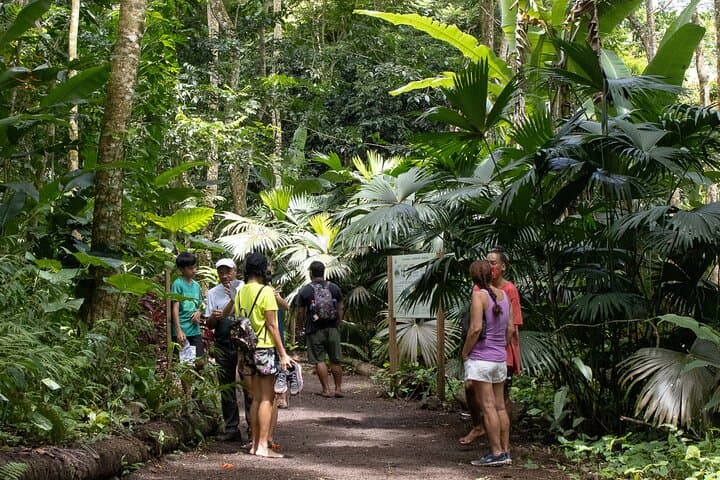
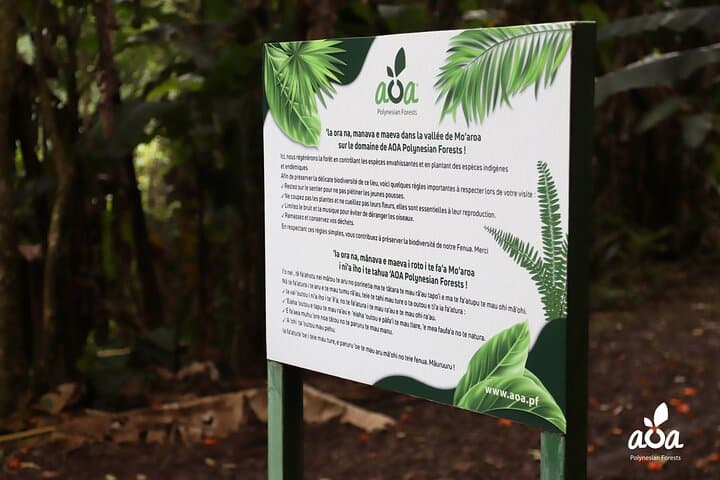
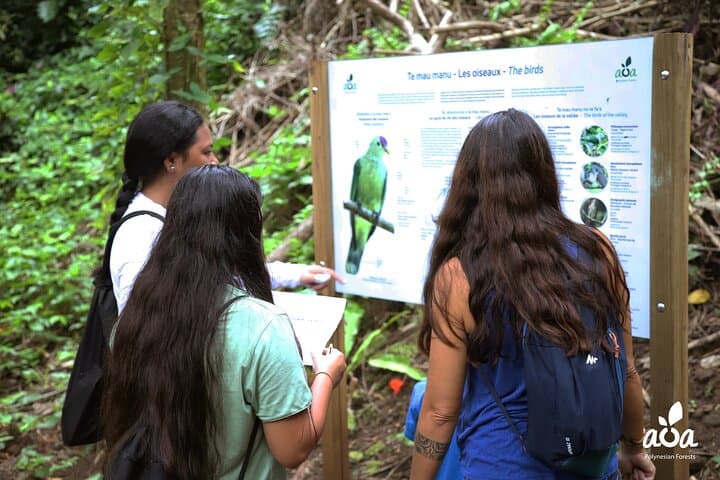
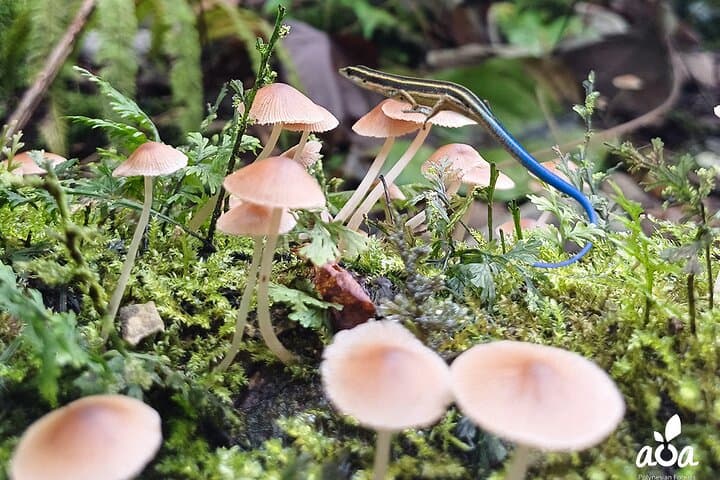
You step through a low gate into a private valley on Tahiti’s west coast, where warm, humid air carries the scent of crushed leaves and distant surf. Narrow paths thread between themed groves—canoe plants, endemic shrubs and pockets of orchids—while interpretive panels and game stations turn each bend into a small discovery. The stream at the valley’s base seems to tug you onward, and the canopy quietly redirects sunlight into soft pools on the trail.
You step through a low gate into a private valley on Tahiti’s west coast, where warm, humid air carries the scent of crushed leaves and distant surf. Narrow paths thread between themed groves—canoe plants, endemic shrubs and pockets of orchids—while interpretive panels and game stations turn each bend into a small discovery. The stream at the valley’s base seems to tug you onward, and the canopy quietly redirects sunlight into soft pools on the trail.
This site opened as French Polynesia’s first educational forest, developed to protect native species and demonstrate invasive-plant control and reintroduction techniques. The island’s volcanic geology—basalt ridges eroded into fertile valley soils—creates microhabitats where endemic plants recover if you give them a little space. Cultural threads run through the program: traditional Polynesian uses for taro, pandanus and medicinal plants are woven into interpretive stops that connect ecology with daily life.
The experience is intimate and accessible: expect about two hours on well-marked, low-gradient trails with packed-earth surfaces and occasional roots. Guides and game elements emphasize restoration work and practical conservation, not just sightseeing. Practical pointers: visit in the cooler morning to avoid peak humidity, wear closed shoes, carry a refillable water bottle, and bring insect repellent and sun protection. Stay on paths to protect new plantings, and allow time after the walk for a coastal viewpoint or a short drive back to Papeete to round out your day on Tahiti’s west coast.