THE ADVENTURE COLLECTIVE® · Independent discovery and booking for outdoor travel

Skip the long route: this one‑hour speedboat shuttle links Ao Nang, Railay, and Ton Sai Pier on Phi Phi Don with hotel pickup and a Railay floating‑pier stop. Read on for what to expect, safety notes, and packing tips.
Skip the long route: this one‑hour speedboat shuttle links Ao Nang, Railay, and Ton Sai Pier on Phi Phi Don with hotel pickup and a Railay floating‑pier stop. Read on for what to expect, safety notes, and packing tips.
The engine thumps, wake pulling the boat into a bright, restless horizon as Ao Nang slips behind you and the limestone cliffs of Railay lean into view.
Verified experiences and guided adventures in the surrounding area.
Operated by Trip Store Krabi · Ao Nang, Krabi Province
The engine thumps, wake pulling the boat into a bright, restless horizon as Ao Nang slips behind you and the limestone cliffs of Railay lean into view.
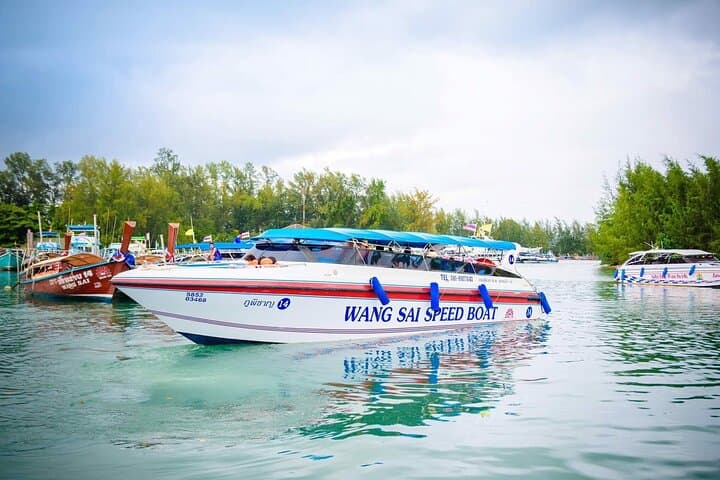
This is a straightforward coastal transfer: Wangsai Speedboat runs a scheduled, roughly 60‑minute crossing between Ao Nang and Ton Sai Pier on Phi Phi Don, with a stop at Railay East to board or drop passengers. The route threads open Andaman Sea, skirting karst towers carved from fossilized coral and volcanic sediments that rise out of turquoise water.
Phi Phi’s recent history — rapid tourism growth since the 1980s and reconstruction after the 2004 tsunami — shapes the arrival experience: a busy pier, boat traffic, and vibrant tourist services. Local culture around Krabi and Phi Phi remains tied to fishing and small‑scale hospitality; you’ll see longtail boats at work beneath jagged cliffs and small vendors selling coconut water at the pier.
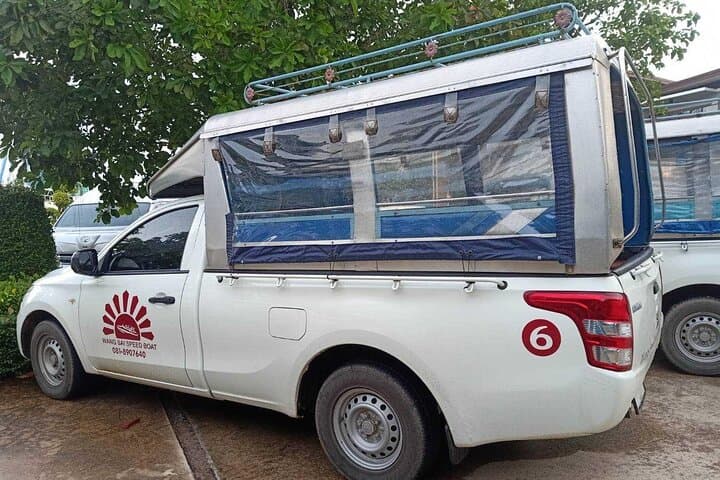
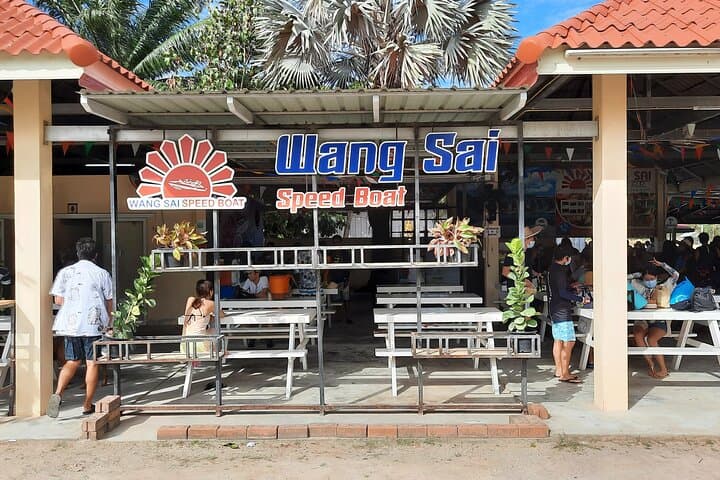
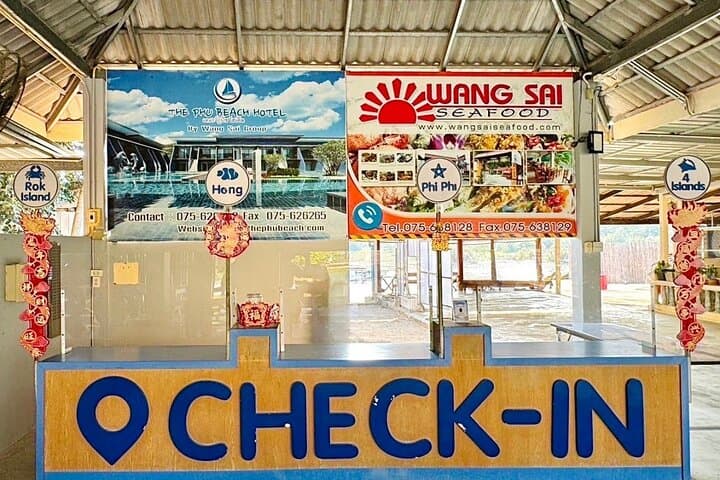
Practically, the transfer is designed for convenience: hotel pickup in the Ao Nang zone, a private pier with restrooms, life jackets and basic accident insurance included. Expect basic boarding from a floating pier at Railay East, so be prepared for a short step down and wet shoes.
Plan around sea conditions — crossings can be smooth or rollicking depending on swell — arrive 30 minutes early, secure loose bags, and carry sunscreen and a small dry bag for phones. The service is an efficient way to connect islands and start your Phi Phi itinerary without a long overland detour.
easy.
1 hour.
Suitable for travelers of most fitness levels; requires basic mobility for boarding from piers
The scheduled transit time is approximately 60 minutes each way; weather and sea conditions can affect trip length.
Yes—there is a scheduled stop at the floating pier on Railay East for pickup and drop‑off.
Small luggage and backpacks are carried aboard; larger suitcases may be restricted—confirm size limits with the operator if traveling with bulky bags.
Full refunds are available if you cancel at least 24 hours before departure; trips may be canceled for bad weather or insufficient travelers.
Phi Phi’s modern tourism boom accelerated in the 1980s; the islands were rebuilt after the 2004 tsunami and continue to balance local livelihoods with visitor demand.
Heavy visitor traffic stresses reefs and local water systems—use reef‑safe sunscreen, avoid anchoring on coral, and follow local guidelines to minimize impact.
Trip Store Krabi operates guided outdoor trips and adventures with an emphasis on safety, stewardship, and memorable experiences.
The engine thumps, wake pulling the boat into a bright, restless horizon as Ao Nang slips behind you and the limestone cliffs of Railay lean into view.
The engine thumps, wake pulling the boat into a bright, restless horizon as Ao Nang slips behind you and the limestone cliffs of Railay lean into view.
This is a straightforward coastal transfer: Wangsai Speedboat runs a scheduled, roughly 60‑minute crossing between Ao Nang and Ton Sai Pier on Phi Phi Don, with a stop at Railay East to board or drop passengers. The route threads open Andaman Sea, skirting karst towers carved from fossilized coral and volcanic sediments that rise out of turquoise water.
Phi Phi’s recent history — rapid tourism growth since the 1980s and reconstruction after the 2004 tsunami — shapes the arrival experience: a busy pier, boat traffic, and vibrant tourist services. Local culture around Krabi and Phi Phi remains tied to fishing and small‑scale hospitality; you’ll see longtail boats at work beneath jagged cliffs and small vendors selling coconut water at the pier.
Practically, the transfer is designed for convenience: hotel pickup in the Ao Nang zone, a private pier with restrooms, life jackets and basic accident insurance included. Expect basic boarding from a floating pier at Railay East, so be prepared for a short step down and wet shoes.
Plan around sea conditions — crossings can be smooth or rollicking depending on swell — arrive 30 minutes early, secure loose bags, and carry sunscreen and a small dry bag for phones. The service is an efficient way to connect islands and start your Phi Phi itinerary without a long overland detour.