THE ADVENTURE COLLECTIVE® · Independent discovery and booking for outdoor travel

Spend a day moving among monumental stupas, sacred figs and ancient reservoirs in Anuradhapura. This guided private tour pairs efficient transport with local storytelling to make Sri Lanka’s UNESCO-listed ruined capital accessible in a single day.
Spend a day moving among monumental stupas, sacred figs and ancient reservoirs in Anuradhapura. This guided private tour pairs efficient transport with local storytelling to make Sri Lanka’s UNESCO-listed ruined capital accessible in a single day.
You arrive at the rim of a vast archaeological park where brick stupas and banyan-shaded ponds push skyward from a low, sunbaked plain. The air is warm, dust motes lift in the shafted light, and the driver-guide eases you into a rhythm of short walks and long stories—of kings, monks and irrigation engineers who reshaped the landscape.
Verified experiences and guided adventures in the surrounding area.
Operated by Travceylon Leisure · Anuradhapura, North Central Province
You arrive at the rim of a vast archaeological park where brick stupas and banyan-shaded ponds push skyward from a low, sunbaked plain. The air is warm, dust motes lift in the shafted light, and the driver-guide eases you into a rhythm of short walks and long stories—of kings, monks and irrigation engineers who reshaped the landscape.
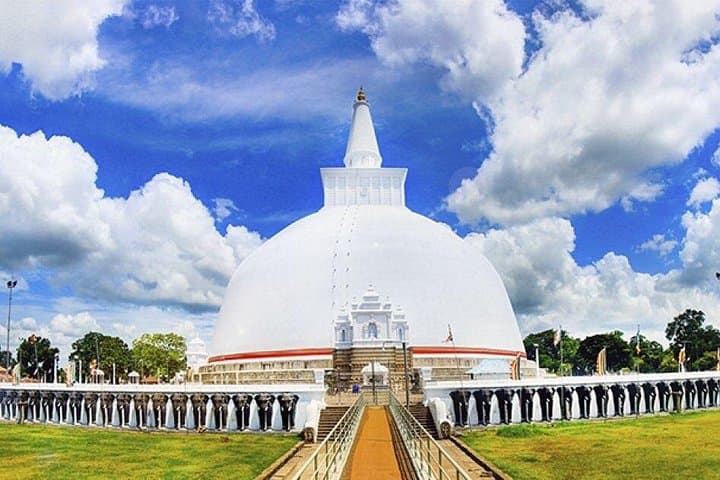
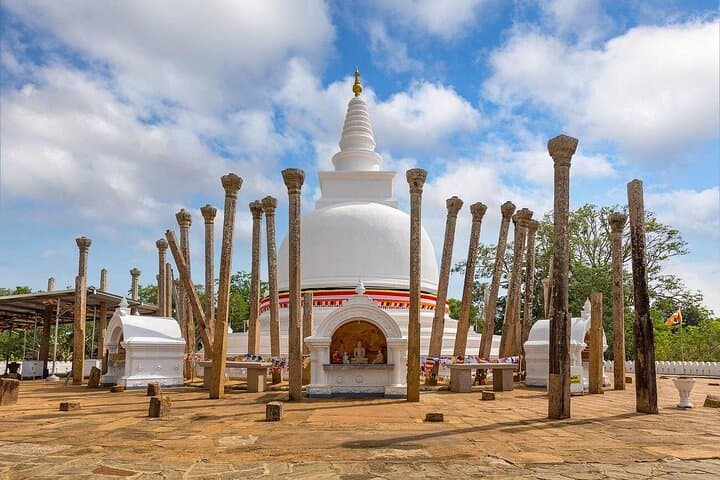
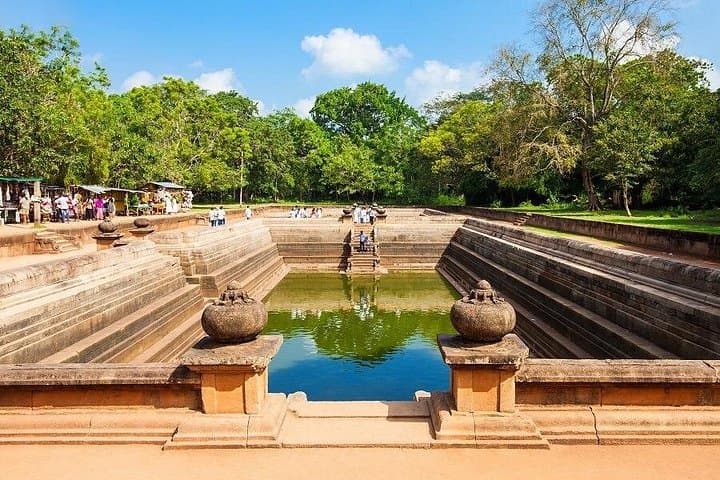
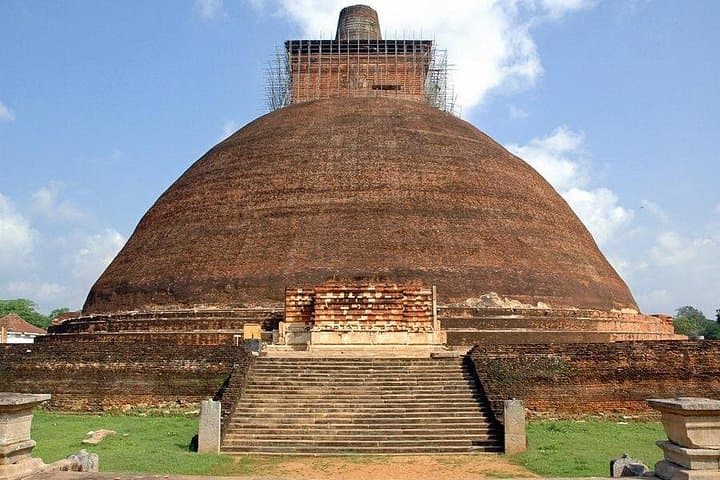
Anuradhapura was Sri Lanka’s political and religious heart from the 4th century BCE into the medieval period. Its stupas—Ruwanweliseya and Jetavanarama—are brick giants built with engineering ambition and religious purpose; the city’s tanks and reservoirs (tisa wewa, Nuwara wewa) reveal an advanced ancient hydraulic system that held the dry zone to life. You’ll pass the Sri Maha Bodhi, a sapling of the original Bodhi tree brought in the 3rd century BCE, and touch carved stone that records centuries of ritual, royal patronage and monastic scholarship.
Practical side: expect 4–8 km of walking on mostly flat, sometimes uneven stone and packed earth surfaces with negligible elevation gain (site sits roughly ~85 m above sea level). The tour typically lasts about seven hours including transport; admission fees are usually extra. Dress conservatively for temple access—shoulders and knees covered—and carry sun protection and refillable water (two 500 ml bottles are often provided by operators). Start early when temperatures are cooler and light is best for seeing relief carvings.
With a local driver-guide, you’ll move efficiently between monuments, gain historical context, and leave with a clearer sense of how this dry‑zone capital shaped Sri Lanka’s identity.
easy.
7 hours.
Suitable for most fitness levels; involves repeated short walks and standing for explanations throughout the day.
Most operator prices exclude government archaeological or museum entrance fees; confirm with your booking and bring cash or card for admissions.
Expect roughly 4–8 km of walking spread across stops—short walks between monuments rather than long continuous hikes.
Parts of the archaeological park have uneven terrain and steps; some major monuments have limited accessibility—check with the operator for tailored arrangements.
Early morning is best for cooler temperatures and softer light for photography; late afternoon is also pleasant but check opening hours and prayer times.
Anuradhapura grew into a major monastic and administrative capital from the 4th century BCE, powered by large scale reservoirs and royal patronage that supported centuries of Buddhist scholarship.
The archaeological park faces pressure from tourism, weathering and groundwater changes; follow paths, avoid touching fragile brickwork and support local conservation efforts by using designated waste bins and guides.
Travceylon Leisure operates guided outdoor trips and adventures with an emphasis on safety, stewardship, and memorable experiences.
You arrive at the rim of a vast archaeological park where brick stupas and banyan-shaded ponds push skyward from a low, sunbaked plain. The air is warm, dust motes lift in the shafted light, and the driver-guide eases you into a rhythm of short walks and long stories—of kings, monks and irrigation engineers who reshaped the landscape.
You arrive at the rim of a vast archaeological park where brick stupas and banyan-shaded ponds push skyward from a low, sunbaked plain. The air is warm, dust motes lift in the shafted light, and the driver-guide eases you into a rhythm of short walks and long stories—of kings, monks and irrigation engineers who reshaped the landscape.
Anuradhapura was Sri Lanka’s political and religious heart from the 4th century BCE into the medieval period. Its stupas—Ruwanweliseya and Jetavanarama—are brick giants built with engineering ambition and religious purpose; the city’s tanks and reservoirs (tisa wewa, Nuwara wewa) reveal an advanced ancient hydraulic system that held the dry zone to life. You’ll pass the Sri Maha Bodhi, a sapling of the original Bodhi tree brought in the 3rd century BCE, and touch carved stone that records centuries of ritual, royal patronage and monastic scholarship.
Practical side: expect 4–8 km of walking on mostly flat, sometimes uneven stone and packed earth surfaces with negligible elevation gain (site sits roughly ~85 m above sea level). The tour typically lasts about seven hours including transport; admission fees are usually extra. Dress conservatively for temple access—shoulders and knees covered—and carry sun protection and refillable water (two 500 ml bottles are often provided by operators). Start early when temperatures are cooler and light is best for seeing relief carvings.
With a local driver-guide, you’ll move efficiently between monuments, gain historical context, and leave with a clearer sense of how this dry‑zone capital shaped Sri Lanka’s identity.