THE ADVENTURE COLLECTIVE® · Independent discovery and booking for outdoor travel

A full-day private drive from Kandy brings you to Anuradhapura’s monumental stupas and the rocky summit of Mihintale. This tour blends accessible ruins-walking with a rewarding stair climb and clear cultural context.
A full-day private drive from Kandy brings you to Anuradhapura’s monumental stupas and the rocky summit of Mihintale. This tour blends accessible ruins-walking with a rewarding stair climb and clear cultural context.
You leave Kandy before dawn and the road opens like a slow ribbon through rice paddies and low, scrubby hills. By midmorning the silhouette of stupas and square brick platforms rises from the flat plains around Anuradhapura; the site breathes history and the heat presses like an invitation to move slowly. Walk past Ruwanwelisaya’s white dome, stand beneath the Sri Maha Bodhiya and feel the carved stone and living tree hold different kinds of time.
Verified experiences and guided adventures in the surrounding area.
Operated by Ok Lanka Travel · Anuradhapura, North Central Province
You leave Kandy before dawn and the road opens like a slow ribbon through rice paddies and low, scrubby hills. By midmorning the silhouette of stupas and square brick platforms rises from the flat plains around Anuradhapura; the site breathes history and the heat presses like an invitation to move slowly. Walk past Ruwanwelisaya’s white dome, stand beneath the Sri Maha Bodhiya and feel the carved stone and living tree hold different kinds of time.
Anuradhapura was the island’s political and religious center from the 4th century BCE. Its massive dagobas are layered with centuries of repairs; the clay-rich plains that support the reservoirs (tanks) reveal ancient irrigation engineering that kept cities alive during dry seasons. Culture here is active—pilgrims, monks and caretakers maintain rituals that continue to shape how you move through the ruins.
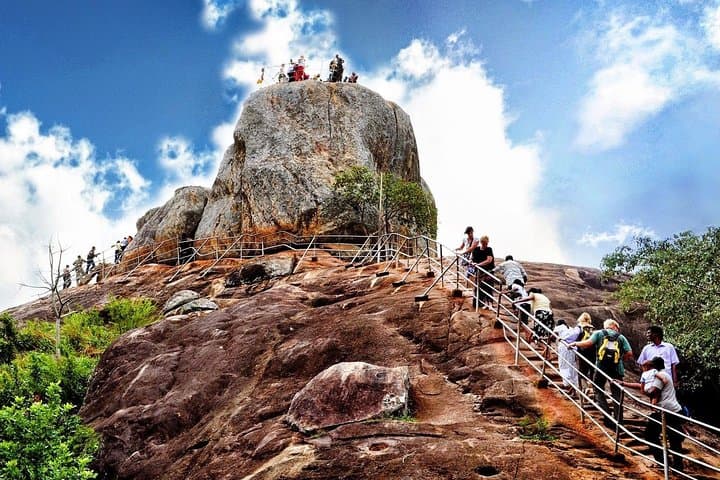
Practical guide: expect a long day (about 14 hours door-to-door) with several hours walking on uneven, sun-exposed paths and a steep stone stair climb at Mihintale (≈300–350 m elevation gain). Modest clothing and a respectful attitude are required at sacred sites; shoes must be removed in temple precincts. Carry at least 2–3 liters of water, sun protection and a small backpack for layers. Plan visits in the cooler morning hours at Anuradhapura and time your Mihintale climb for late afternoon or sunrise to avoid peak heat.
The tour is historically rich and physically manageable for most travelers who can stand and walk across uneven ground; it pairs cultural intensity with straightforward logistics—private transport, bottled water and hotel pickup simplify the day but don’t remove the need for sun-smart planning and comfortable footwear.
moderate.
14 hours (full day).
Suitable for travelers with moderate fitness who can walk several hours on uneven ground and climb stone steps.
Most guided day tours do not include individual site entry fees—confirm with the operator and carry local currency for tickets.
Yes—shoes must be removed when entering temple interiors and some shrine areas; wear socks or bring a small towel if preferred.
The ascent is a steep stone stairway of several hundred steps; it’s strenuous but short and manageable if you take breaks and avoid peak heat.
Private transport and a relaxed pace make the tour accessible to many ages, but consider mobility limitations for stairs and long walking periods.
Anuradhapura served as Sri Lanka’s capital for over a millennium from the 4th century BCE and is a focal point of Theravada Buddhism, anchored by the sacred Bodhi tree.
Stay on marked paths, avoid climbing or touching fragile brickwork and carry out any trash; local caretakers work to protect both archaeological fabric and living religious practices.
Ok Lanka Travel operates guided outdoor trips and adventures with an emphasis on safety, stewardship, and memorable experiences.



You leave Kandy before dawn and the road opens like a slow ribbon through rice paddies and low, scrubby hills. By midmorning the silhouette of stupas and square brick platforms rises from the flat plains around Anuradhapura; the site breathes history and the heat presses like an invitation to move slowly. Walk past Ruwanwelisaya’s white dome, stand beneath the Sri Maha Bodhiya and feel the carved stone and living tree hold different kinds of time.
You leave Kandy before dawn and the road opens like a slow ribbon through rice paddies and low, scrubby hills. By midmorning the silhouette of stupas and square brick platforms rises from the flat plains around Anuradhapura; the site breathes history and the heat presses like an invitation to move slowly. Walk past Ruwanwelisaya’s white dome, stand beneath the Sri Maha Bodhiya and feel the carved stone and living tree hold different kinds of time.
Anuradhapura was the island’s political and religious center from the 4th century BCE. Its massive dagobas are layered with centuries of repairs; the clay-rich plains that support the reservoirs (tanks) reveal ancient irrigation engineering that kept cities alive during dry seasons. Culture here is active—pilgrims, monks and caretakers maintain rituals that continue to shape how you move through the ruins.
Practical guide: expect a long day (about 14 hours door-to-door) with several hours walking on uneven, sun-exposed paths and a steep stone stair climb at Mihintale (≈300–350 m elevation gain). Modest clothing and a respectful attitude are required at sacred sites; shoes must be removed in temple precincts. Carry at least 2–3 liters of water, sun protection and a small backpack for layers. Plan visits in the cooler morning hours at Anuradhapura and time your Mihintale climb for late afternoon or sunrise to avoid peak heat.
The tour is historically rich and physically manageable for most travelers who can stand and walk across uneven ground; it pairs cultural intensity with straightforward logistics—private transport, bottled water and hotel pickup simplify the day but don’t remove the need for sun-smart planning and comfortable footwear.