THE ADVENTURE COLLECTIVE® · Independent discovery and booking for outdoor travel

Drive into the high Andean wilds to watch condors wheel over glaciated ridges and alpacas graze beside Laguna La Mica. This private day trip from Quito mixes geology, wildlife viewing and practical, high-altitude trekking tips.
Drive into the high Andean wilds to watch condors wheel over glaciated ridges and alpacas graze beside Laguna La Mica. This private day trip from Quito mixes geology, wildlife viewing and practical, high-altitude trekking tips.
A cold wind pushes across the high páramo as your van climbs away from Quito; the road opens onto volcanic scree and a horizon cut by Antisana’s glaciated ridges. Early light finds condors riding the thermals, their wingspan stark against a cobalt sky, while alpacas graze along the salt-scoured edges of Laguna La Mica.
Verified experiences and guided adventures in the surrounding area.
Operated by CUSCUNGA TOURS · Quito, Pichincha
A cold wind pushes across the high páramo as your van climbs away from Quito; the road opens onto volcanic scree and a horizon cut by Antisana’s glaciated ridges. Early light finds condors riding the thermals, their wingspan stark against a cobalt sky, while alpacas graze along the salt-scoured edges of Laguna La Mica.
Antisana is part of the Eastern Cordillera of the Ecuadorian Andes, shaped by repeated eruptions and glacial sculpting. The reserve protects montane forests, wet páramo, and the last fragments of Andean glaciers—landscapes that supply water to nearby valleys and to Quito itself. Local communities historically used the highlands for camelid grazing and transhumance; today the area blends conservation with traditional use.
On a private day excursion expect guided wildlife viewing—condors, Andean deer and grazing camelids—plus photo stops at Laguna La Mica. The terrain is high-altitude grassland and dirt roads with short walks on uneven ground; weather changes fast and sunlight is intense. Guides interpret geology (glacial cirques, moraine fields) and point out cultural markers like shepherd trails and fence lines.
Practical guidance: leave Quito early to avoid afternoon cloud build-up, dress in layers for wind and sun, and bring water and snacks since services are limited. A camera with a telephoto or binoculars improves wildlife encounters. Respect fenced grazing areas, keep distance from animals, and follow your guide’s instructions—this is fragile páramo, and small choices affect water sources downstream.
moderate.
6–8 hours.
Light to moderate fitness; able to handle short walks on uneven, high-altitude ground and prolonged standing for wildlife watching.
The private tour runs about 6–8 hours, including transport from Quito, stops for wildlife viewing and time at Laguna La Mica.
The excursion is rated easy to moderate but involves high altitude; children and older travelers should consult a physician and avoid strenuous exertion.
Condors are frequently seen riding thermals, especially in the morning, but sightings are never guaranteed—bring optics to increase chances.
Entrance and transport are included; meals are not typically provided—bring snacks or request dietary accommodations when booking.
Antisana’s highlands have long been used by indigenous and mestizo communities for grazing; its glaciers and wetlands historically fed downstream agricultural valleys and Quito’s water supply.
The reserve protects fragile páramo and remaining glaciers; visitors are asked to stay on routes, avoid littering, and follow guides to minimize erosion and disturbance.
CUSCUNGA TOURS operates guided outdoor trips and adventures with an emphasis on safety, stewardship, and memorable experiences.
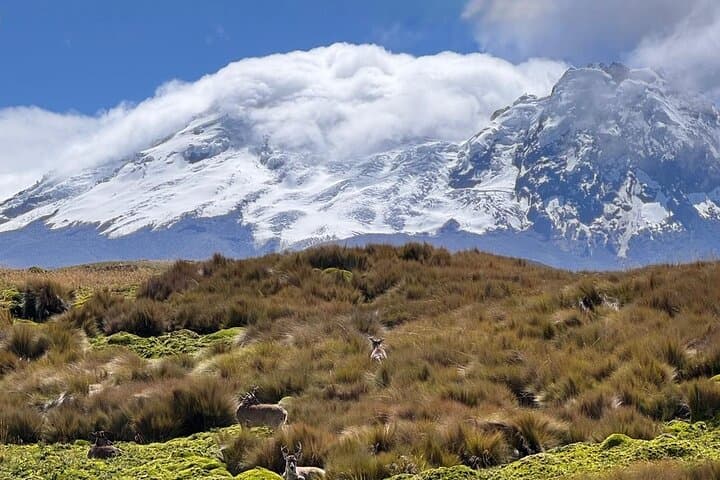


A cold wind pushes across the high páramo as your van climbs away from Quito; the road opens onto volcanic scree and a horizon cut by Antisana’s glaciated ridges. Early light finds condors riding the thermals, their wingspan stark against a cobalt sky, while alpacas graze along the salt-scoured edges of Laguna La Mica.
A cold wind pushes across the high páramo as your van climbs away from Quito; the road opens onto volcanic scree and a horizon cut by Antisana’s glaciated ridges. Early light finds condors riding the thermals, their wingspan stark against a cobalt sky, while alpacas graze along the salt-scoured edges of Laguna La Mica.
Antisana is part of the Eastern Cordillera of the Ecuadorian Andes, shaped by repeated eruptions and glacial sculpting. The reserve protects montane forests, wet páramo, and the last fragments of Andean glaciers—landscapes that supply water to nearby valleys and to Quito itself. Local communities historically used the highlands for camelid grazing and transhumance; today the area blends conservation with traditional use.
On a private day excursion expect guided wildlife viewing—condors, Andean deer and grazing camelids—plus photo stops at Laguna La Mica. The terrain is high-altitude grassland and dirt roads with short walks on uneven ground; weather changes fast and sunlight is intense. Guides interpret geology (glacial cirques, moraine fields) and point out cultural markers like shepherd trails and fence lines.
Practical guidance: leave Quito early to avoid afternoon cloud build-up, dress in layers for wind and sun, and bring water and snacks since services are limited. A camera with a telephoto or binoculars improves wildlife encounters. Respect fenced grazing areas, keep distance from animals, and follow your guide’s instructions—this is fragile páramo, and small choices affect water sources downstream.