THE ADVENTURE COLLECTIVE® · Independent discovery and booking for outdoor travel

Explore Antigua’s Baroque ruins, artisan villages and living textile traditions on a full-day guided circuit that pairs city history with visits to nearby colonial towns. Expect cobblestone walks, local workshops, and volcano views.
Explore Antigua’s Baroque ruins, artisan villages and living textile traditions on a full-day guided circuit that pairs city history with visits to nearby colonial towns. Expect cobblestone walks, local workshops, and volcano views.
You step off the van into Antigua’s central plaza and the first thing you notice is the rhythm of cobblestones underfoot and Agua volcano holding its shape over the roofs—an ever-present backdrop that seems to watch the city’s long story. The tour moves at a deliberate pace: a guided circuit past the Arch of Santa Catalina, cathedral ruins spilling light through empty windows, then out along narrow lanes where painted facades meet market stalls.
Verified experiences and guided adventures in the surrounding area.
Operated by Los Nahuales · Antigua Guatemala, Sacatepéquez
You step off the van into Antigua’s central plaza and the first thing you notice is the rhythm of cobblestones underfoot and Agua volcano holding its shape over the roofs—an ever-present backdrop that seems to watch the city’s long story. The tour moves at a deliberate pace: a guided circuit past the Arch of Santa Catalina, cathedral ruins spilling light through empty windows, then out along narrow lanes where painted facades meet market stalls.
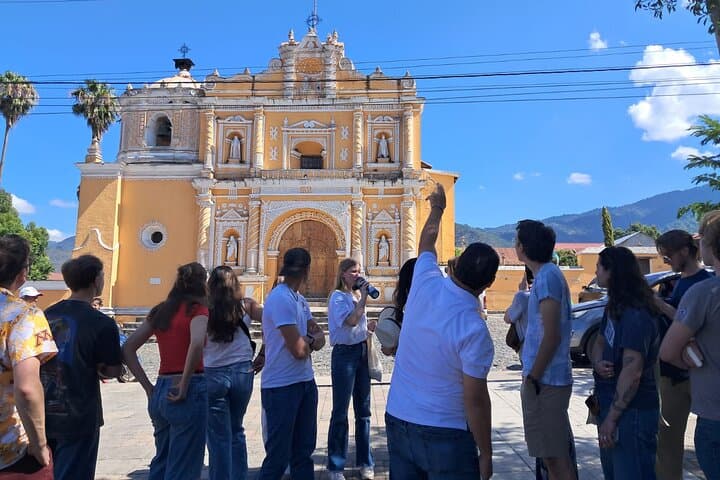
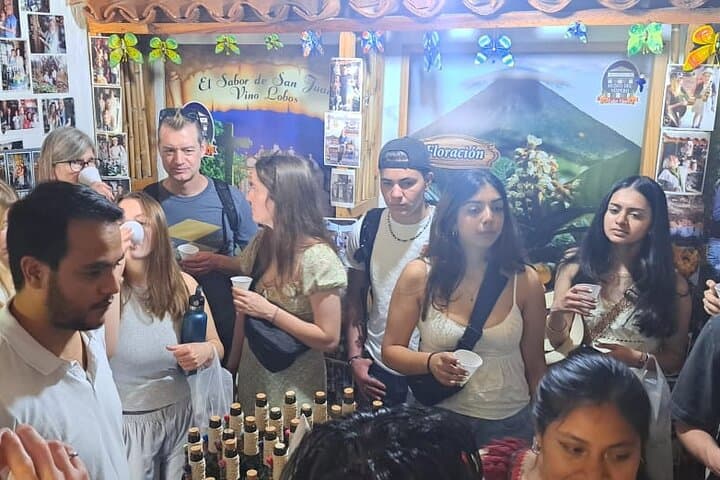
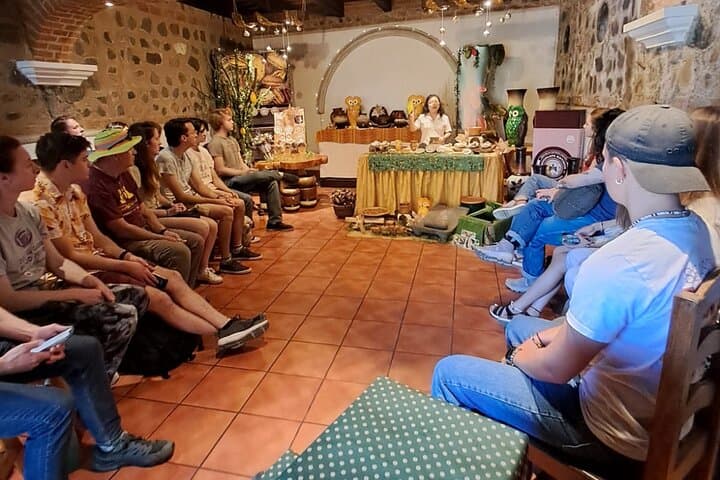
Antigua was once the Spanish capital of Central America; earthquakes in the 18th century left Baroque ruins that now define the city’s character. The surrounding volcanic soil—rich, dark, and dramatic—has long supported small orchards and textile traditions in nearby hamlets. In San Juan del Obispo visitors encounter a 16th-century convent and local family cooperatives still distilling spirits and curing coffee; San Pedro offers communal parks and shared plazas that preserve everyday Maya-Kaqchikel culture. San Antonio Aguas Calientes is quieter, its women’s weaving co-ops producing hand-dyed textiles whose patterns carry lineage and technique.
Practical side: expect a full day (roughly nine hours) with multiple short walks on uneven stones and gentle slopes; bring comfortable walking shoes, a light rain shell and cash for market purchases. Hydrate for altitude (Antigua sits near 1,530 m) and plan for sun in the middle of the day. Timing matters—mornings are cooler and less crowded at museums and textile workshops. This is a cultural, not strenuous, itinerary: it rewards curiosity, patience, and respect for working communities you’ll meet along the way.
easy.
9 hours.
Suitable for most fitness levels; requires the ability to walk short distances on uneven cobblestones and climb modest steps.
The tour runs about nine hours with multiple short stops for walking, museum visits and workshops; the pace is relaxed but full-day.
The itinerary is labeled easy, but cobblestones and steps can be challenging for strollers or mobility impairments—contact the operator about accessibility options.
Admission is generally not included for specialty museums or workshops; check the booking details and bring money for meals and optional entries.
Language options vary by operator—confirm at booking if you need English, Spanish, or another language guide.
Antigua was Guatemala’s colonial capital until devastating 18th-century earthquakes led to the capital’s relocation; the preserved ruins reveal Spanish Baroque architecture adapted to seismic realities.
Local co-ops emphasize sustainable textile dyes and small-scale agriculture; visitors are encouraged to buy directly from artisans and avoid contributing to over-tourism in fragile neighborhoods.
Los Nahuales operates guided outdoor trips and adventures with an emphasis on safety, stewardship, and memorable experiences.
You step off the van into Antigua’s central plaza and the first thing you notice is the rhythm of cobblestones underfoot and Agua volcano holding its shape over the roofs—an ever-present backdrop that seems to watch the city’s long story. The tour moves at a deliberate pace: a guided circuit past the Arch of Santa Catalina, cathedral ruins spilling light through empty windows, then out along narrow lanes where painted facades meet market stalls.
You step off the van into Antigua’s central plaza and the first thing you notice is the rhythm of cobblestones underfoot and Agua volcano holding its shape over the roofs—an ever-present backdrop that seems to watch the city’s long story. The tour moves at a deliberate pace: a guided circuit past the Arch of Santa Catalina, cathedral ruins spilling light through empty windows, then out along narrow lanes where painted facades meet market stalls.
Antigua was once the Spanish capital of Central America; earthquakes in the 18th century left Baroque ruins that now define the city’s character. The surrounding volcanic soil—rich, dark, and dramatic—has long supported small orchards and textile traditions in nearby hamlets. In San Juan del Obispo visitors encounter a 16th-century convent and local family cooperatives still distilling spirits and curing coffee; San Pedro offers communal parks and shared plazas that preserve everyday Maya-Kaqchikel culture. San Antonio Aguas Calientes is quieter, its women’s weaving co-ops producing hand-dyed textiles whose patterns carry lineage and technique.
Practical side: expect a full day (roughly nine hours) with multiple short walks on uneven stones and gentle slopes; bring comfortable walking shoes, a light rain shell and cash for market purchases. Hydrate for altitude (Antigua sits near 1,530 m) and plan for sun in the middle of the day. Timing matters—mornings are cooler and less crowded at museums and textile workshops. This is a cultural, not strenuous, itinerary: it rewards curiosity, patience, and respect for working communities you’ll meet along the way.