THE ADVENTURE COLLECTIVE® · Independent discovery and booking for outdoor travel

Swap a beach day for a full-bodied city ride: a one-hour coastal transfer from Side delivers five hours in Antalya’s Old Town, an optional cable car to Tunektepe’s panoramas, and a cooling stop at Kurşunlu Waterfall. This practical day trip blends archaeology, sea views, and a short nature walk.
Swap a beach day for a full-bodied city ride: a one-hour coastal transfer from Side delivers five hours in Antalya’s Old Town, an optional cable car to Tunektepe’s panoramas, and a cooling stop at Kurşunlu Waterfall. This practical day trip blends archaeology, sea views, and a short nature walk.
The bus eases out of Side before sunrise, salt on the air and a driver who knows the road. One hour later, Antalya’s old harbor slips into view: red-tiled roofs, a crescent of blue Mediterranean, and the stone arch of Hadrian’s Gate framing a street that smells of roasting coffee and citrus. Your local guide cuts through a maze of cobblestones, pausing at a timbered Ottoman house, then directing you toward the clock tower that watches over Kaleiçi like a patient old neighbor.
Verified experiences and guided adventures in the surrounding area.
Operated by Payless · Antalya, Antalya
The bus eases out of Side before sunrise, salt on the air and a driver who knows the road. One hour later, Antalya’s old harbor slips into view: red-tiled roofs, a crescent of blue Mediterranean, and the stone arch of Hadrian’s Gate framing a street that smells of roasting coffee and citrus. Your local guide cuts through a maze of cobblestones, pausing at a timbered Ottoman house, then directing you toward the clock tower that watches over Kaleiçi like a patient old neighbor.
Antalya has been a port for millennia — Attaleia in Hellenistic maps, a Roman stopover when Hadrian passed through, later reinforced by Seljuk minarets and Ottoman mansions. That layered history reads in stone: Yivliminare’s fluted minaret rises as an architectural claim from the 13th century; Hadrian’s Gate still carries the visitors’ procession route. Geologically, the region sits where limestone of the Taurus foothills meets the Mediterranean shelf; karst springs feed rivers that still make the waterfalls possible, even in the heat of summer.
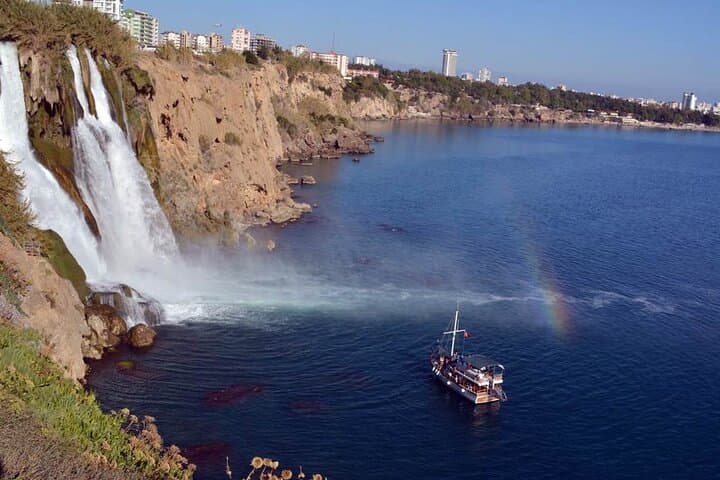
The tour is designed around movement: a comfortable, air-conditioned transfer from Side, roughly 60 minutes each way; five hours of free time to explore the Old Town on foot; an optional cable car up to Tunektepe for sweeping views; and a shorter stop at Kurşunlu Waterfall on the return. Tunektepe’s cable car climbs to a hilltop viewpoint that pushes the city into a new scale — the sea becomes a plane, the jagged teeth of the Taurus Mountains a distant rim. Kurşunlu, by contrast, asks you to slow down: wooden platforms cross emerald pools and the waterfall’s breath cools the path.
Practical edge: expect cobbled streets and uneven steps in Kaleiçi — comfortable walking shoes are non-negotiable. The five hours of free time give you space for a museum, a light lunch of meze and caught fish at the harbor, and a slow weave through spice shops; but if you want the cable car, plan the extra cost and the 30–40 minute transfer the guide mentions. Entrance fees to museums and the waterfall are typically extra. Cash (Turkish lira) is handy for small vendors and tips.
Timing matters: mornings are best for photography and cooler walking; late afternoon brings softer light on the minaret and fewer tour groups. For the waterfall, expect a brief but lush interlude — a good pair of sandals or light trekking shoes will make the boardwalk comfortable. Whether you come for history, views, or the scent of lemon trees, the Side–Antalya day trip stitches coastal ease with concentrated city character in a single, well-paced day.
easy.
7–8 hours.
Suitable for travelers in average physical condition who can walk 2–4 km on cobbles and climb short flights of steps.
Expect roughly a one-hour, air-conditioned bus ride each way depending on traffic.
Museum entrances are not included in the standard tour price; the itinerary provides free time for optional visits and an optional cable car ride has an extra fee.
Yes — the operator notes infants and small children can use strollers, but expect cobbles and steps in Old Town which may make some routes challenging.
The park has boardwalks and paths but accessibility is limited; contact the supplier in advance to discuss specific mobility needs.
Guides are local professionals; confirm language availability at booking if you require a specific language.
The tour provider may cancel and offer a refund if weather prevents safe travel, per their 24-hour cancellation policy.
Antalya began as Attaleia under the Hellenistic Attalid dynasty; Hadrian’s Gate marks a Roman-era welcome, while Yivliminare reflects Seljuk influence from the 13th century.
Kurşunlu Waterfall sits inside a protected nature park — sticking to boardwalks and paying entrance fees helps fund trail maintenance and wildlife protection.
Payless operates guided outdoor trips and adventures with an emphasis on safety, stewardship, and memorable experiences.
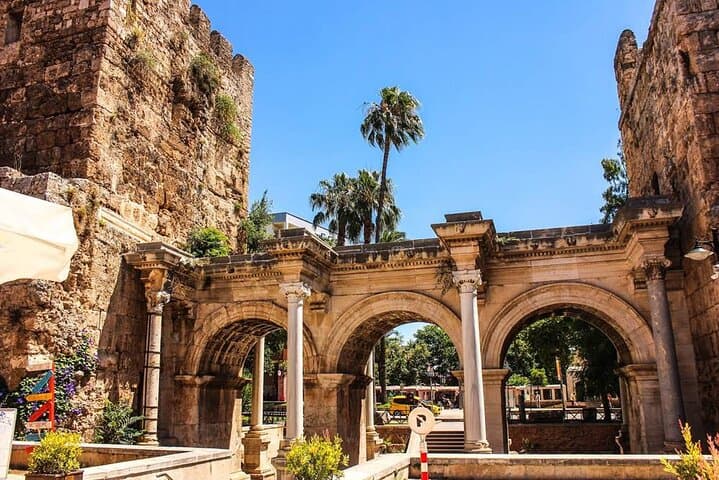
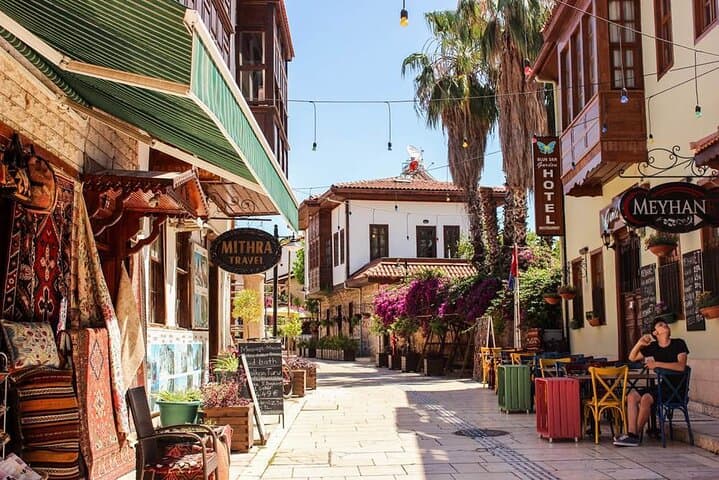
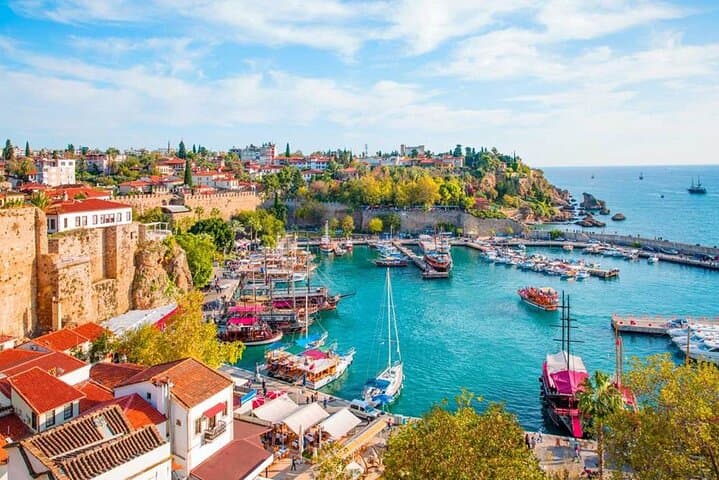
The bus eases out of Side before sunrise, salt on the air and a driver who knows the road. One hour later, Antalya’s old harbor slips into view: red-tiled roofs, a crescent of blue Mediterranean, and the stone arch of Hadrian’s Gate framing a street that smells of roasting coffee and citrus. Your local guide cuts through a maze of cobblestones, pausing at a timbered Ottoman house, then directing you toward the clock tower that watches over Kaleiçi like a patient old neighbor.
The bus eases out of Side before sunrise, salt on the air and a driver who knows the road. One hour later, Antalya’s old harbor slips into view: red-tiled roofs, a crescent of blue Mediterranean, and the stone arch of Hadrian’s Gate framing a street that smells of roasting coffee and citrus. Your local guide cuts through a maze of cobblestones, pausing at a timbered Ottoman house, then directing you toward the clock tower that watches over Kaleiçi like a patient old neighbor.
Antalya has been a port for millennia — Attaleia in Hellenistic maps, a Roman stopover when Hadrian passed through, later reinforced by Seljuk minarets and Ottoman mansions. That layered history reads in stone: Yivliminare’s fluted minaret rises as an architectural claim from the 13th century; Hadrian’s Gate still carries the visitors’ procession route. Geologically, the region sits where limestone of the Taurus foothills meets the Mediterranean shelf; karst springs feed rivers that still make the waterfalls possible, even in the heat of summer.
The tour is designed around movement: a comfortable, air-conditioned transfer from Side, roughly 60 minutes each way; five hours of free time to explore the Old Town on foot; an optional cable car up to Tunektepe for sweeping views; and a shorter stop at Kurşunlu Waterfall on the return. Tunektepe’s cable car climbs to a hilltop viewpoint that pushes the city into a new scale — the sea becomes a plane, the jagged teeth of the Taurus Mountains a distant rim. Kurşunlu, by contrast, asks you to slow down: wooden platforms cross emerald pools and the waterfall’s breath cools the path.
Practical edge: expect cobbled streets and uneven steps in Kaleiçi — comfortable walking shoes are non-negotiable. The five hours of free time give you space for a museum, a light lunch of meze and caught fish at the harbor, and a slow weave through spice shops; but if you want the cable car, plan the extra cost and the 30–40 minute transfer the guide mentions. Entrance fees to museums and the waterfall are typically extra. Cash (Turkish lira) is handy for small vendors and tips.
Timing matters: mornings are best for photography and cooler walking; late afternoon brings softer light on the minaret and fewer tour groups. For the waterfall, expect a brief but lush interlude — a good pair of sandals or light trekking shoes will make the boardwalk comfortable. Whether you come for history, views, or the scent of lemon trees, the Side–Antalya day trip stitches coastal ease with concentrated city character in a single, well-paced day.