THE ADVENTURE COLLECTIVE® · Independent discovery and booking for outdoor travel

A compact 7-day trek from Pokhara to Ghorepani and Poon Hill that delivers Himalayan sunrises and close-up views of Annapurna and Dhaulagiri. Ideal for moderately fit hikers seeking a short, culture-rich mountain experience.
A compact 7-day trek from Pokhara to Ghorepani and Poon Hill that delivers Himalayan sunrises and close-up views of Annapurna and Dhaulagiri. Ideal for moderately fit hikers seeking a short, culture-rich mountain experience.
Before dawn, the ridge at Poon Hill glows from a thin line of light and the Himalaya answers with ridgelines serrated against an indigo sky. You’ll climb in the dark—headlamp cones cutting through rhododendron—then stand as the sun pushes color across Annapurna, Dhaulagiri and Machhapuchhre.
Verified experiences and guided adventures in the surrounding area.
Operated by Himalayan Holyland Treks and Expedition · Ghorepani, Gandaki Province
Before dawn, the ridge at Poon Hill glows from a thin line of light and the Himalaya answers with ridgelines serrated against an indigo sky. You’ll climb in the dark—headlamp cones cutting through rhododendron—then stand as the sun pushes color across Annapurna, Dhaulagiri and Machhapuchhre.
The Ghorepani–Poon Hill route is short but storied: a traditional transhumance path used by Gurung communities and mule caravans that later became one of Nepal’s most accessible mountain viewpoints. Geologically, you’re in the Lesser Himalaya—folded metamorphic beds rising from terraced farmland into steep forested slopes. Culturally, villages like Ghandruk display Gurung architecture and small community museums that explain local life and wartime recruitment to the Gurkha regiments.
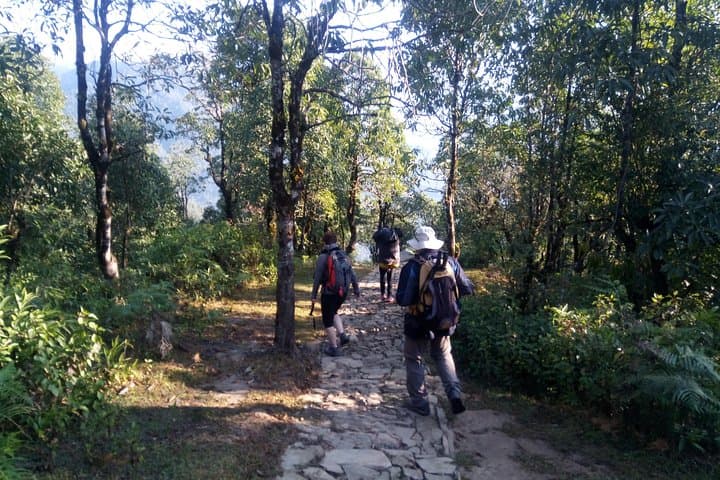
Expect a mix of steep stone staircases, dirt tracks and occasional suspension bridges crossing tributaries of the Modi Khola. Lodging is teahouse style—simple rooms and shared bathrooms. Spring and autumn bring clear mountain visibility; monsoon softens trails and winter can frost the higher paths.
Practical guidance: acclimatize with the gentle ascent profile—sleeping nights steadily gain from Pokhara to Ghorepani—and keep daily hiking to 4–6 hours where possible. Footwear with good ankle support and a waterproof midlayer matter more than top-end technical gear. Hydrate frequently; carry a water filter or purification tablets to refill at teahouses. Start the Poon Hill pre-dawn walk to avoid crowds and catch the cleanest light. Be prepared to pay modest fees for ACAP/TIMS permits and to tip guides and porters; they move the local economy. The trek rewards patience—each switchback peels back another panorama until the peaks claim the sky.
moderate.
7 days.
Moderate fitness: regular walkers who can handle 4–6 hours of uphill walking and stair climbs daily.
Yes—an ACAP permit and TIMS card are required; reputable operators usually arrange these and include fees in the package.
Poon Hill sits around 3,210 m (10,530 ft); the ascent is gradual and most trekkers acclimatize well, but monitor symptoms and descend if headache, nausea, or dizziness appear.
Accommodation is teahouse-style—basic private rooms or dorms, shared bathrooms, and simple hot meals; standards improve in Ghandruk and Pokhara.
Autumn (Sept–Nov) and spring (Mar–May) offer the most stable weather and clear mountain views; monsoon brings green trails but reduced visibility.
Paths here were long-used by Gurung and Magar communities for trade and seasonal herding; the route later opened to trekkers in the late 20th century.
The Annapurna Conservation Area Project (ACAP) regulates permits and supports community conservation; hikers are encouraged to minimize waste and use refillable water bottles.
Himalayan Holyland Treks and Expedition operates guided outdoor trips and adventures with an emphasis on safety, stewardship, and memorable experiences.
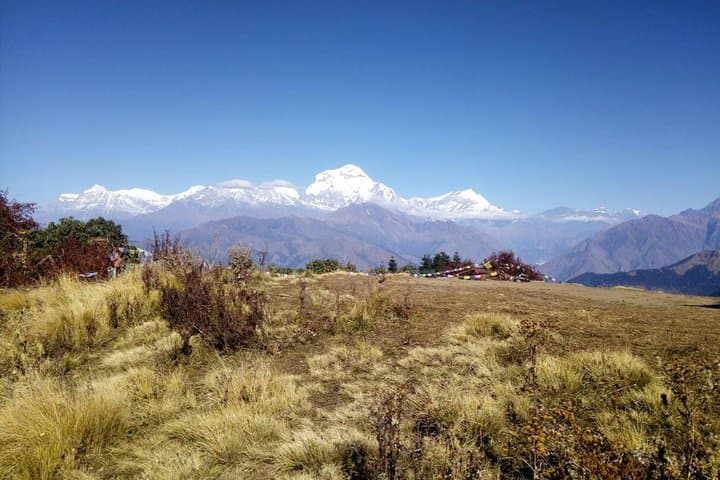

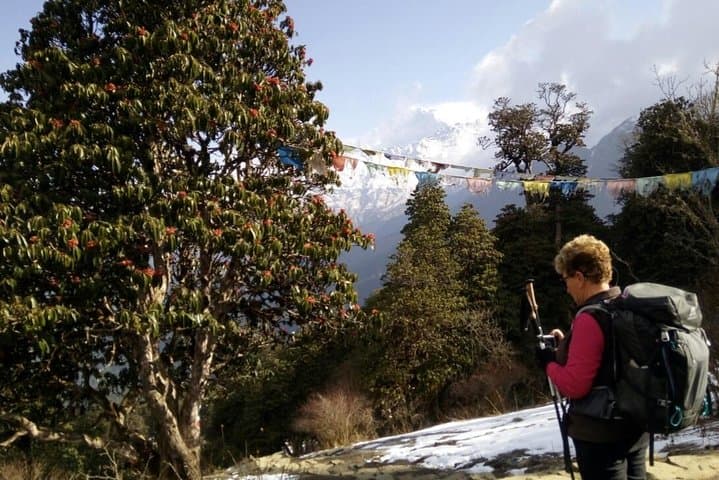
Before dawn, the ridge at Poon Hill glows from a thin line of light and the Himalaya answers with ridgelines serrated against an indigo sky. You’ll climb in the dark—headlamp cones cutting through rhododendron—then stand as the sun pushes color across Annapurna, Dhaulagiri and Machhapuchhre.
Before dawn, the ridge at Poon Hill glows from a thin line of light and the Himalaya answers with ridgelines serrated against an indigo sky. You’ll climb in the dark—headlamp cones cutting through rhododendron—then stand as the sun pushes color across Annapurna, Dhaulagiri and Machhapuchhre.
The Ghorepani–Poon Hill route is short but storied: a traditional transhumance path used by Gurung communities and mule caravans that later became one of Nepal’s most accessible mountain viewpoints. Geologically, you’re in the Lesser Himalaya—folded metamorphic beds rising from terraced farmland into steep forested slopes. Culturally, villages like Ghandruk display Gurung architecture and small community museums that explain local life and wartime recruitment to the Gurkha regiments.
Expect a mix of steep stone staircases, dirt tracks and occasional suspension bridges crossing tributaries of the Modi Khola. Lodging is teahouse style—simple rooms and shared bathrooms. Spring and autumn bring clear mountain visibility; monsoon softens trails and winter can frost the higher paths.
Practical guidance: acclimatize with the gentle ascent profile—sleeping nights steadily gain from Pokhara to Ghorepani—and keep daily hiking to 4–6 hours where possible. Footwear with good ankle support and a waterproof midlayer matter more than top-end technical gear. Hydrate frequently; carry a water filter or purification tablets to refill at teahouses. Start the Poon Hill pre-dawn walk to avoid crowds and catch the cleanest light. Be prepared to pay modest fees for ACAP/TIMS permits and to tip guides and porters; they move the local economy. The trek rewards patience—each switchback peels back another panorama until the peaks claim the sky.