
Annapurna Ghorepani Poon Hill Trek — 8-Day Sunrise Trek from Pokhara
A compact, high-reward trek from Pokhara to Poon Hill, offering sunrise views over the Annapurna massif, rhododendron forests, and Gurung villages. This accessible 7–8 day route mixes steep stair climbs with short daily stages—ideal for first-time Himalayan trekkers who want big mountain scenery without technical mounts.
An Adventure In Pokhara.
A compact, high-reward trek from Pokhara to Poon Hill, offering sunrise views over the Annapurna massif, rhododendron forests, and Gurung villages. This accessible 7–8 day route mixes steep stair climbs with short daily stages—ideal for first-time Himalayan trekkers who want big mountain scenery without technical mounts.
Read the full experience
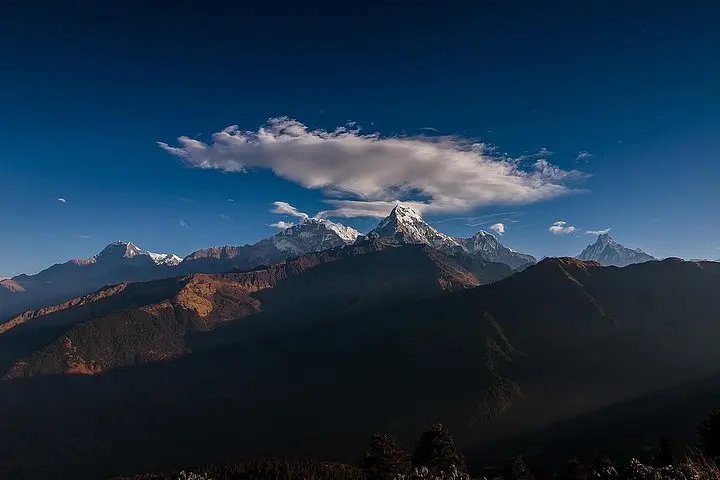
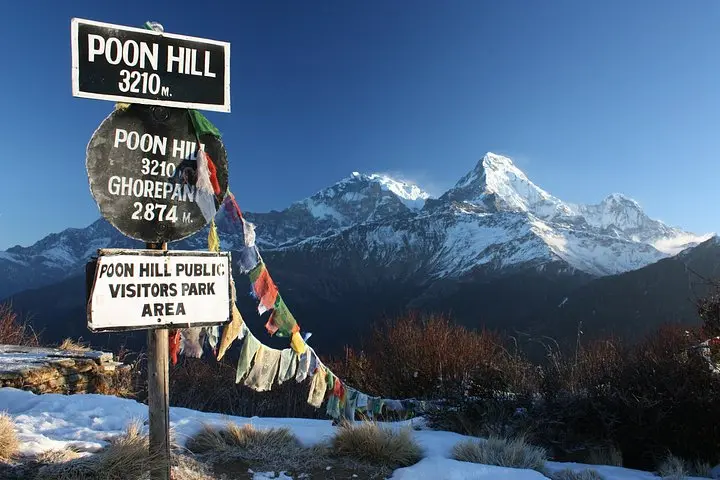
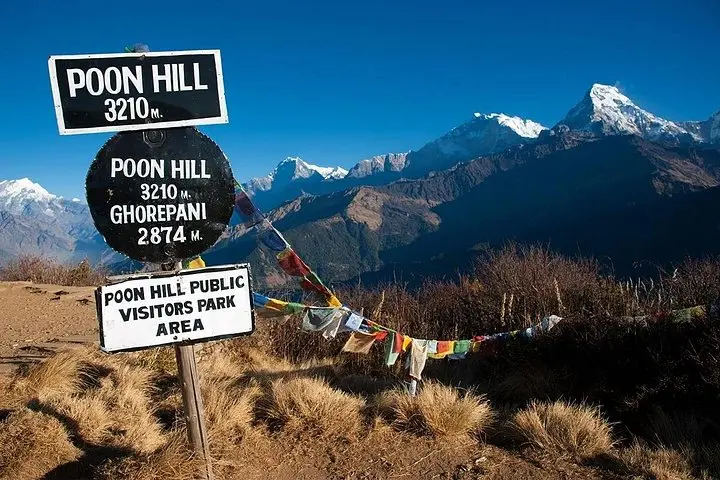
Dawn pulls the peaks into color: a cold pink that spreads across Annapurna and Dhaulagiri as you stand on Poon Hill, breath fogging, camera steady in a world that just woke up.
Dawn pulls the peaks into color: a cold pink that spreads across Annapurna and Dhaulagiri as you stand on Poon Hill, breath fogging, camera steady in a world that just woke up.
This classic Annapurna circuit begins in Pokhara and moves up through Ulleri’s stone steps, the rhododendron corridors of Ghorepani, and the open viewpoint at Poon Hill (3,210 m). Geologically the route runs along the southern flank of the Greater Himalaya—steep schist and metamorphic ridges carved by glacial action—so expect sharp, exposed viewpoints and steep valley sides. Culturally the trail threads Gurung villages where terrace farming and traditional houses outline a centuries-old mountain life; Ghandruk offers a small museum and local hospitality.
Days are measured in climbs and rests: long stone staircases, single-track forested trails, and short exposed ridgelines; daily legs typically run 3–7 hours with elevation changes of 300–900 m depending on the stage. The sunrise on Poon Hill is the highlight—arrive early (pre-dawn) for unobstructed light and cooler air.
Practical guidance: train for sustained uphill walking and stair climbs, carry layered clothing for alpine mornings and warm afternoons, and budget local cash for teahouse snacks and tips. Permits (TIMS and Annapurna Conservation Area) are required and usually handled by operators. Stay hydrated at altitude, move at a steady pace, and respect local systems for waste and water. For first-time Himalayan trekkers this route is an accessible, high-value introduction to Nepal’s mountains—dramatic summits, close cultural contact, and efficient logistics from Pokhara make it a reliable, memorable trek.
Frequently asked questions
The route is considered moderate—no technical climbing—but requires stamina for long days and steep stone steps; guided groups and tea-house accommodations make logistics straightforward.
Yes—TIMS card and Annapurna Conservation Area Project (ACAP) permit are required; operators typically arrange these before the trek.
Autumn (Sept–Nov) and spring (Mar–May) offer the clearest views and stable weather; winter can be cold and summer monsoon brings heavy rain and leeches.
Yes—tea houses along the trail provide basic rooms and meals; the itinerary includes hotel nights in Pokhara and Kathmandu for arrival and return.
About This Experience
Pariwar Holidays Pvt Ltd operates guided outdoor trips and adventures with an emphasis on safety, stewardship, and memorable experiences.
Adventure tips
Recommended gear
- Waterproof hiking boots: Support and traction on long stone steps and wet trails.
- Insulating mid-layer and shell: Cold mornings on Poon Hill and variable mountain weather require layers.
- Trekking poles: Reduce knee strain on steep descents and stabilize on uneven steps.
- Daypack with hydration system: Carry water, snacks, and layers for changing conditions during daily hikes.
Photos of the experience

Related adventures & guides
Read the full experience
Dawn pulls the peaks into color: a cold pink that spreads across Annapurna and Dhaulagiri as you stand on Poon Hill, breath fogging, camera steady in a world that just woke up.
Dawn pulls the peaks into color: a cold pink that spreads across Annapurna and Dhaulagiri as you stand on Poon Hill, breath fogging, camera steady in a world that just woke up.
This classic Annapurna circuit begins in Pokhara and moves up through Ulleri’s stone steps, the rhododendron corridors of Ghorepani, and the open viewpoint at Poon Hill (3,210 m). Geologically the route runs along the southern flank of the Greater Himalaya—steep schist and metamorphic ridges carved by glacial action—so expect sharp, exposed viewpoints and steep valley sides. Culturally the trail threads Gurung villages where terrace farming and traditional houses outline a centuries-old mountain life; Ghandruk offers a small museum and local hospitality.
Days are measured in climbs and rests: long stone staircases, single-track forested trails, and short exposed ridgelines; daily legs typically run 3–7 hours with elevation changes of 300–900 m depending on the stage. The sunrise on Poon Hill is the highlight—arrive early (pre-dawn) for unobstructed light and cooler air.
Practical guidance: train for sustained uphill walking and stair climbs, carry layered clothing for alpine mornings and warm afternoons, and budget local cash for teahouse snacks and tips. Permits (TIMS and Annapurna Conservation Area) are required and usually handled by operators. Stay hydrated at altitude, move at a steady pace, and respect local systems for waste and water. For first-time Himalayan trekkers this route is an accessible, high-value introduction to Nepal’s mountains—dramatic summits, close cultural contact, and efficient logistics from Pokhara make it a reliable, memorable trek.
Make a day of it nearby.
Verified experiences and guided adventures in the surrounding area.