THE ADVENTURE COLLECTIVE® · Independent discovery and booking for outdoor travel

A multi-day trek that moves from subtropical valleys to the high desert around Thorong La, the Annapurna Circuit combines cultural villages, dramatic geology and a 5,416 m pass. Read on for what to expect, route highlights and practical prep.
A multi-day trek that moves from subtropical valleys to the high desert around Thorong La, the Annapurna Circuit combines cultural villages, dramatic geology and a 5,416 m pass. Read on for what to expect, route highlights and practical prep.
Dawn breaks over terraced rice paddies as your vehicle climbs out of the lowland heat and the Himalaya begin to loom — first as distant ice-white teeth, then as a river of ridgelines that pulls you higher. The Annapurna Circuit is a route of shifting climates and hard-won vistas: subtropical valleys, rhododendron forests, high desert, and finally the crowds and silence of Thorong La at 5,416 m.
Verified experiences and guided adventures in the surrounding area.
Operated by Swotah Travel and Adventure Pvt. Ltd. · Kathmandu, Bagmati Province
Dawn breaks over terraced rice paddies as your vehicle climbs out of the lowland heat and the Himalaya begin to loom — first as distant ice-white teeth, then as a river of ridgelines that pulls you higher. The Annapurna Circuit is a route of shifting climates and hard-won vistas: subtropical valleys, rhododendron forests, high desert, and finally the crowds and silence of Thorong La at 5,416 m.
The route follows old trade roads between Nepal and Tibet and threads through the Annapurna Conservation Area, a geologically active schist-and-granite landscape carved by the Marsyangdi River. Villages along the way reflect Gurung, Thakali and Tibetan-influenced cultures; teahouses, mani walls and Buddhist gompas mark both daily life and centuries of pilgrimage to sites like Muktinath.
Expect long days (up to 6–8 hours of walking), roughly 350–4,000 m of progressive elevation gain during the trek, and varied terrain: river valleys, stone staircases, carved cliff trails and exposed high passes. Key logistics: permit checks (ACAP and TIMS), at least one acclimatization day in Manang, and an early-morning start for the Thorong La crossing to avoid afternoon winds and snow.
Practical tips — hike in sturdy boots, layer for temperature swings, carry water-treatment options, and budget time for weather delays. Teahouse accommodation simplifies planning but brings limited hot-water availability at altitude. Whether you’re here for the pilgrimage sites, the rock walls of Pisang, or the vast, thin air at Thorong La, the Circuit rewards endurance with enormous, immediate mountain presence.
challenging.
16–17 days.
You should have good endurance for consecutive 5–8 hour walking days and be comfortable with long uphill sections at altitude.
You need an Annapurna Conservation Area Permit (ACAP) and a Trekkers' Information Management System (TIMS) card; these are checked at entry points.
Thorong La is the highest: approximately 5,416 m (17,769 ft); plan your crossing early in the day for safer conditions.
Teahouses provide basic dorms or twin rooms, meals and hot drinks; expect limited hot water and simple facilities at higher elevations.
If you experience severe headache, nausea, dizziness, or shortness of breath, descend immediately and seek medical help; mild symptoms can often be managed by rest and hydration, but vigilance is essential.
The Circuit follows historical trade routes between Nepal and Tibet and communities here have long mixed Nepalese and Tibetan cultural practices, reflected in local temples and festivals.
The Annapurna Conservation Area manages permits and limits, promoting responsible tourism and waste reduction; stick to marked trails and carry out trash where possible.
Swotah Travel and Adventure Pvt. Ltd. operates guided outdoor trips and adventures with an emphasis on safety, stewardship, and memorable experiences.
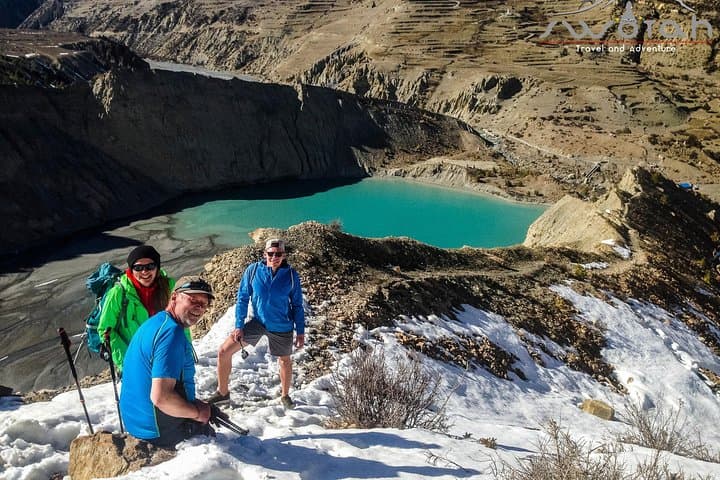


Dawn breaks over terraced rice paddies as your vehicle climbs out of the lowland heat and the Himalaya begin to loom — first as distant ice-white teeth, then as a river of ridgelines that pulls you higher. The Annapurna Circuit is a route of shifting climates and hard-won vistas: subtropical valleys, rhododendron forests, high desert, and finally the crowds and silence of Thorong La at 5,416 m.
Dawn breaks over terraced rice paddies as your vehicle climbs out of the lowland heat and the Himalaya begin to loom — first as distant ice-white teeth, then as a river of ridgelines that pulls you higher. The Annapurna Circuit is a route of shifting climates and hard-won vistas: subtropical valleys, rhododendron forests, high desert, and finally the crowds and silence of Thorong La at 5,416 m.
The route follows old trade roads between Nepal and Tibet and threads through the Annapurna Conservation Area, a geologically active schist-and-granite landscape carved by the Marsyangdi River. Villages along the way reflect Gurung, Thakali and Tibetan-influenced cultures; teahouses, mani walls and Buddhist gompas mark both daily life and centuries of pilgrimage to sites like Muktinath.
Expect long days (up to 6–8 hours of walking), roughly 350–4,000 m of progressive elevation gain during the trek, and varied terrain: river valleys, stone staircases, carved cliff trails and exposed high passes. Key logistics: permit checks (ACAP and TIMS), at least one acclimatization day in Manang, and an early-morning start for the Thorong La crossing to avoid afternoon winds and snow.
Practical tips — hike in sturdy boots, layer for temperature swings, carry water-treatment options, and budget time for weather delays. Teahouse accommodation simplifies planning but brings limited hot-water availability at altitude. Whether you’re here for the pilgrimage sites, the rock walls of Pisang, or the vast, thin air at Thorong La, the Circuit rewards endurance with enormous, immediate mountain presence.