THE ADVENTURE COLLECTIVE® · Independent discovery and booking for outdoor travel

Follow an ancient trade route from subtropical valleys to the high Thorong La pass on this 14-day Annapurna Circuit trek. Expect tea houses, high alpine views, and cultural exchanges in Tibetan-Buddhist villages.
Follow an ancient trade route from subtropical valleys to the high Thorong La pass on this 14-day Annapurna Circuit trek. Expect tea houses, high alpine views, and cultural exchanges in Tibetan-Buddhist villages.
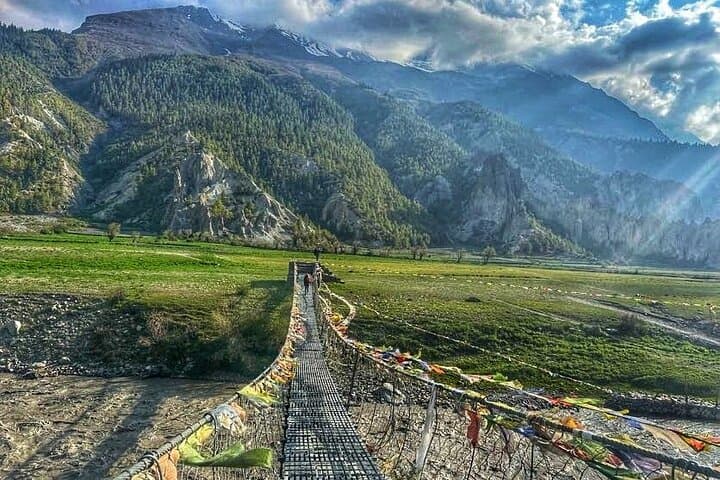
Dust from the road lifts as your jeep drops you at Jagat and the mountains close in—terraced fields give way to pine-scented gullies, rivers daring you to follow their braided channels uphill.
Verified experiences and guided adventures in the surrounding area.
Operated by Nepal Trail Finder Treks & Expedition · Kathmandu, Bagmati Province
Dust from the road lifts as your jeep drops you at Jagat and the mountains close in—terraced fields give way to pine-scented gullies, rivers daring you to follow their braided channels uphill.
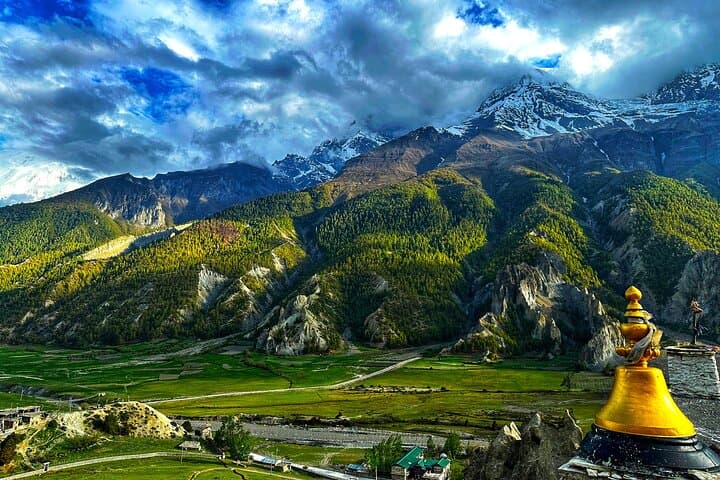
The Annapurna Circuit traces an ancient trade route between the Tibetan plateau and Nepali lowlands. Geologically, it’s a study in contrasts: steep Kali Gandaki canyons cut through folded limestone, while the Annapurna and Dhaulagiri massifs throw glaciated faces over high meadows. Culturally the route moves from Hindu villages and apple orchards around Marpha to Tibetan-Buddhist gompas in Manang and the pilgrimage shrine at Muktinath.
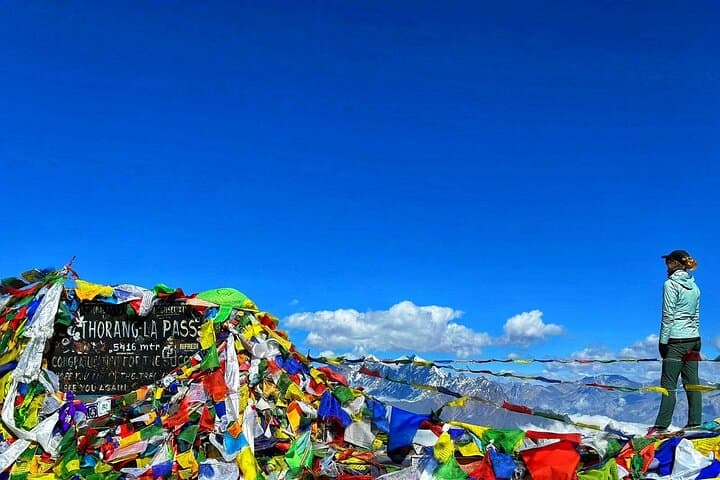
Expect mixed terrain—rocky mule tracks, stone staircases through villages, scree fields approaching Thorong La (5,416 m)—with daily gains typically 300–900 m and long acclimatization days. The classic 14-day itinerary spends nights in tea houses, uses TIMS and ACAP permits, and usually includes a rest day in Manang to adapt before the high pass.
Practical edge: hydrate early and often, eat salty snacks, and walk steady on steep descents to save your knees. Layers are vital—clear, cold mornings can turn to warm afternoons in the lower valleys. Guides and porters are common and recommended for load-carrying and local navigation.
Plan for variable weather—spring and fall offer the best visibility; monsoon brings green valleys and slippery trails; winter closes higher passes. Respect local customs at monasteries and leave no trace in fragile alpine meadows. With preparation, the Circuit delivers high mountain panoramas, living culture, and a sustained sense of progression from subtropical valley to sky-high pass.
challenging.
12–16 days.
Good aerobic fitness with experience on multi-day hikes; ability to walk 5–8 hours/day with elevation gain.
Yes—an ACAP permit and a TIMS card are required and checked at trailheads and checkpoints.
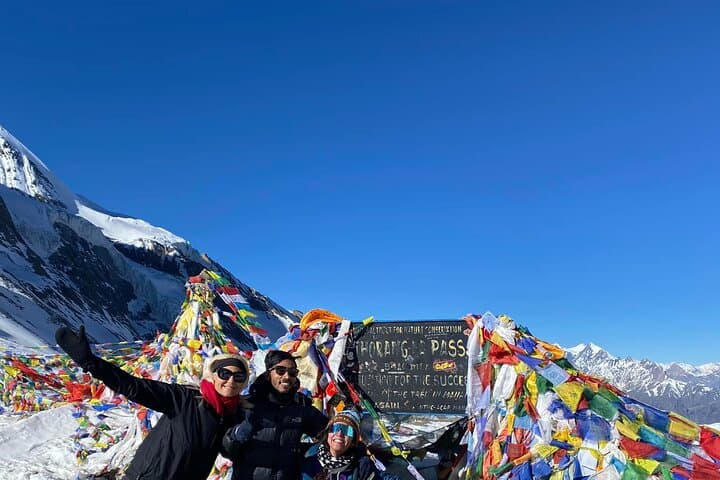
Thorong La at 5,416 m is the highest point; the pass day is long and demanding but non-technical—altitude and endurance are the main challenges.
Yes; most villages on the classic route have tea houses offering basic meals and dorm/private rooms, though standards vary.
Fall (Sept–Nov) and spring (Mar–May) offer the best weather and visibility; monsoon and winter bring hazards and fewer services.
The Circuit follows historical salt and trade routes between Tibet and Nepal and passes through mixed Hindu and Tibetan-Buddhist communities.
The Annapurna Conservation Area (ACAP) manages permits and promotes waste management and sustainable tourism; carry out plastics and minimize campfire use.
Nepal Trail Finder Treks & Expedition operates guided outdoor trips and adventures with an emphasis on safety, stewardship, and memorable experiences.
Dust from the road lifts as your jeep drops you at Jagat and the mountains close in—terraced fields give way to pine-scented gullies, rivers daring you to follow their braided channels uphill.
Dust from the road lifts as your jeep drops you at Jagat and the mountains close in—terraced fields give way to pine-scented gullies, rivers daring you to follow their braided channels uphill.
The Annapurna Circuit traces an ancient trade route between the Tibetan plateau and Nepali lowlands. Geologically, it’s a study in contrasts: steep Kali Gandaki canyons cut through folded limestone, while the Annapurna and Dhaulagiri massifs throw glaciated faces over high meadows. Culturally the route moves from Hindu villages and apple orchards around Marpha to Tibetan-Buddhist gompas in Manang and the pilgrimage shrine at Muktinath.
Expect mixed terrain—rocky mule tracks, stone staircases through villages, scree fields approaching Thorong La (5,416 m)—with daily gains typically 300–900 m and long acclimatization days. The classic 14-day itinerary spends nights in tea houses, uses TIMS and ACAP permits, and usually includes a rest day in Manang to adapt before the high pass.
Practical edge: hydrate early and often, eat salty snacks, and walk steady on steep descents to save your knees. Layers are vital—clear, cold mornings can turn to warm afternoons in the lower valleys. Guides and porters are common and recommended for load-carrying and local navigation.
Plan for variable weather—spring and fall offer the best visibility; monsoon brings green valleys and slippery trails; winter closes higher passes. Respect local customs at monasteries and leave no trace in fragile alpine meadows. With preparation, the Circuit delivers high mountain panoramas, living culture, and a sustained sense of progression from subtropical valley to sky-high pass.