THE ADVENTURE COLLECTIVE® · Independent discovery and booking for outdoor travel

An 8-day guided trek from Pokhara up traditional village trails to Annapurna Base Camp (4,130 m). Expect forested paths, stone steps, suspension bridges and one high alpine bowl beneath towering peaks—ideal for fit hikers who prioritize acclimatization and local culture.
An 8-day guided trek from Pokhara up traditional village trails to Annapurna Base Camp (4,130 m). Expect forested paths, stone steps, suspension bridges and one high alpine bowl beneath towering peaks—ideal for fit hikers who prioritize acclimatization and local culture.
Dawn in the Annapurna Sanctuary arrives with a hard, cold clarity: prayer flags snap above stone teahouses and the eastern face of Annapurna I glows like a slab of hammered silver. You start low—Pokhara’s lake-flanked streets—then trade jeeps for dusty trails that climb through terraced farmland, rhododendron forests and villages where children wave from trailside houses.
Verified experiences and guided adventures in the surrounding area.
Operated by Arpan Nepal · Pokhara, Gandaki Province
Dawn in the Annapurna Sanctuary arrives with a hard, cold clarity: prayer flags snap above stone teahouses and the eastern face of Annapurna I glows like a slab of hammered silver. You start low—Pokhara’s lake-flanked streets—then trade jeeps for dusty trails that climb through terraced farmland, rhododendron forests and villages where children wave from trailside houses.
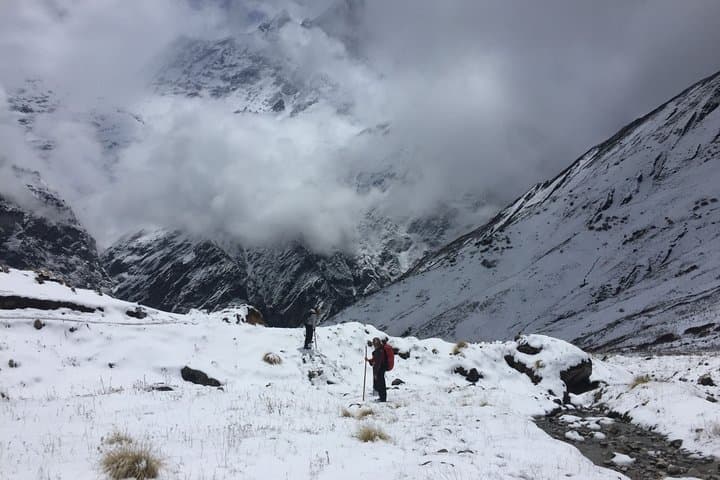
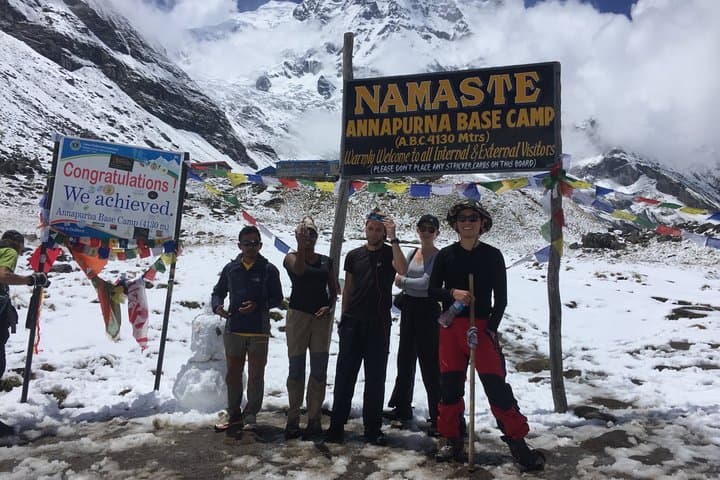
The route follows long-established trade and shepherd paths used by Gurung and Magar communities for generations. Geologically the trail threads glacial valleys and moraine slopes carved by the massif’s uplift; by the time you reach Annapurna Base Camp (4,130 m) you stand in a bowl of granite, ice and scree below towering seracs.
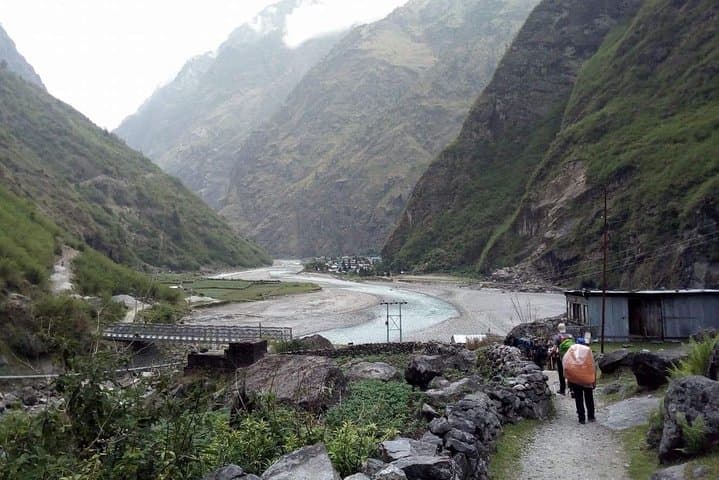
Cultural notes arrive with the altitude: stone-built guesthouses, simple dal-bhat meals and local guides who carry not just packs but knowledge of weather windows and altitude cues. The trek moves over suspension bridges, stone steps and narrow ridgelines; expect steady climbs of 6–8 hours on several days and one major summit-style push from MBC (3,730 m) to ABC.
Practical guidance: travel with a licensed guide and TIMS/Annapurna permits, plan a full eight-day itinerary to allow acclimatization, and prioritize layered clothing, sturdy waterproof boots and a 30–40 L daypack. Hydrate constantly and monitor for acute mountain sickness—slow, conservative pacing is the single best strategy. Nights are spent in lodges; treat them as your recovery routine. Aim for pre-dawn starts on summit-push days for the clearest views and safest light on steep, high trails.
challenging.
8 days.
Requires high level of cardiovascular fitness and multi-day endurance; prior trekking experience recommended
You need an Annapurna Conservation Area Permit (ACAP) and a TIMS card; your operator typically arranges these before departure.
Fall (Sept–Nov) and spring (Mar–May) offer the most stable weather and clear mountain views; monsoon summers are wet and winters are cold with snow above 3,000 m.
This itinerary uses guesthouses/lodges each night—simple rooms with shared bathrooms and hot meals, though standards vary between villages.
ABC reaches 4,130 m—altitude sickness is a real risk; follow rest days, hydrate, ascend slowly and descend if symptoms worsen.
The Annapurna circuit and side routes follow traditional trans-Himalayan trade paths used by Gurung and Magar communities; modern trekking developed here in the late 20th century with established teahouse systems.
The route passes through the Annapurna Conservation Area—permits fund local conservation and trekkers are asked to minimize waste, use lodge water sparingly and pack out non-biodegradable trash.
Arpan Nepal operates guided outdoor trips and adventures with an emphasis on safety, stewardship, and memorable experiences.
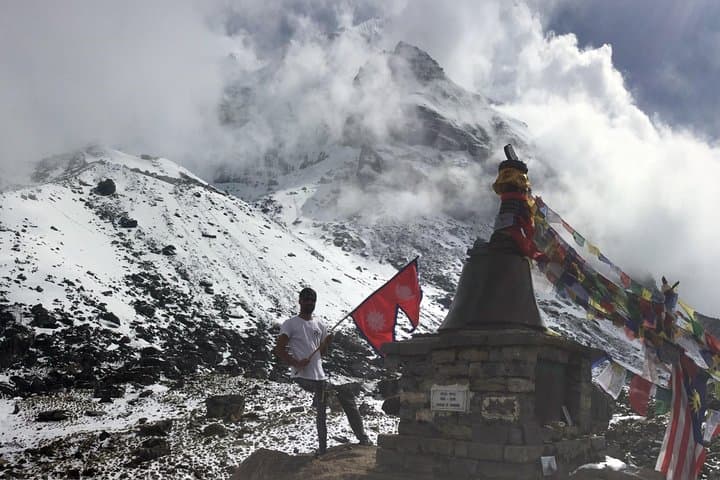
Dawn in the Annapurna Sanctuary arrives with a hard, cold clarity: prayer flags snap above stone teahouses and the eastern face of Annapurna I glows like a slab of hammered silver. You start low—Pokhara’s lake-flanked streets—then trade jeeps for dusty trails that climb through terraced farmland, rhododendron forests and villages where children wave from trailside houses.
Dawn in the Annapurna Sanctuary arrives with a hard, cold clarity: prayer flags snap above stone teahouses and the eastern face of Annapurna I glows like a slab of hammered silver. You start low—Pokhara’s lake-flanked streets—then trade jeeps for dusty trails that climb through terraced farmland, rhododendron forests and villages where children wave from trailside houses.
The route follows long-established trade and shepherd paths used by Gurung and Magar communities for generations. Geologically the trail threads glacial valleys and moraine slopes carved by the massif’s uplift; by the time you reach Annapurna Base Camp (4,130 m) you stand in a bowl of granite, ice and scree below towering seracs.
Cultural notes arrive with the altitude: stone-built guesthouses, simple dal-bhat meals and local guides who carry not just packs but knowledge of weather windows and altitude cues. The trek moves over suspension bridges, stone steps and narrow ridgelines; expect steady climbs of 6–8 hours on several days and one major summit-style push from MBC (3,730 m) to ABC.
Practical guidance: travel with a licensed guide and TIMS/Annapurna permits, plan a full eight-day itinerary to allow acclimatization, and prioritize layered clothing, sturdy waterproof boots and a 30–40 L daypack. Hydrate constantly and monitor for acute mountain sickness—slow, conservative pacing is the single best strategy. Nights are spent in lodges; treat them as your recovery routine. Aim for pre-dawn starts on summit-push days for the clearest views and safest light on steep, high trails.