THE ADVENTURE COLLECTIVE® · Independent discovery and booking for outdoor travel

A classic 7-day trek from Pokhara to Annapurna Base Camp that combines high-mountain scenery, village culture, and tea-house stays. Expect steady elevation gain, mixed terrain, and panoramic views of Annapurna and Machhapuchhre.
A classic 7-day trek from Pokhara to Annapurna Base Camp that combines high-mountain scenery, village culture, and tea-house stays. Expect steady elevation gain, mixed terrain, and panoramic views of Annapurna and Machhapuchhre.
You step off the jeep into a valley that tightens around a thread of river and a trail that climbs—one boot after another toward a bowl of ice and stone. Green terraced fields give way to rhododendron forest; above the treeline, the Annapurna massif hangs like a wall, Machhapuchhre’s fluted summit watching as you gain altitude.
Verified experiences and guided adventures in the surrounding area.
Operated by My Dream Adventure (MDA) · Pokhara, Gandaki Province
You step off the jeep into a valley that tightens around a thread of river and a trail that climbs—one boot after another toward a bowl of ice and stone. Green terraced fields give way to rhododendron forest; above the treeline, the Annapurna massif hangs like a wall, Machhapuchhre’s fluted summit watching as you gain altitude.
This route threads centuries of Gurung and Magar mountain life, mule tracks and tea houses that grew with the trekking boom of the late 20th century. Geologically, the trail moves from riverine alluvium into glacial moraines and ablation valleys near base camp—expect loose scree and carved moraines below the final cirque. Cultural pauses in Chhomrong and Ghandruk offer hospitality, local dal-bhat, and views that explain why the Annapurna Conservation Area was Nepal’s first and remains a model for community-led conservation.
Practical guide: the 7-day itinerary gains roughly 3,200–3,400 m from Pokhara (~820 m) to Annapurna Base Camp (~4,130 m) over about 60–70 km round trip. Plan for long daily marches (4–8 hours), steep stone staircases and short river crossings. Hydrate deliberately, pace uphill to reduce altitude strain, and carry layers—the temperature swings dramatically after sunset. Tea houses provide simple meals and basic dorm-style rooms; bring a warm sleeping liner. The descent is kinder on lungs but tough on knees—use trekking poles and controlled steps.
Timing matters: clarity comes after the monsoon in fall and spring’s rhododendron bloom; winter brings cold and possible snow. Respect local conservation rules, pack out what you carry in, and let the mountains do the talking—this trek rewards steady, respectful effort.
challenging.
7 days.
Moderate to good aerobic fitness with experience on long, steep day-hikes; able to hike 4–8 hours daily carrying a daypack.
Yes—trekkers must carry a TIMS card and the Annapurna Conservation Area Permit; guides/agents typically arrange these before departure.
Annapurna Base Camp sits around 4,130 m (13,550 ft); expect the highest daily gain to be several hundred meters on summit approach days.
Tea houses provide basic dorm or double rooms, shared bathrooms sometimes without hot water at higher elevations; bring a sleeping liner and expect simple dal-bhat meals.
Fall (Sept–Nov) and spring (Mar–May) offer the clearest views and stable weather; monsoon (Jun–Aug) is wet and winter (Dec–Feb) can be very cold with snow on higher sections.
The Annapurna region is managed by the Annapurna Conservation Area Project, a pioneering community-based conservation model that balances livelihoods and protection of alpine ecosystems.
Stick to marked trails, avoid single-use plastics, and use registered guides who follow ACAP waste and sanitation practices to limit human impact.
My Dream Adventure (MDA) operates guided outdoor trips and adventures with an emphasis on safety, stewardship, and memorable experiences.

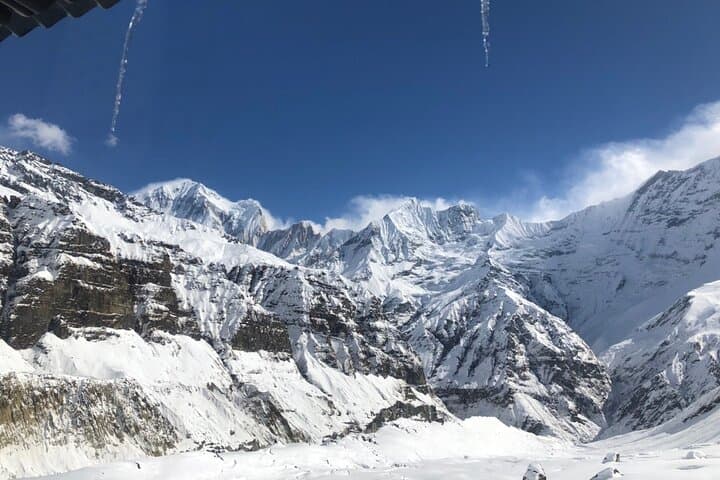
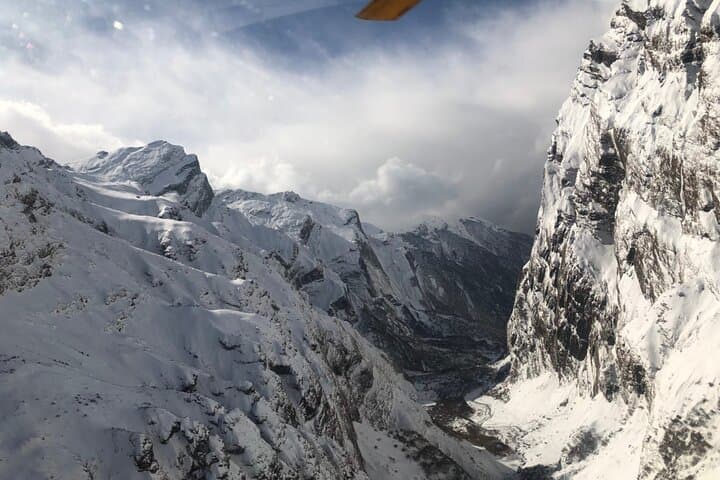
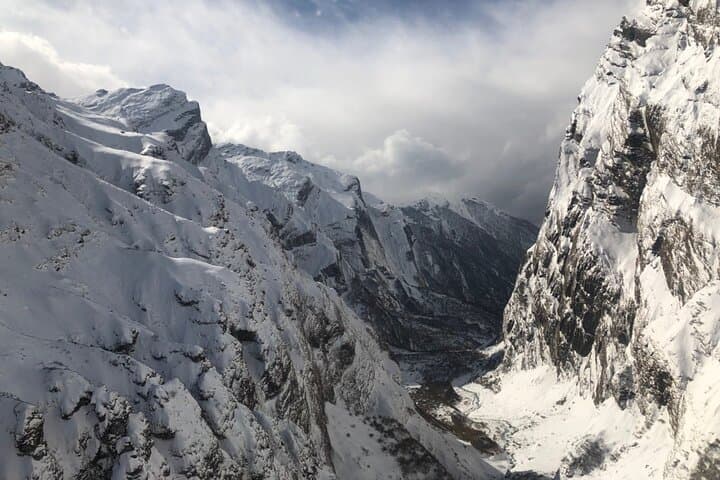
You step off the jeep into a valley that tightens around a thread of river and a trail that climbs—one boot after another toward a bowl of ice and stone. Green terraced fields give way to rhododendron forest; above the treeline, the Annapurna massif hangs like a wall, Machhapuchhre’s fluted summit watching as you gain altitude.
You step off the jeep into a valley that tightens around a thread of river and a trail that climbs—one boot after another toward a bowl of ice and stone. Green terraced fields give way to rhododendron forest; above the treeline, the Annapurna massif hangs like a wall, Machhapuchhre’s fluted summit watching as you gain altitude.
This route threads centuries of Gurung and Magar mountain life, mule tracks and tea houses that grew with the trekking boom of the late 20th century. Geologically, the trail moves from riverine alluvium into glacial moraines and ablation valleys near base camp—expect loose scree and carved moraines below the final cirque. Cultural pauses in Chhomrong and Ghandruk offer hospitality, local dal-bhat, and views that explain why the Annapurna Conservation Area was Nepal’s first and remains a model for community-led conservation.
Practical guide: the 7-day itinerary gains roughly 3,200–3,400 m from Pokhara (~820 m) to Annapurna Base Camp (~4,130 m) over about 60–70 km round trip. Plan for long daily marches (4–8 hours), steep stone staircases and short river crossings. Hydrate deliberately, pace uphill to reduce altitude strain, and carry layers—the temperature swings dramatically after sunset. Tea houses provide simple meals and basic dorm-style rooms; bring a warm sleeping liner. The descent is kinder on lungs but tough on knees—use trekking poles and controlled steps.
Timing matters: clarity comes after the monsoon in fall and spring’s rhododendron bloom; winter brings cold and possible snow. Respect local conservation rules, pack out what you carry in, and let the mountains do the talking—this trek rewards steady, respectful effort.