THE ADVENTURE COLLECTIVE® · Independent discovery and booking for outdoor travel

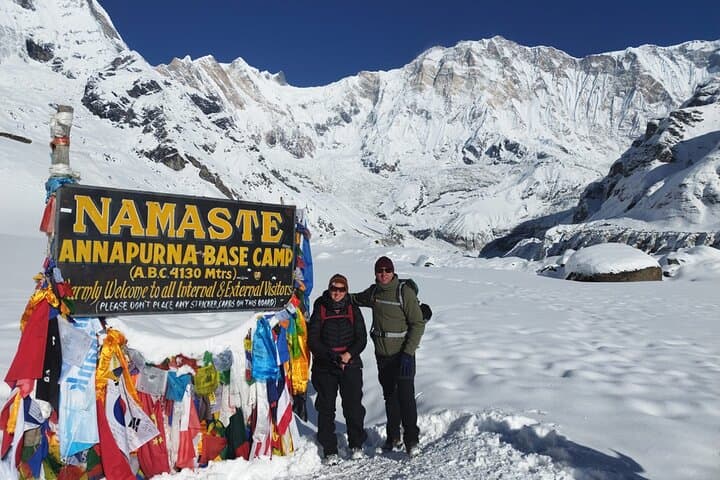
Follow a classic 12–13 day trek from Pokhara into the Annapurna Sanctuary to reach ABC at 4,130 m. This guide covers what to expect on trail, the cultural context, and practical preparation for high-altitude trekking.
Follow a classic 12–13 day trek from Pokhara into the Annapurna Sanctuary to reach ABC at 4,130 m. This guide covers what to expect on trail, the cultural context, and practical preparation for high-altitude trekking.
You step off the dusty village trail as the valley narrows and the mountains push in — Annapurna’s serrated faces filling the sky. The air sharpens, rhododendrons thin to scrub, and the path becomes a steady ledger of switchbacks and stone steps that leads toward the bowl of the Annapurna Sanctuary.
Verified experiences and guided adventures in the surrounding area.
Operated by Ace the Himalaya · Pokhara, Gandaki Province
You step off the dusty village trail as the valley narrows and the mountains push in — Annapurna’s serrated faces filling the sky. The air sharpens, rhododendrons thin to scrub, and the path becomes a steady ledger of switchbacks and stone steps that leads toward the bowl of the Annapurna Sanctuary.
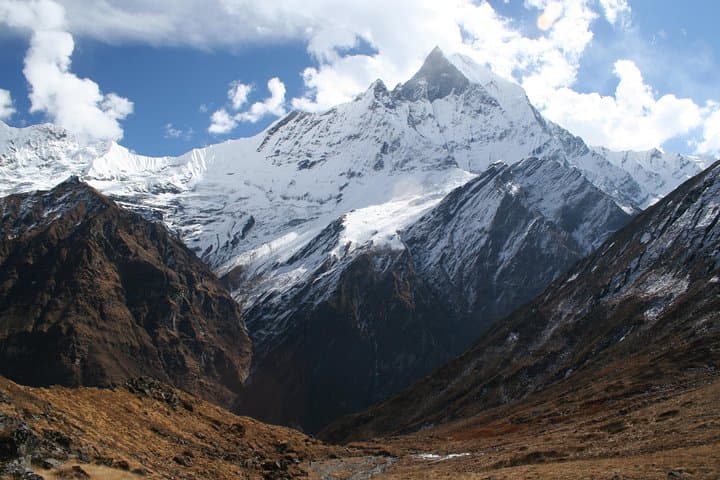
The route threads through centuries of Gurung farming communities and centuries-old trans-Himalayan trade corridors. Geologically, the sanctuary is a glacial amphitheater carved from uplifted metamorphic rock; peaks like Annapurna I (8,091 m) and Machapuchare (6,993 m) frame the skyline and command the weather. Culturally, tea-houses and wooden monasteries punctuate the trail, offering local dal bhat and stories of mountain reverence.
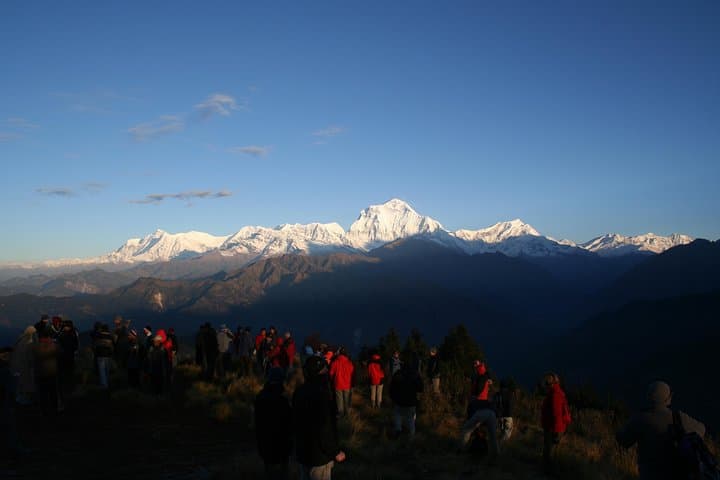
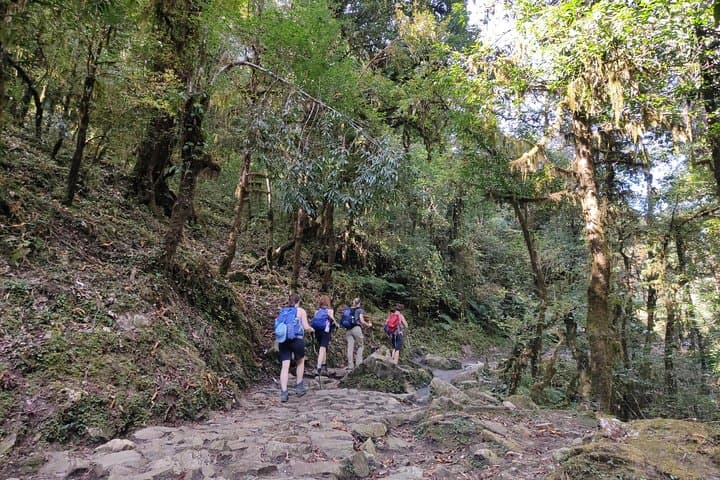
Practically, the organized itinerary runs about 12–13 days from Pokhara, reaching base camp at 4,130 m. Daily walks average 4–7 hours, with sustained elevation gain spread over multiple days to aid acclimatization. Terrain varies: river terraces, packed dirt, stone staircases, bamboo gullies and exposed alpine moraines near ABC. Expect long uphill sections, icy mornings above 3,000 m, and crowded teahouses at key stops like Ghorepani and Chomrong.
Bring waterproof layers, a warm down jacket for nights above 3,000 m, and quality trekking boots; use poles to spare knees on steep descents. Hydrate early and often, watch for early signs of altitude illness, and schedule a rest day if you feel slow gains. Permits (ACAP and TIMS) are required and usually arranged by guides. Trekking here is equal parts logistical planning and steady, patient walking — the reward is an uncompromising close-up of the high Himalaya.
challenging.
12–13 days.
Good aerobic base, ability to hike 4–7 hours daily with sustained uphill; prior multi-day trekking experience recommended.
Yes — the trek requires an ACAP (Annapurna Conservation Area Project) permit and a TIMS card; operators typically arrange these before departure.
Spring (March–May) and autumn (September–November) offer the most stable weather and clear mountain views; monsoon season is wetter and winter brings cold and snow above 3,000 m.
Fit beginners can if they allow adequate acclimatization time, use guides/porters, and accept modest teahouse conditions; prior multi-day hiking experience is helpful.
Teahouses are basic accommodations offering shared rooms, simple hot meals and communal dining — standards vary, improving as you descend toward Pokhara.
The Annapurna Sanctuary has long been inhabited and used by Gurung and Magar communities; the region gained formal protection under ACAP in the late 1980s to manage tourism and conserve biodiversity.
ACAP manages permits and conservation fees; stick to marked trails, minimize single-use plastics, and use local lodges to support village economies.
Ace the Himalaya operates guided outdoor trips and adventures with an emphasis on safety, stewardship, and memorable experiences.
You step off the dusty village trail as the valley narrows and the mountains push in — Annapurna’s serrated faces filling the sky. The air sharpens, rhododendrons thin to scrub, and the path becomes a steady ledger of switchbacks and stone steps that leads toward the bowl of the Annapurna Sanctuary.
You step off the dusty village trail as the valley narrows and the mountains push in — Annapurna’s serrated faces filling the sky. The air sharpens, rhododendrons thin to scrub, and the path becomes a steady ledger of switchbacks and stone steps that leads toward the bowl of the Annapurna Sanctuary.
The route threads through centuries of Gurung farming communities and centuries-old trans-Himalayan trade corridors. Geologically, the sanctuary is a glacial amphitheater carved from uplifted metamorphic rock; peaks like Annapurna I (8,091 m) and Machapuchare (6,993 m) frame the skyline and command the weather. Culturally, tea-houses and wooden monasteries punctuate the trail, offering local dal bhat and stories of mountain reverence.
Practically, the organized itinerary runs about 12–13 days from Pokhara, reaching base camp at 4,130 m. Daily walks average 4–7 hours, with sustained elevation gain spread over multiple days to aid acclimatization. Terrain varies: river terraces, packed dirt, stone staircases, bamboo gullies and exposed alpine moraines near ABC. Expect long uphill sections, icy mornings above 3,000 m, and crowded teahouses at key stops like Ghorepani and Chomrong.
Bring waterproof layers, a warm down jacket for nights above 3,000 m, and quality trekking boots; use poles to spare knees on steep descents. Hydrate early and often, watch for early signs of altitude illness, and schedule a rest day if you feel slow gains. Permits (ACAP and TIMS) are required and usually arranged by guides. Trekking here is equal parts logistical planning and steady, patient walking — the reward is an uncompromising close-up of the high Himalaya.