THE ADVENTURE COLLECTIVE® · Independent discovery and booking for outdoor travel

A 13-day trek from Pokhara up to Annapurna Base Camp, this route winds through rhododendron forests, traditional Gurung villages and high alpine meadows to reach panoramic Himalayan views. Expect long days on uneven trails, simple tea-house lodging and spectacular sunrise vistas at Poon Hill and ABC.
A 13-day trek from Pokhara up to Annapurna Base Camp, this route winds through rhododendron forests, traditional Gurung villages and high alpine meadows to reach panoramic Himalayan views. Expect long days on uneven trails, simple tea-house lodging and spectacular sunrise vistas at Poon Hill and ABC.
The first morning in Pokhara feels like the calm before a climb—lake glassed with light, Himalaya ridgelines sharpening at the horizon. From there the trail threads traditional villages, terraced fields and rhododendron forests, each step taking trekkers higher toward the amphitheater of granite and ice at Annapurna Base Camp (ABC).
Verified experiences and guided adventures in the surrounding area.
Operated by Himalayan Adventure Treks and Tours Pvt Ltd · Pokhara, Gandaki Province
The first morning in Pokhara feels like the calm before a climb—lake glassed with light, Himalaya ridgelines sharpening at the horizon. From there the trail threads traditional villages, terraced fields and rhododendron forests, each step taking trekkers higher toward the amphitheater of granite and ice at Annapurna Base Camp (ABC).
The route follows long-established mule tracks used by Gurung and Magar communities, passing Ghorepani and the famous Poon Hill sunrise viewpoint before climbing through alpine meadows to ABC (approx. 4,170 m). Geologically, the Annapurna massif is a dramatic slice of the Greater Himalaya: uplifted sedimentary layers folded and thrust by the collision of the Indian and Eurasian plates, capped by glaciers that sculpt cirques and moraines along the route.
Culturally the region is rural and hospitable—tea houses run by local families, small shrines in village squares, and simple menus that reflect Nepali mountain life. Wildlife shows itself in shy glimpses: pheasants in the rhododendron, occasional langur or musk deer tracks, and the constant overhead of Himalayan vultures.
Practical guidance: acclimatize on gradual gain days, hydrate deliberately, and expect long walking days of 5–7 hours on uneven stone and dirt trails. Footwear with good ankle support and layered insulation for cold nights are essential. Peak seasons are spring and autumn for clear views and stable weather; monsoon brings heavy trail mud and winter brings deep cold and snow at higher passes.
For first-timers the trek is non-technical but demanding—respect altitude, move conservatively, and plan for simple lodge accommodations and variable cell service. The payoff is immediate: a bowl-shaped base camp ringed by 7,000–8,000 m giants that make every climb and every night on the trail feel earned.
challenging.
13 days.
Suitable for trekkers with good cardiovascular fitness and experience with multi-day hikes; expect long ascents, uneven steps and altitude exposure.
No—this is a non-technical trekking route on established trails and stone staircases; no ropes or crampons are required in normal seasons.
Trekkers need the Annapurna Conservation Area Permit (ACAP) and a TIMS card, obtained in Pokhara or Kathmandu before the trek.
ABC reaches ~4,170 m; altitude sickness is possible—symptoms vary—so acclimatize, ascend slowly and carry medication if advised by a doctor.
You’ll sleep in basic tea houses and lodges with shared rooms, limited hot water and simple meals—expect rustic but comfortable mountain hospitality.
Local Gurung and Magar communities have shepherded these trails for centuries; trading routes and village pathways evolved into today’s trekking network after tourism growth in the 1970s.
The Annapurna Conservation Area manages permits and limits environmental impact; visitors should pack out waste when possible, minimize single-use plastics and respect local water sources.
Himalayan Adventure Treks and Tours Pvt Ltd operates guided outdoor trips and adventures with an emphasis on safety, stewardship, and memorable experiences.
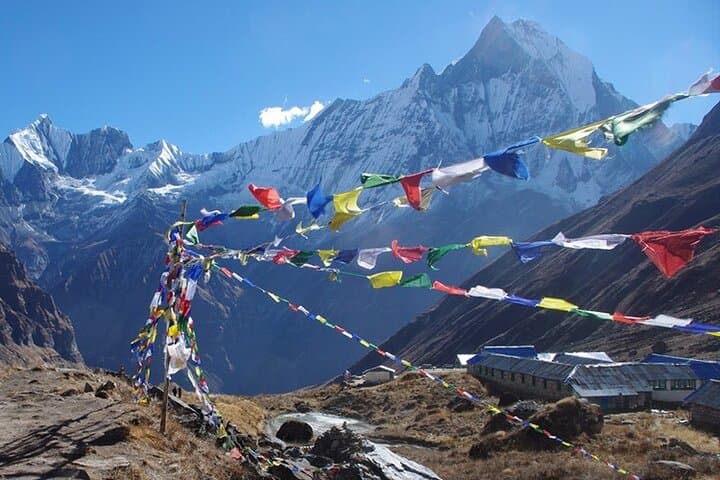
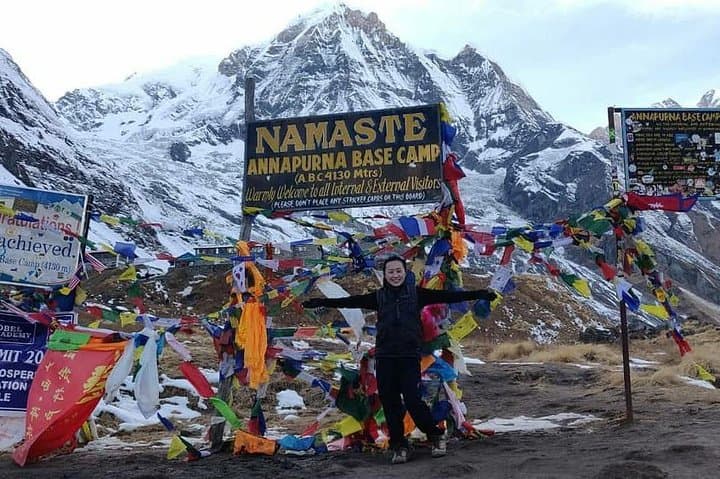
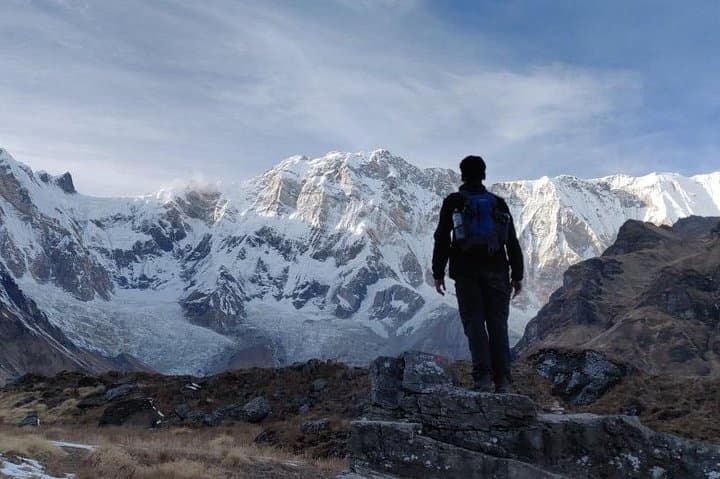
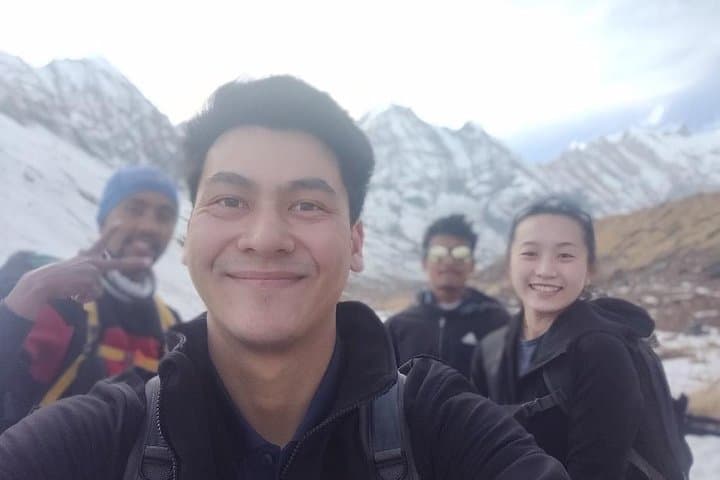
The first morning in Pokhara feels like the calm before a climb—lake glassed with light, Himalaya ridgelines sharpening at the horizon. From there the trail threads traditional villages, terraced fields and rhododendron forests, each step taking trekkers higher toward the amphitheater of granite and ice at Annapurna Base Camp (ABC).
The first morning in Pokhara feels like the calm before a climb—lake glassed with light, Himalaya ridgelines sharpening at the horizon. From there the trail threads traditional villages, terraced fields and rhododendron forests, each step taking trekkers higher toward the amphitheater of granite and ice at Annapurna Base Camp (ABC).
The route follows long-established mule tracks used by Gurung and Magar communities, passing Ghorepani and the famous Poon Hill sunrise viewpoint before climbing through alpine meadows to ABC (approx. 4,170 m). Geologically, the Annapurna massif is a dramatic slice of the Greater Himalaya: uplifted sedimentary layers folded and thrust by the collision of the Indian and Eurasian plates, capped by glaciers that sculpt cirques and moraines along the route.
Culturally the region is rural and hospitable—tea houses run by local families, small shrines in village squares, and simple menus that reflect Nepali mountain life. Wildlife shows itself in shy glimpses: pheasants in the rhododendron, occasional langur or musk deer tracks, and the constant overhead of Himalayan vultures.
Practical guidance: acclimatize on gradual gain days, hydrate deliberately, and expect long walking days of 5–7 hours on uneven stone and dirt trails. Footwear with good ankle support and layered insulation for cold nights are essential. Peak seasons are spring and autumn for clear views and stable weather; monsoon brings heavy trail mud and winter brings deep cold and snow at higher passes.
For first-timers the trek is non-technical but demanding—respect altitude, move conservatively, and plan for simple lodge accommodations and variable cell service. The payoff is immediate: a bowl-shaped base camp ringed by 7,000–8,000 m giants that make every climb and every night on the trail feel earned.