THE ADVENTURE COLLECTIVE® · Independent discovery and booking for outdoor travel

A compact seven-day trek from Pokhara into the Annapurna Sanctuary, this route climbs through forests, terraced villages and alpine meadows to Annapurna Base Camp. Expect long days of walking, teahouse stays, high-altitude views and a classic Himalayan sunrise.
A compact seven-day trek from Pokhara into the Annapurna Sanctuary, this route climbs through forests, terraced villages and alpine meadows to Annapurna Base Camp. Expect long days of walking, teahouse stays, high-altitude views and a classic Himalayan sunrise.
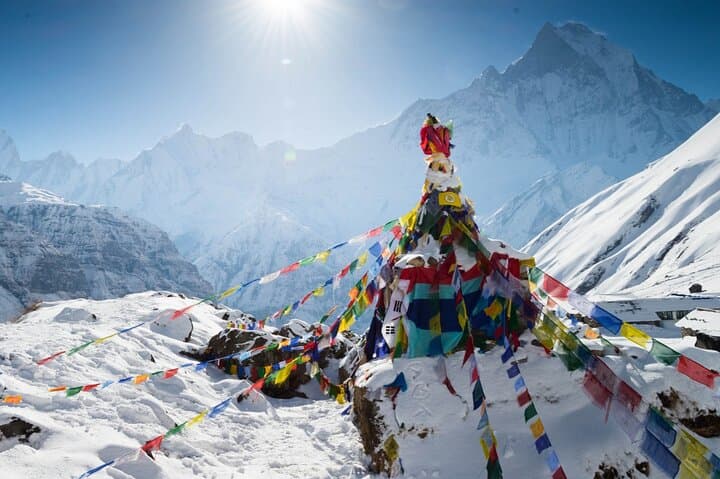
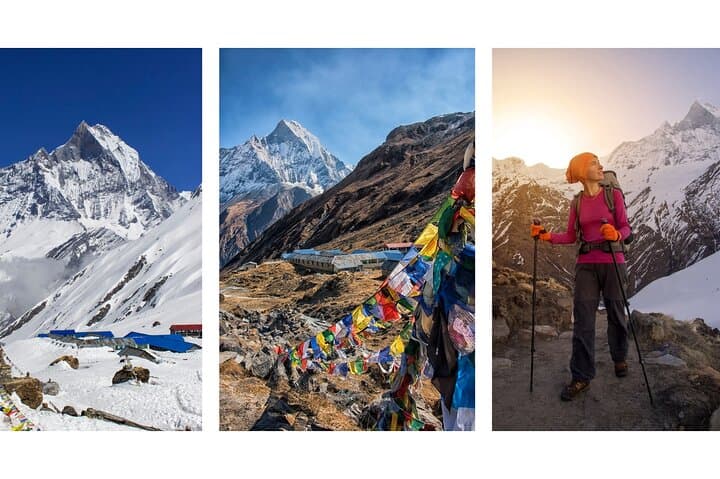
Morning light hands you the first contours of Annapurna; prayer flags stutter in a cold breeze and the trail climbs through rhododendron forest, terraces and villages that still use stone steps. Over seven days you move from Pokhara’s lakeside warmth to the amphitheater of rock and ice at Annapurna Base Camp (ABC), earning a sunrise that frames Annapurna I and Machhapuchhre.
Verified experiences and guided adventures in the surrounding area.
Operated by Green Leaf Treks and Expedition Private Limited · Pokhara, Gandaki Province
Morning light hands you the first contours of Annapurna; prayer flags stutter in a cold breeze and the trail climbs through rhododendron forest, terraces and villages that still use stone steps. Over seven days you move from Pokhara’s lakeside warmth to the amphitheater of rock and ice at Annapurna Base Camp (ABC), earning a sunrise that frames Annapurna I and Machhapuchhre.
The route threads through centuries-old Gurung and Magar communities, terraced agriculture and the Annapurna Conservation Area, created to protect this biologically rich corner of the Himalaya. Geologically the Sanctuary is a bowl carved by glacial and fluvial action; scree slopes give way to moraine and permanent snow approaching 4,130 m.
Expect 5–7 hours of trekking on most days, uphill staircases like Ulleri, long forested stretches, open alpine meadows, and narrow gullies near MBC. Daily elevation gain is gradual but overall ascent from Nayapul (~1,070 m) to ABC (~4,130 m) is substantial — plan for light days and listen to your body. Villages along the route offer teahouse accommodation, basic meals and a chance to meet local families; Jiinu’s hot springs are a welcome reward on return.
Practical guidance: carry layered clothing for big diurnal swings, a warm sleeping bag rated to -10°C, and sufficient cash—ATMs stop beyond Pokhara. Spring (March–May) and autumn (September–November) provide the most stable weather and visibility for summit views. Acclimatize, stay hydrated, and be prepared for uneven steps and occasional rain. The trek is accessible to fit hikers with no technical climbing skills but demands respect for altitude and mountain weather.
challenging.
7 days.
Good cardiovascular fitness and regular hiking experience recommended; ability to walk 5–7 hours daily with a 8–12 kg pack.
Yes—Annapurna Conservation Area Project (ACAP) permit and TIMS card are required; these are typically arranged in Pokhara or included by operators.
Annapurna Base Camp sits around 4,100–4,130 m; altitude-related symptoms can occur, so ascend gradually and monitor yourself.
Autumn (Sept–Nov) and spring (Mar–May) offer the clearest weather and stable trails; monsoon summer brings heavy rain and winter can have deep snow above 3,000 m.
Teahouses are basic lodges offering shared rooms, simple meals and hot water; expect rustic conditions but reliable food and warmth in communal dining areas.
The Annapurna region is home to Gurung and Magar communities with centuries-old terrace farming; the area became Nepal’s first conservation area to balance tourism and local livelihoods.
Trek sustainably—carry out waste, use local teahouses, and support ACAP regulations; erosion and litter are ongoing issues on busy trails.
Green Leaf Treks and Expedition Private Limited operates guided outdoor trips and adventures with an emphasis on safety, stewardship, and memorable experiences.


Morning light hands you the first contours of Annapurna; prayer flags stutter in a cold breeze and the trail climbs through rhododendron forest, terraces and villages that still use stone steps. Over seven days you move from Pokhara’s lakeside warmth to the amphitheater of rock and ice at Annapurna Base Camp (ABC), earning a sunrise that frames Annapurna I and Machhapuchhre.
Morning light hands you the first contours of Annapurna; prayer flags stutter in a cold breeze and the trail climbs through rhododendron forest, terraces and villages that still use stone steps. Over seven days you move from Pokhara’s lakeside warmth to the amphitheater of rock and ice at Annapurna Base Camp (ABC), earning a sunrise that frames Annapurna I and Machhapuchhre.
The route threads through centuries-old Gurung and Magar communities, terraced agriculture and the Annapurna Conservation Area, created to protect this biologically rich corner of the Himalaya. Geologically the Sanctuary is a bowl carved by glacial and fluvial action; scree slopes give way to moraine and permanent snow approaching 4,130 m.
Expect 5–7 hours of trekking on most days, uphill staircases like Ulleri, long forested stretches, open alpine meadows, and narrow gullies near MBC. Daily elevation gain is gradual but overall ascent from Nayapul (~1,070 m) to ABC (~4,130 m) is substantial — plan for light days and listen to your body. Villages along the route offer teahouse accommodation, basic meals and a chance to meet local families; Jiinu’s hot springs are a welcome reward on return.
Practical guidance: carry layered clothing for big diurnal swings, a warm sleeping bag rated to -10°C, and sufficient cash—ATMs stop beyond Pokhara. Spring (March–May) and autumn (September–November) provide the most stable weather and visibility for summit views. Acclimatize, stay hydrated, and be prepared for uneven steps and occasional rain. The trek is accessible to fit hikers with no technical climbing skills but demands respect for altitude and mountain weather.