THE ADVENTURE COLLECTIVE® · Independent discovery and booking for outdoor travel

A compact seven-day circuit into the Annapurna Sanctuary, this trek climbs from lowland terraced fields to the bowl of snow surrounding Annapurna and Machhapuchhre. Expect long uphill days, teahouse stays, and commanding views of 6,000–8,000 m peaks.
A compact seven-day circuit into the Annapurna Sanctuary, this trek climbs from lowland terraced fields to the bowl of snow surrounding Annapurna and Machhapuchhre. Expect long uphill days, teahouse stays, and commanding views of 6,000–8,000 m peaks.
You step out of Pokhara's early light into a bus that snakes toward the foothills, then trade the road for stone staircases and terraces. The first day rises from 1,130 m at Kade through green rice bowls and Gurung villages; by mid-trek the valley tightens, rivers dare you across suspension bridges, and the massif above tightens into a ring of snow and rock.
Verified experiences and guided adventures in the surrounding area.
Operated by Mega Mount Trekking Expedition P. Ltd · Pokhara, Gandaki Province
You step out of Pokhara's early light into a bus that snakes toward the foothills, then trade the road for stone staircases and terraces. The first day rises from 1,130 m at Kade through green rice bowls and Gurung villages; by mid-trek the valley tightens, rivers dare you across suspension bridges, and the massif above tightens into a ring of snow and rock.
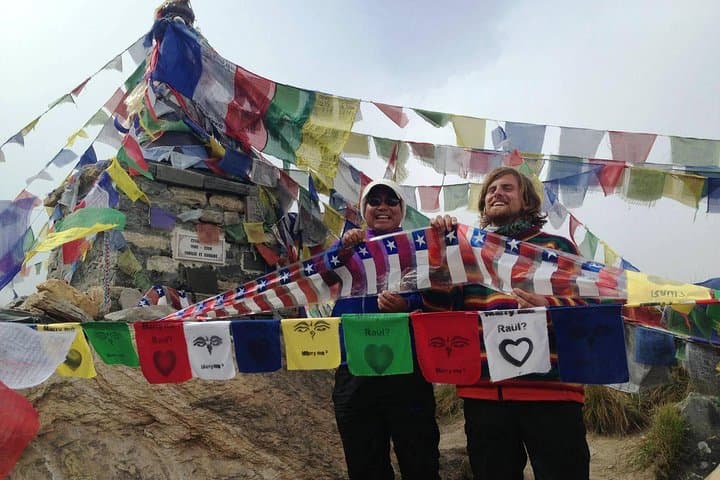
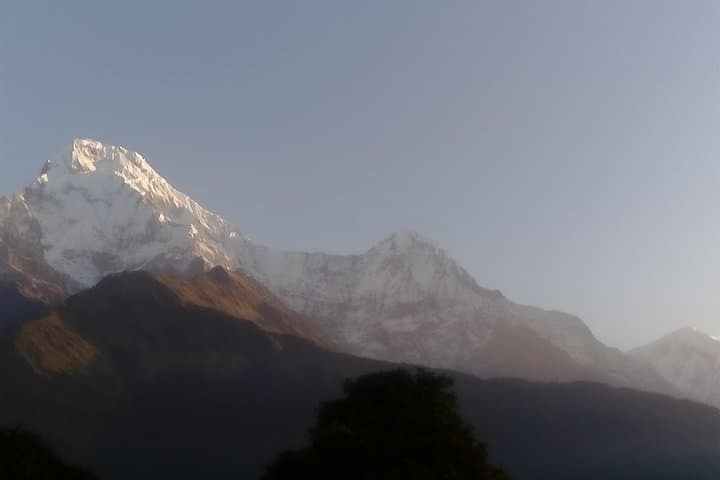
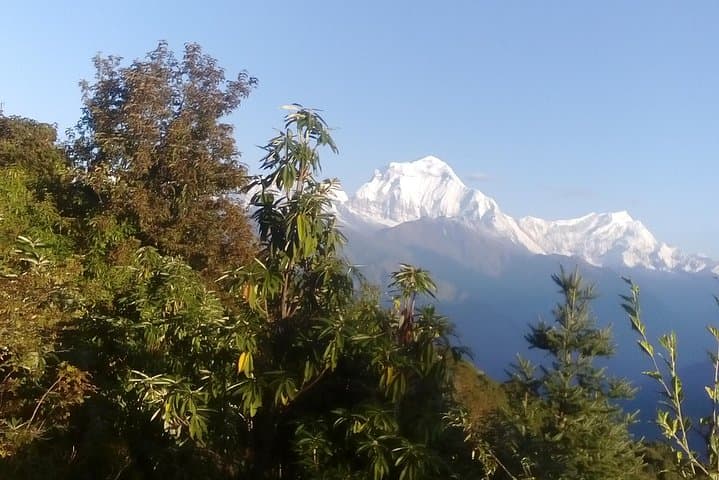
This route threads the Annapurna Sanctuary — a glacially carved amphitheater of peaks including Annapurna I (8,091 m), Annapurna South, Gangapurna and Machhapuchhre (Fishtail). The trail is part cultural corridor: traditional Gurung settlements like Ghandruk offer stone houses, prayer flags and local tea houses. Geologically the basin is young Himalaya: steep, folded rock and active erosion produce the narrow Modi Khola valley you'll cross repeatedly.
Expect steady uphill days (net gain ~3,000 m across the trek) with long sections of stone steps, muddy trails after rain, and high-altitude scree near basecamp. Typical stages run 4–7 hours daily; Machhapuchhre/Annapurna Base Camp sits above 3,700–4,100 m, so watch for altitude symptoms. Facilities are basic but reliable: teahouse lodges, simple meals, and hot springs down-valley at Jhinu.
Practical edge: pack layered insulation for night temperatures, a sturdy sole for wet stone staircases, water treatment and a small first-aid kit. Plan itinerary to allow an easy day for acclimatization, start early when alpine views are clearest, and register with the Annapurna Conservation Area Project — the trail is stunning, but the mountain demands respect.
challenging.
6–7 days.
Good cardiovascular fitness and strong legs for sustained uphill hours; prior multi-day hiking experience recommended
Yes—foreigners must carry an Annapurna Conservation Area Permit (ACAP) and a Trekker’s Information Management System (TIMS) card; these are arranged in Pokhara.
Annapurna Base Camp and nearby Machhapuchhre Base Camp sit roughly between 3,700–4,130 m, depending on exact itinerary stops.
Physically fit beginners with prior day-hiking experience may manage, but the pace and altitude make it more appropriate for trekkers with multi-day experience or guided support.
Teahouses offer basic dorm or private rooms and simple cooked meals (dal bhat, noodles, soups); evenings are communal and heating is limited at higher elevations.
The trail passes Gurung villages that have long acted as trade and pastoral stops; the Annapurna Conservation Area was the first and largest protected area managed with community involvement in Nepal.
The Annapurna Conservation Area Project (ACAP) regulates permits and supports waste management and sustainable tourism—carry out all litter and minimize single-use plastics.
Mega Mount Trekking Expedition P. Ltd operates guided outdoor trips and adventures with an emphasis on safety, stewardship, and memorable experiences.
You step out of Pokhara's early light into a bus that snakes toward the foothills, then trade the road for stone staircases and terraces. The first day rises from 1,130 m at Kade through green rice bowls and Gurung villages; by mid-trek the valley tightens, rivers dare you across suspension bridges, and the massif above tightens into a ring of snow and rock.
You step out of Pokhara's early light into a bus that snakes toward the foothills, then trade the road for stone staircases and terraces. The first day rises from 1,130 m at Kade through green rice bowls and Gurung villages; by mid-trek the valley tightens, rivers dare you across suspension bridges, and the massif above tightens into a ring of snow and rock.
This route threads the Annapurna Sanctuary — a glacially carved amphitheater of peaks including Annapurna I (8,091 m), Annapurna South, Gangapurna and Machhapuchhre (Fishtail). The trail is part cultural corridor: traditional Gurung settlements like Ghandruk offer stone houses, prayer flags and local tea houses. Geologically the basin is young Himalaya: steep, folded rock and active erosion produce the narrow Modi Khola valley you'll cross repeatedly.
Expect steady uphill days (net gain ~3,000 m across the trek) with long sections of stone steps, muddy trails after rain, and high-altitude scree near basecamp. Typical stages run 4–7 hours daily; Machhapuchhre/Annapurna Base Camp sits above 3,700–4,100 m, so watch for altitude symptoms. Facilities are basic but reliable: teahouse lodges, simple meals, and hot springs down-valley at Jhinu.
Practical edge: pack layered insulation for night temperatures, a sturdy sole for wet stone staircases, water treatment and a small first-aid kit. Plan itinerary to allow an easy day for acclimatization, start early when alpine views are clearest, and register with the Annapurna Conservation Area Project — the trail is stunning, but the mountain demands respect.