THE ADVENTURE COLLECTIVE® · Independent discovery and booking for outdoor travel

A seven-day trek into the Annapurna Sanctuary that moves from terraced farmland to a glacier-carved amphitheater beneath towering peaks. This guide covers terrain, culture, and the practical steps to prepare for 4,130 m altitude and multi-day tea-house trekking.
A seven-day trek into the Annapurna Sanctuary that moves from terraced farmland to a glacier-carved amphitheater beneath towering peaks. This guide covers terrain, culture, and the practical steps to prepare for 4,130 m altitude and multi-day tea-house trekking.
Dawn peels back the night at Annapurna Base Camp and the range answers in shards of light — Machhapuchhre (“Fish Tail”) cutting the sky while glaciers glint like old metal.
Verified experiences and guided adventures in the surrounding area.
Operated by Nepal High Trek & Expedition Pvt. Ltd · Pokhara, Gandaki Province
Dawn peels back the night at Annapurna Base Camp and the range answers in shards of light — Machhapuchhre (“Fish Tail”) cutting the sky while glaciers glint like old metal.
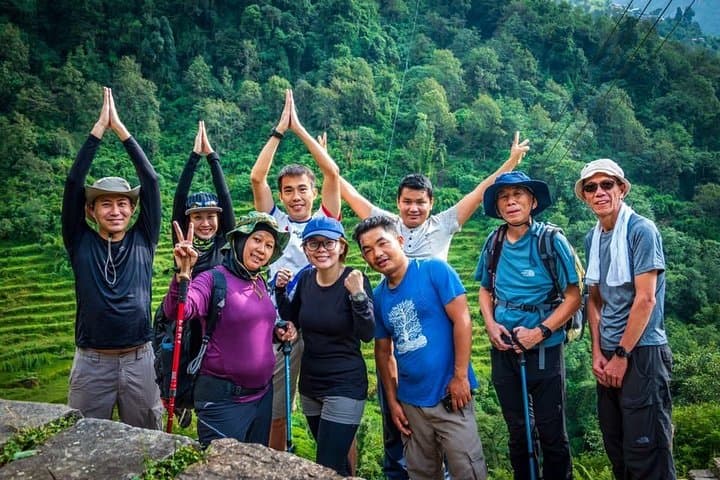
The route threads from Nayapul through terraced farms and rhododendron forest, climbs stone staircases past Gurung villages, and finally opens into the broad amphitheater of the Annapurna Sanctuary. Geologically the landscape is young: uplifted Himalayan strata, cirques carved by glaciers and steep moraine channels that demand steady footing. Culturally the trail runs through Gurung country; tea houses serve dal bhat and stories, and local guides hold the permits (ACAP and TIMS) that keep this region regulated.
Expect varied terrain — packed stone steps, singletrack through bamboo gullies, river fords and alpine scree — with a maximum altitude of about 4,130 m at base camp. Typical round-trip distance for the classic 7-day itinerary is roughly 60–80 km depending on approaches, with cumulative elevation gain of ~3,000 m from trailheads. Weather shifts fast: clear mornings can give way to afternoon snow or high winds.
Practical edge: acclimatize on the way up, drink 3–4 liters daily, carry layered insulation and a reliable headlamp, and trust a local mountain guide. Aim for spring (March–May) or fall (Sept–Nov) for the best visibility and services in tea houses. Move deliberately on steep stone steps and anywhere the trail narrows; altitude, not distance, is the real challenge.
moderate.
7 days.
Moderately fit — regular cardio and stair/hill training for several weeks before the trek will make days of 5–8 hours manageable.
Yes — you need an Annapurna Conservation Area Project (ACAP) permit and a TIMS card; guides or operators typically arrange these before you enter the sanctuary.
Spring (March–May) and fall (September–November) offer the most stable weather and clear mountain views; winter is cold with possible heavy snow and summer brings monsoon rain and leeches at lower elevations.
ABC sits around 4,130 m; altitude sickness is possible — ascend slowly, hydrate, and recognize symptoms early; descend if symptoms worsen.
Yes — the route uses tea houses and lodges offering basic twin rooms and three meals a day, but standards vary and hot showers or charging can incur extra fees.
The Annapurna Sanctuary was formally protected with the creation of the Annapurna Conservation Area (ACAP) in the 1980s, which balances tourism and local livelihoods in Gurung communities.
ACAP manages permits and trail upkeep; minimize impact by carrying out waste, using refillable water systems and supporting local teahouses.
Nepal High Trek & Expedition Pvt. Ltd operates guided outdoor trips and adventures with an emphasis on safety, stewardship, and memorable experiences.
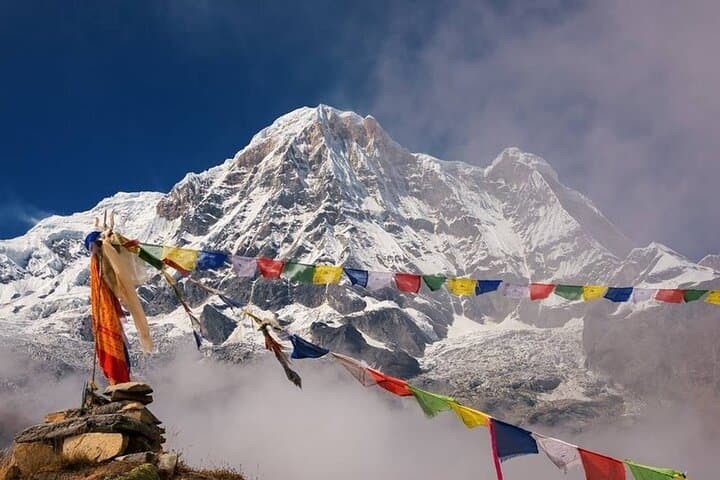
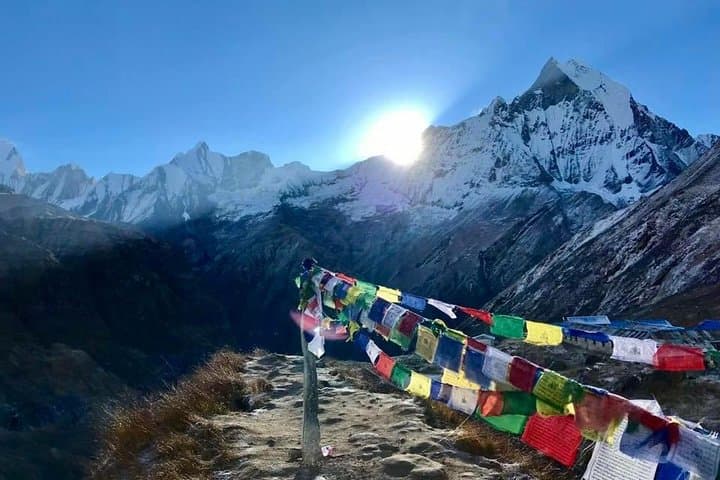
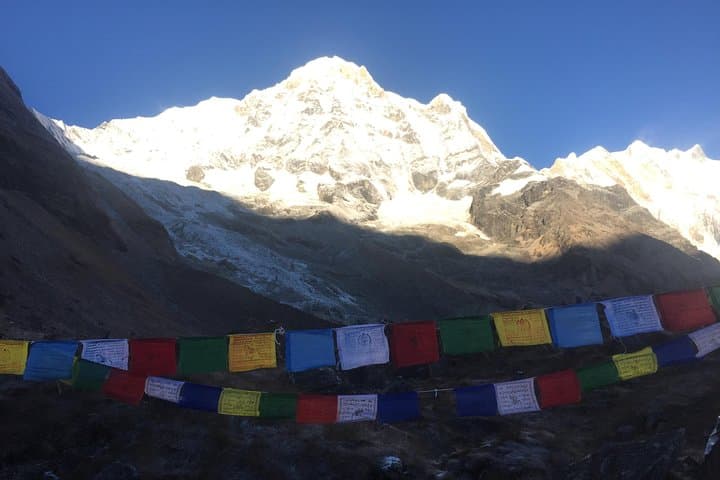
Dawn peels back the night at Annapurna Base Camp and the range answers in shards of light — Machhapuchhre (“Fish Tail”) cutting the sky while glaciers glint like old metal.
Dawn peels back the night at Annapurna Base Camp and the range answers in shards of light — Machhapuchhre (“Fish Tail”) cutting the sky while glaciers glint like old metal.
The route threads from Nayapul through terraced farms and rhododendron forest, climbs stone staircases past Gurung villages, and finally opens into the broad amphitheater of the Annapurna Sanctuary. Geologically the landscape is young: uplifted Himalayan strata, cirques carved by glaciers and steep moraine channels that demand steady footing. Culturally the trail runs through Gurung country; tea houses serve dal bhat and stories, and local guides hold the permits (ACAP and TIMS) that keep this region regulated.
Expect varied terrain — packed stone steps, singletrack through bamboo gullies, river fords and alpine scree — with a maximum altitude of about 4,130 m at base camp. Typical round-trip distance for the classic 7-day itinerary is roughly 60–80 km depending on approaches, with cumulative elevation gain of ~3,000 m from trailheads. Weather shifts fast: clear mornings can give way to afternoon snow or high winds.
Practical edge: acclimatize on the way up, drink 3–4 liters daily, carry layered insulation and a reliable headlamp, and trust a local mountain guide. Aim for spring (March–May) or fall (Sept–Nov) for the best visibility and services in tea houses. Move deliberately on steep stone steps and anywhere the trail narrows; altitude, not distance, is the real challenge.