THE ADVENTURE COLLECTIVE® · Independent discovery and booking for outdoor travel

An 11‑day teahouse trek to Annapurna Base Camp that moves from terraced farms through rhododendron forests to a glacial bowl beneath Annapurna and Machhapuchhre. Expect long days on stone steps, village hospitality, and high‑altitude panoramas.
An 11‑day teahouse trek to Annapurna Base Camp that moves from terraced farms through rhododendron forests to a glacial bowl beneath Annapurna and Machhapuchhre. Expect long days on stone steps, village hospitality, and high‑altitude panoramas.
Clouds peel back to reveal the jagged ridgeline of Annapurna South and the mirror‑sharp face of Machhapuchhre — the mountains seem to watch every step as the trail climbs. Early mornings on the route bring the scent of wood smoke from teahouses and the clack of porter boots on stone steps, while rivers braid below, daring walkers to keep pace.
Verified experiences and guided adventures in the surrounding area.
Operated by Alpine Club of Himalaya · Pokhara, Gandaki Province
Clouds peel back to reveal the jagged ridgeline of Annapurna South and the mirror‑sharp face of Machhapuchhre — the mountains seem to watch every step as the trail climbs. Early mornings on the route bring the scent of wood smoke from teahouses and the clack of porter boots on stone steps, while rivers braid below, daring walkers to keep pace.
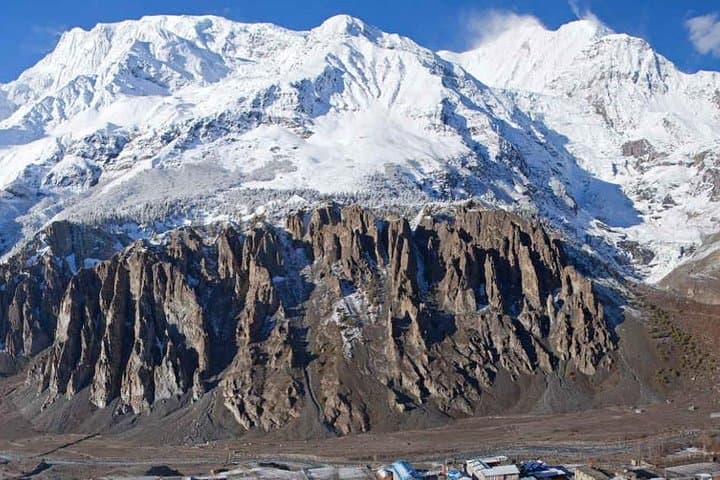
This 11‑day teahouse trek follows century‑old Himalaya trails forged by local Gurung and Magar communities who farm the terraced slopes and guide climbers. Geologically the route threads glacial valleys carved by ice and rivers, with moraine fields and cirques near base camp that mark the high‑altitude landscape. Culturally, villages like Ghandruk and Chhomrong offer insights into hill farming, local temples, and homestay hospitality.
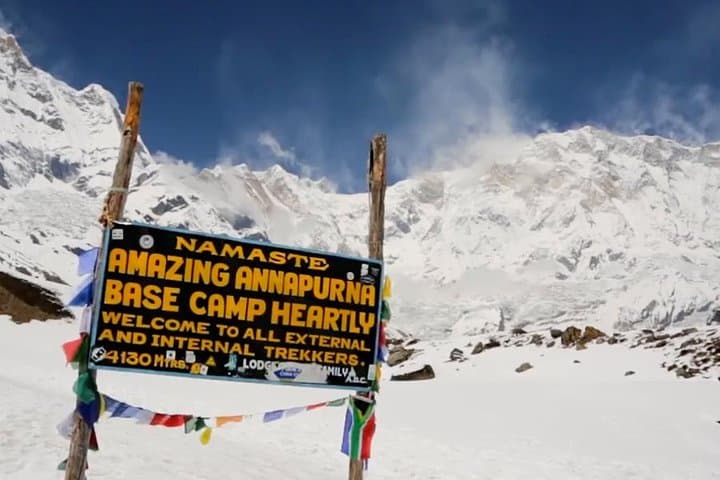
Expect hand‑built stone steps, rhododendron and oak forests lower down, and open moraines above 3,000 m. Daily walking ranges from 3–8 hours; the high point is Annapurna Base Camp at about 4,130 m. Accommodation is teahouse/guesthouse style; basic but ample for dry kit and hot meals. Porters are commonly used for comfort and are included here on a 2:1 trekker:porter ratio.
Practical edge: acclimatize with slow ascents and rest days, prioritize layered clothing for wide temperature swings, and use sturdy boots with good ankle support for long descents. Autumn (Sept–Nov) and spring (Mar–May) offer the most stable weather and visibility; winter gives solitude but severe cold, and monsoon brings heavy rain and slippery trails. With preparation, this trek is a demanding but achievable Himalayan introduction that delivers close‑up mountain theater and living cultural encounters.
challenging.
11 days.
Requires good aerobic fitness and experience with multi‑day hikes; able to walk 4–8 hours on uneven terrain and handle altitude gain.
Annapurna Base Camp sits at roughly 4,130 m (13,545 ft); the itinerary also crosses Machhapuchhre Base Camp around 3,700 m.
Teahouses are basic guesthouses offering shared rooms, simple hot meals, and charging facilities—expect rustic comfort rather than luxury.
Guides are recommended for navigation, permits, and cultural context; porters reduce load and help prevent altitude strain—this trip includes porter service at a 2:1 ratio.
Autumn (Sept–Nov) and spring (Mar–May) provide the most stable weather and clear mountain views; winter is colder but less crowded, while monsoon brings rain and slippery trails.
The trail follows traditional trade and shepherding routes used by Gurung and Magar communities; villages along the way retain distinct festivals and stone architecture.
Trail rescue, waste management, and controlled teahouse development are priorities; travelers should pack out non‑biodegradable waste and respect local water use.
Alpine Club of Himalaya operates guided outdoor trips and adventures with an emphasis on safety, stewardship, and memorable experiences.
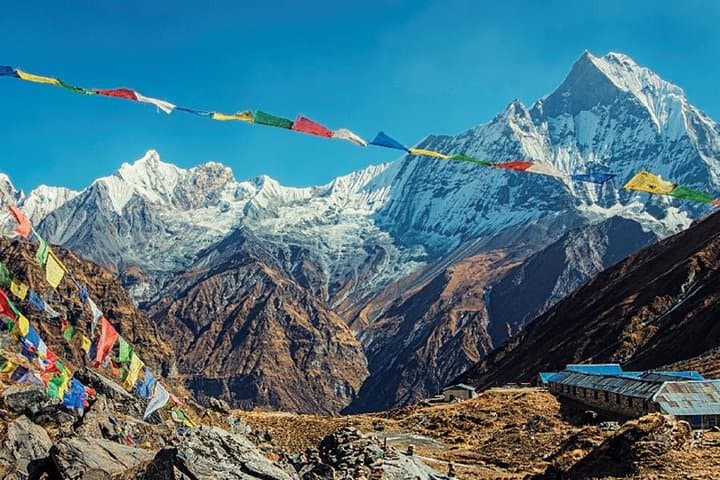
Clouds peel back to reveal the jagged ridgeline of Annapurna South and the mirror‑sharp face of Machhapuchhre — the mountains seem to watch every step as the trail climbs. Early mornings on the route bring the scent of wood smoke from teahouses and the clack of porter boots on stone steps, while rivers braid below, daring walkers to keep pace.
Clouds peel back to reveal the jagged ridgeline of Annapurna South and the mirror‑sharp face of Machhapuchhre — the mountains seem to watch every step as the trail climbs. Early mornings on the route bring the scent of wood smoke from teahouses and the clack of porter boots on stone steps, while rivers braid below, daring walkers to keep pace.
This 11‑day teahouse trek follows century‑old Himalaya trails forged by local Gurung and Magar communities who farm the terraced slopes and guide climbers. Geologically the route threads glacial valleys carved by ice and rivers, with moraine fields and cirques near base camp that mark the high‑altitude landscape. Culturally, villages like Ghandruk and Chhomrong offer insights into hill farming, local temples, and homestay hospitality.
Expect hand‑built stone steps, rhododendron and oak forests lower down, and open moraines above 3,000 m. Daily walking ranges from 3–8 hours; the high point is Annapurna Base Camp at about 4,130 m. Accommodation is teahouse/guesthouse style; basic but ample for dry kit and hot meals. Porters are commonly used for comfort and are included here on a 2:1 trekker:porter ratio.
Practical edge: acclimatize with slow ascents and rest days, prioritize layered clothing for wide temperature swings, and use sturdy boots with good ankle support for long descents. Autumn (Sept–Nov) and spring (Mar–May) offer the most stable weather and visibility; winter gives solitude but severe cold, and monsoon brings heavy rain and slippery trails. With preparation, this trek is a demanding but achievable Himalayan introduction that delivers close‑up mountain theater and living cultural encounters.