THE ADVENTURE COLLECTIVE® · Independent discovery and booking for outdoor travel

A 10‑day circuit from Pokhara to Annapurna Base Camp that mixes traditional teahouse trekking, steep stone steps and high‑alpine panoramas. This practical guide outlines what to expect on trail, how to prepare for altitude, and why timing matters for views.
A 10‑day circuit from Pokhara to Annapurna Base Camp that mixes traditional teahouse trekking, steep stone steps and high‑alpine panoramas. This practical guide outlines what to expect on trail, how to prepare for altitude, and why timing matters for views.
The trail opens with Pokhara’s lake mist dissolving as your jeep climbs toward Nayapul — prayer flags flutter and rhododendron slopes lean over a single-file path. Each day the Himalaya pulls closer: Machhapuchhre’s knife-edge silhouette arrives first, then the great amphitheater of Annapurna itself, until you stand at ABC (4,130 m) with stone underfoot and a ring of white peaks watching.
Verified experiences and guided adventures in the surrounding area.
Operated by Himalayan Recreation Treks & Expedition Pvt.Ltd · Pokhara, Gandaki Province
The trail opens with Pokhara’s lake mist dissolving as your jeep climbs toward Nayapul — prayer flags flutter and rhododendron slopes lean over a single-file path. Each day the Himalaya pulls closer: Machhapuchhre’s knife-edge silhouette arrives first, then the great amphitheater of Annapurna itself, until you stand at ABC (4,130 m) with stone underfoot and a ring of white peaks watching.
This route threads traditional Gurung and Magar villages, old trade paths and terraced rice fields, inside the Annapurna Conservation Area — Nepal’s pioneering protected landscape. Geologically the route climbs from Siwalik foothills through mid-hill schists into high glacial cirques carved by ice and time; culturally you pass mani walls, tea houses and mountain shrines that mark travelers’ lives.
Expect varied terrain: slate steps, bamboo forests, river crossings, and steep scree near base camp. Weather can swing fast; clear mornings yield the best views while afternoons bring cloud build-up. Guides here are local, and teahouse logistics keep the pack-light ethos afloat.
Practical guidance: pace for altitude — move slowly above 2,500 m, drink often, and sleep earlier to aid acclimatization. Footwear with aggressive tread and ankle support is vital; carry a warm down layer for night at ABC. Plan buffer days in Pokhara for weather or acclimatization, and secure permits through your operator (ACAP) before you head out. Treat the sanctuary with respect: stick to trails, use refillable bottles, and pack out plastics where possible. The trek is demanding but straightforward in navigation — it rewards measured effort with some of the most immediate, vertical Himalayan panoramas in Nepal.
challenging.
10 days.
Good cardiovascular fitness with prior multi‑day hiking experience and the ability to handle successive days of uphill and altitude gain.
Yes — the trek passes through the Annapurna Conservation Area and requires an ACAP permit and TIMS card; your operator typically arranges these.
Physically fit beginners can complete it with proper preparation, but prior multi‑day hiking experience and time for acclimatization are strongly recommended.
Teahouses provide basic rooms with shared or simple private facilities, hot meals and limited hot water; expect simple bedding and communal dining.
Autumn (Sept–Nov) and spring (Mar–May) offer the clearest skies and stable conditions, with spring also showcasing rhododendron blooms.
The Annapurna Conservation Area, created in 1986, balances conservation and community livelihoods, protecting glacial catchments and traditional mountain cultures such as the Gurung and Magar settlements along the trail.
Visitors should follow ACAP rules: stay on trails, minimize single‑use plastics, use refill stations in Pokhara, and favor local teahouses to support community-based tourism.
Himalayan Recreation Treks & Expedition Pvt.Ltd operates guided outdoor trips and adventures with an emphasis on safety, stewardship, and memorable experiences.
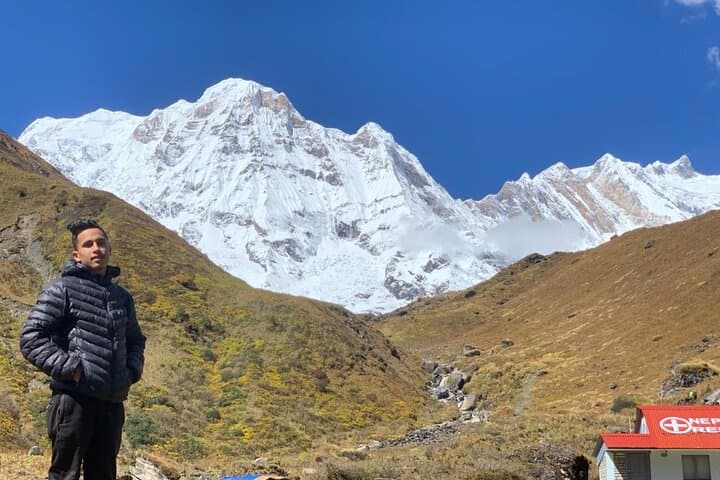
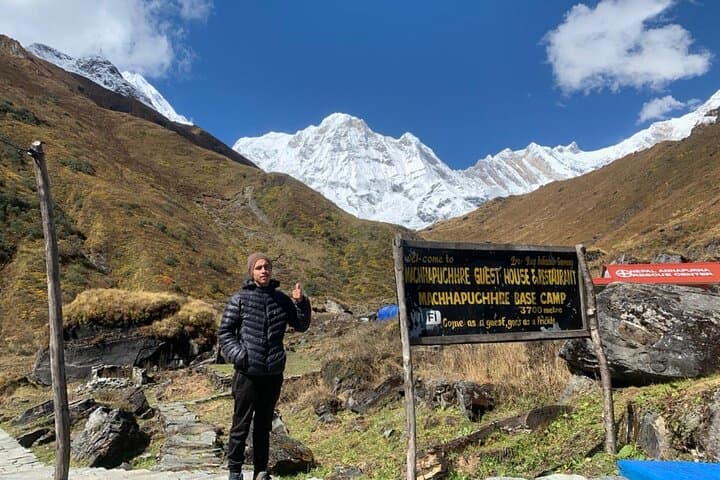
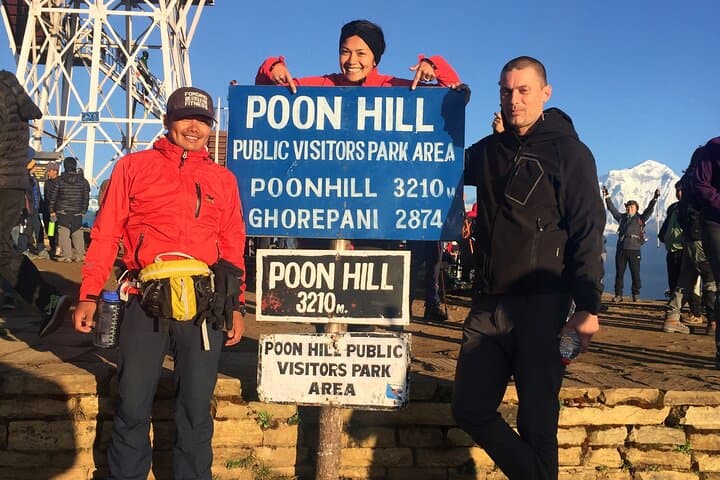
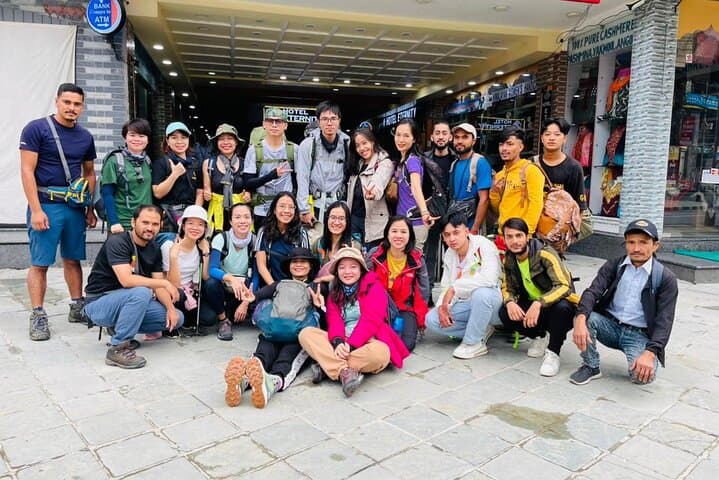
The trail opens with Pokhara’s lake mist dissolving as your jeep climbs toward Nayapul — prayer flags flutter and rhododendron slopes lean over a single-file path. Each day the Himalaya pulls closer: Machhapuchhre’s knife-edge silhouette arrives first, then the great amphitheater of Annapurna itself, until you stand at ABC (4,130 m) with stone underfoot and a ring of white peaks watching.
The trail opens with Pokhara’s lake mist dissolving as your jeep climbs toward Nayapul — prayer flags flutter and rhododendron slopes lean over a single-file path. Each day the Himalaya pulls closer: Machhapuchhre’s knife-edge silhouette arrives first, then the great amphitheater of Annapurna itself, until you stand at ABC (4,130 m) with stone underfoot and a ring of white peaks watching.
This route threads traditional Gurung and Magar villages, old trade paths and terraced rice fields, inside the Annapurna Conservation Area — Nepal’s pioneering protected landscape. Geologically the route climbs from Siwalik foothills through mid-hill schists into high glacial cirques carved by ice and time; culturally you pass mani walls, tea houses and mountain shrines that mark travelers’ lives.
Expect varied terrain: slate steps, bamboo forests, river crossings, and steep scree near base camp. Weather can swing fast; clear mornings yield the best views while afternoons bring cloud build-up. Guides here are local, and teahouse logistics keep the pack-light ethos afloat.
Practical guidance: pace for altitude — move slowly above 2,500 m, drink often, and sleep earlier to aid acclimatization. Footwear with aggressive tread and ankle support is vital; carry a warm down layer for night at ABC. Plan buffer days in Pokhara for weather or acclimatization, and secure permits through your operator (ACAP) before you head out. Treat the sanctuary with respect: stick to trails, use refillable bottles, and pack out plastics where possible. The trek is demanding but straightforward in navigation — it rewards measured effort with some of the most immediate, vertical Himalayan panoramas in Nepal.