THE ADVENTURE COLLECTIVE® · Independent discovery and booking for outdoor travel

Skip days of trekking and fly from Pokhara to Annapurna Base Camp in a single morning. This helicopter tour delivers sweeping Himalayan panoramas and a short landing at 4,130 m for up-close mountain views.
Skip days of trekking and fly from Pokhara to Annapurna Base Camp in a single morning. This helicopter tour delivers sweeping Himalayan panoramas and a short landing at 4,130 m for up-close mountain views.
The helicopter settles above a sea of ridgelines and rice terraces and the Annapurna massif pushes its teeth through the clouds. From the window the valley falls away in alternating bands of green and grey; villagers, rivers and switchback trails shrink to thread beneath you. In under an hour you land at Annapurna Base Camp (4,130 m) — a wind-swept amphitheater at the foot of Mount Annapurna where glacier-carved rock faces and permanent snow demand attention.
Verified experiences and guided adventures in the surrounding area.
Operated by Worldwide Tourism Inc - Highly Recommended Travel Company · Pokhara, Gandaki Province
The helicopter settles above a sea of ridgelines and rice terraces and the Annapurna massif pushes its teeth through the clouds. From the window the valley falls away in alternating bands of green and grey; villagers, rivers and switchback trails shrink to thread beneath you. In under an hour you land at Annapurna Base Camp (4,130 m) — a wind-swept amphitheater at the foot of Mount Annapurna where glacier-carved rock faces and permanent snow demand attention.
The Annapurna massif was the site of the first 8,000-meter summit ascent in 1950 and the sanctuary below has long been a meeting point of Gurung villages, Buddhist prayer flags, and hardy alpine ecology. Geologically, the region is young Himalaya — uplifted schists and gneiss shaped by glacial action — so expect steep moraine slopes and sudden weather swings. Culturally, Pokhara remains the gateway: a city of lakefront bazaars and teahouses that provide the logistical backbone for flights and treks.
Practical guidance: the total excursion runs about 3–4 hours including transfers and pre-flight checks; actual air time is roughly 40–60 minutes round trip with a 20–30 minute landing window at ABC. Dress in warm layers and windproof outerwear — temperatures at the landing can be sharply colder than in Pokhara. Bring a camera with a fast shutter, sunglasses for glare off snow, and any required medication for altitude sensitivity. Operators typically request passenger weights and confirmation 24–48 hours in advance; weather can force last-minute changes.
This tour is the quickest, least technical way to experience the Annapurna Sanctuary: dramatic, high-altitude viewing with minimal effort on the ground, but with real exposure to mountain weather and thin air.
easy.
3–4 hours.
Minimal fitness required—sitting tolerance and ability to transfer in/out of the helicopter are sufficient.
Round-trip flying time is typically 40–60 minutes, with total tour time including transfers and check-in around 3–4 hours.
Landing at 4,130 m can produce mild symptoms for some—if you have a history of altitude issues, consult your doctor and bring medication.
Yes, operators request passenger weights for balance and seating; provide accurate weights at booking and during check-in.
Flights are weather-dependent—operators usually offer refunds or rebookings; confirm cancellation policy and timing before booking.
Annapurna I was the first 8,000‑meter peak climbed in 1950; the sanctuary below has long been traversed by Gurung communities and mule caravans.
The Sanctuary is sensitive to human impact—minimize waste, avoid disturbing local prayer flags or cairns, and follow operator guidance on landing areas to reduce erosion and noise disturbance.
Worldwide Tourism Inc - Highly Recommended Travel Company operates guided outdoor trips and adventures with an emphasis on safety, stewardship, and memorable experiences.
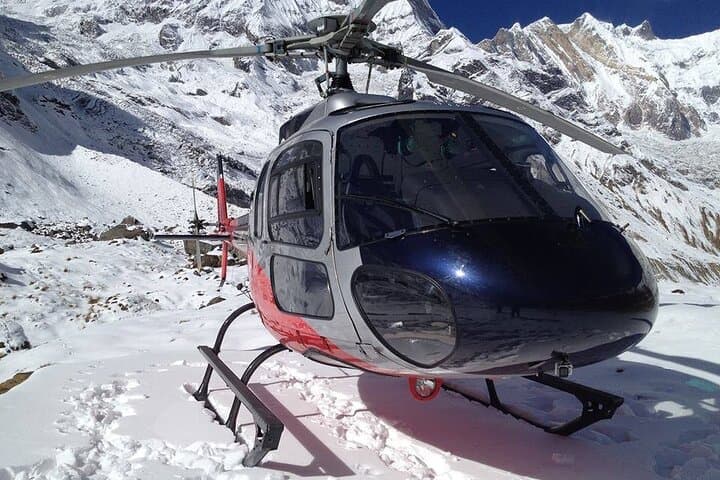
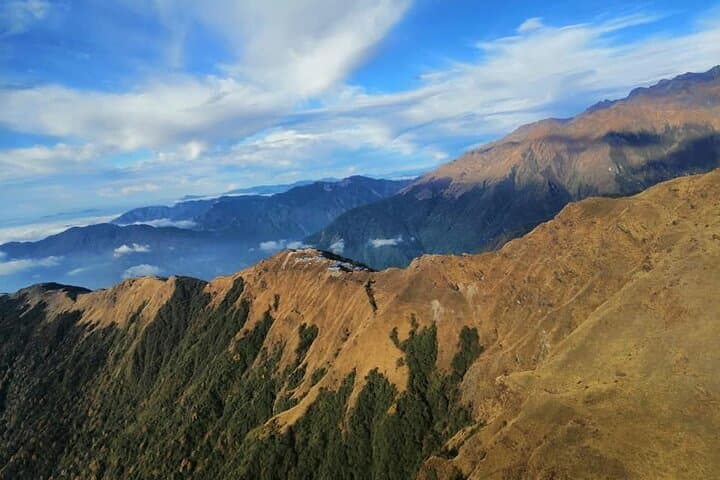
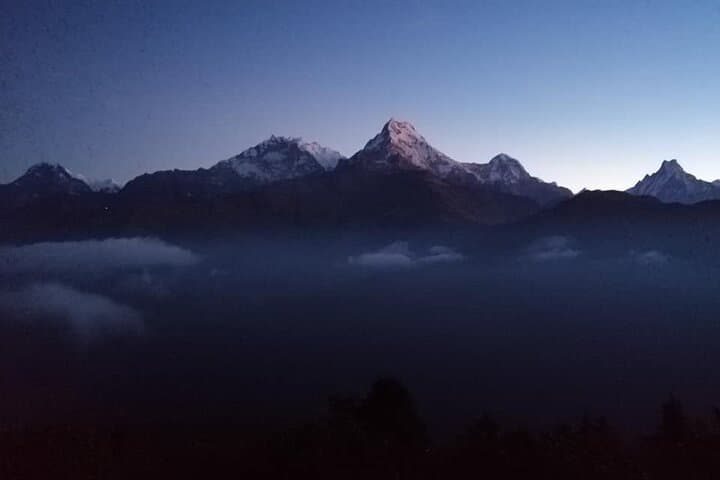
The helicopter settles above a sea of ridgelines and rice terraces and the Annapurna massif pushes its teeth through the clouds. From the window the valley falls away in alternating bands of green and grey; villagers, rivers and switchback trails shrink to thread beneath you. In under an hour you land at Annapurna Base Camp (4,130 m) — a wind-swept amphitheater at the foot of Mount Annapurna where glacier-carved rock faces and permanent snow demand attention.
The helicopter settles above a sea of ridgelines and rice terraces and the Annapurna massif pushes its teeth through the clouds. From the window the valley falls away in alternating bands of green and grey; villagers, rivers and switchback trails shrink to thread beneath you. In under an hour you land at Annapurna Base Camp (4,130 m) — a wind-swept amphitheater at the foot of Mount Annapurna where glacier-carved rock faces and permanent snow demand attention.
The Annapurna massif was the site of the first 8,000-meter summit ascent in 1950 and the sanctuary below has long been a meeting point of Gurung villages, Buddhist prayer flags, and hardy alpine ecology. Geologically, the region is young Himalaya — uplifted schists and gneiss shaped by glacial action — so expect steep moraine slopes and sudden weather swings. Culturally, Pokhara remains the gateway: a city of lakefront bazaars and teahouses that provide the logistical backbone for flights and treks.
Practical guidance: the total excursion runs about 3–4 hours including transfers and pre-flight checks; actual air time is roughly 40–60 minutes round trip with a 20–30 minute landing window at ABC. Dress in warm layers and windproof outerwear — temperatures at the landing can be sharply colder than in Pokhara. Bring a camera with a fast shutter, sunglasses for glare off snow, and any required medication for altitude sensitivity. Operators typically request passenger weights and confirmation 24–48 hours in advance; weather can force last-minute changes.
This tour is the quickest, least technical way to experience the Annapurna Sanctuary: dramatic, high-altitude viewing with minimal effort on the ground, but with real exposure to mountain weather and thin air.