THE ADVENTURE COLLECTIVE® · Independent discovery and booking for outdoor travel

Experience Angkor's highlights with a private licensed guide and air‑conditioned SUV. This 5–6 hour circuit focuses on Angkor Wat, Ta Prohm, the Bayon and a quieter temple—optimized to dodge crowds and deepen context.
Experience Angkor's highlights with a private licensed guide and air‑conditioned SUV. This 5–6 hour circuit focuses on Angkor Wat, Ta Prohm, the Bayon and a quieter temple—optimized to dodge crowds and deepen context.
Dawn light slides over sandstone galleries and the SUV hums down a palm-lined track—this is the pace of a private day through Angkor's major temples. You arrive with a licensed guide who sets the rhythm: quick glances at bas-reliefs, longer pauses beneath carved faces, and time at quieter ruins where roots and masonry argue for attention.
Verified experiences and guided adventures in the surrounding area.
Operated by Around Cambodia Travel · Siem Reap, Siem Reap Province
Dawn light slides over sandstone galleries and the SUV hums down a palm-lined track—this is the pace of a private day through Angkor's major temples. You arrive with a licensed guide who sets the rhythm: quick glances at bas-reliefs, longer pauses beneath carved faces, and time at quieter ruins where roots and masonry argue for attention.
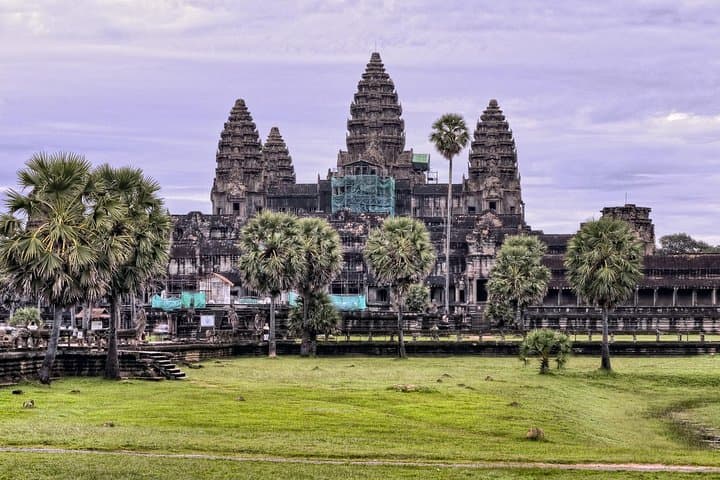
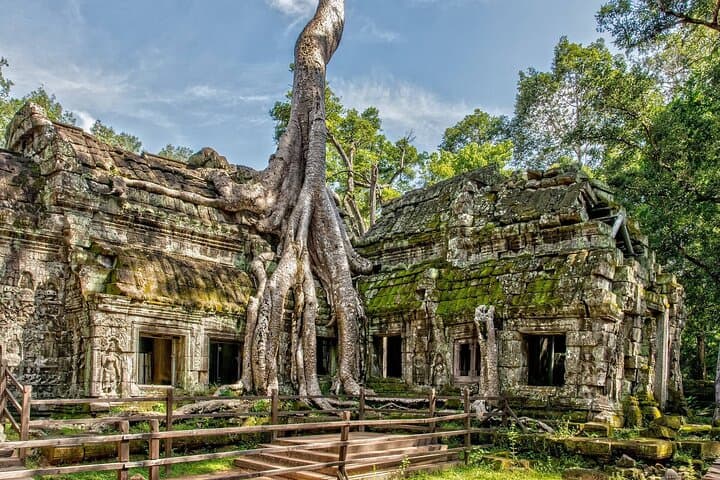
Angkor's monuments span the 9th–13th centuries, built by Khmer kings like Suryavarman II and Jayavarman VII. The stones record political ambition and religious shifts—Hindu shrine to Buddhist state temple—and the Bayon's smiling towers and Angkor Wat's axial geometry show different ideals of sacred space. Geologically, the park sits on sandstone laid down by ancient rivers; heavy monsoon flows and later tree roots have both worn and dramatized the masonry.
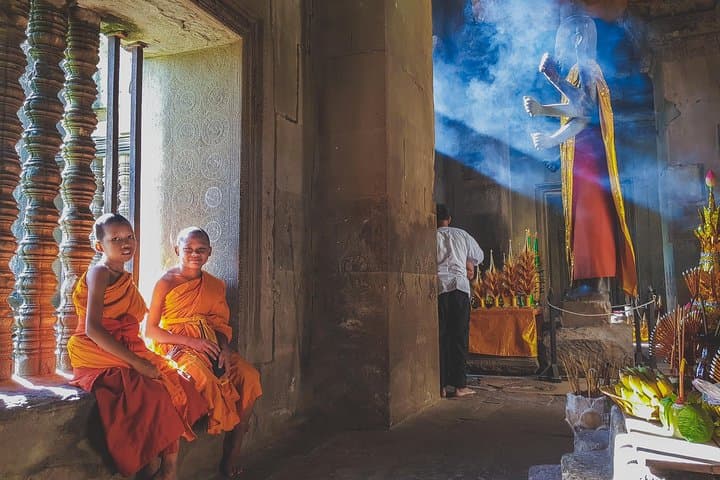
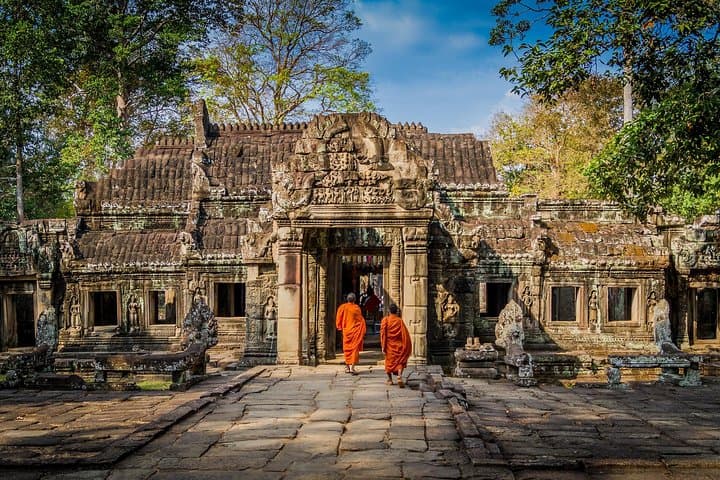
Local culture remains tied to rice cycles and Buddhist practice; you'll often pass rural villages and hear monks' alms rounds at sunrise. The guide's local knowledge helps you read inscriptions, point out iconography, and avoid the busiest corridors.
Practical guidance: this private tour runs about 5–6 hours and covers Angkor Wat, Ta Prohm, Bayon, Pre Rup, plus a lesser-known shrine. Expect uneven stone steps, warm temperatures, and short walks between sites; wear breathable layers and sturdy shoes. Bring cash for your Angkor pass (required), bottled water (some provided), and a camera with extra memory. Midday heat is strongest—schedule temples with your guide to hit major sites early or late to avoid crowds and squinting sun.
moderate.
5–6 hours.
Moderate fitness—able to walk on uneven ground and climb short staircases repeatedly.
Entrance fees are not included in most private tours; your guide can direct you to the ticketing center where single‑day and multi‑day passes are sold.
Many temples have uneven steps and cobbled approaches; accessibility is limited though Angkor Wat has some ramps—check with your provider for tailored assistance.
Photography is allowed at most sites but respect signage around religious rites and avoid flash on delicate bas‑reliefs; drones are restricted without permits.
Expect repeated short walks at each temple (10–30 minutes of walking per stop) and some stair climbing; the private vehicle reduces transfer walking between sites.
Angkor was the seat of the Khmer Empire between the 9th and 15th centuries; temples served both political and religious functions and were periodically reworked by successive rulers.
Conservation at Angkor focuses on stabilizing structures and managing visitor impact; avoid touching carvings, stick to marked paths, and minimize single‑use plastics.
Around Cambodia Travel operates guided outdoor trips and adventures with an emphasis on safety, stewardship, and memorable experiences.
Dawn light slides over sandstone galleries and the SUV hums down a palm-lined track—this is the pace of a private day through Angkor's major temples. You arrive with a licensed guide who sets the rhythm: quick glances at bas-reliefs, longer pauses beneath carved faces, and time at quieter ruins where roots and masonry argue for attention.
Dawn light slides over sandstone galleries and the SUV hums down a palm-lined track—this is the pace of a private day through Angkor's major temples. You arrive with a licensed guide who sets the rhythm: quick glances at bas-reliefs, longer pauses beneath carved faces, and time at quieter ruins where roots and masonry argue for attention.
Angkor's monuments span the 9th–13th centuries, built by Khmer kings like Suryavarman II and Jayavarman VII. The stones record political ambition and religious shifts—Hindu shrine to Buddhist state temple—and the Bayon's smiling towers and Angkor Wat's axial geometry show different ideals of sacred space. Geologically, the park sits on sandstone laid down by ancient rivers; heavy monsoon flows and later tree roots have both worn and dramatized the masonry.
Local culture remains tied to rice cycles and Buddhist practice; you'll often pass rural villages and hear monks' alms rounds at sunrise. The guide's local knowledge helps you read inscriptions, point out iconography, and avoid the busiest corridors.
Practical guidance: this private tour runs about 5–6 hours and covers Angkor Wat, Ta Prohm, Bayon, Pre Rup, plus a lesser-known shrine. Expect uneven stone steps, warm temperatures, and short walks between sites; wear breathable layers and sturdy shoes. Bring cash for your Angkor pass (required), bottled water (some provided), and a camera with extra memory. Midday heat is strongest—schedule temples with your guide to hit major sites early or late to avoid crowds and squinting sun.