THE ADVENTURE COLLECTIVE® · Independent discovery and booking for outdoor travel

Experience Angkor’s highlights in one day: Angkor Wat’s galleries, Bayon’s faces, Ta Prohm’s tree-woven ruins, and a sunset finish at Pre Rup. This practical guide explains what to expect, how to prepare, and local insights to make the most of your day.
Experience Angkor’s highlights in one day: Angkor Wat’s galleries, Bayon’s faces, Ta Prohm’s tree-woven ruins, and a sunset finish at Pre Rup. This practical guide explains what to expect, how to prepare, and local insights to make the most of your day.
You step out of an air-conditioned minivan into the dust and heat of the lowland plains, temple towers rising like stone crowns through the morning haze. Guides lead the way beneath carved lintels, and the first shadows slip across bas-reliefs that still hold the faces of an empire. The day moves from the vast galleries of Angkor Wat to the carved faces of Bayon, through jungle-claimed corridors at Ta Prohm, and finally to Pre Rup where the sky steals color as the temple silhouettes darken.
Verified experiences and guided adventures in the surrounding area.
Operated by Journey Cambodia · Siem Reap, Siem Reap Province
You step out of an air-conditioned minivan into the dust and heat of the lowland plains, temple towers rising like stone crowns through the morning haze. Guides lead the way beneath carved lintels, and the first shadows slip across bas-reliefs that still hold the faces of an empire. The day moves from the vast galleries of Angkor Wat to the carved faces of Bayon, through jungle-claimed corridors at Ta Prohm, and finally to Pre Rup where the sky steals color as the temple silhouettes darken.
These monuments span the Khmer Empire (9th–15th centuries), with Angkor Wat—built in the early 12th century—standing as the largest religious complex ever created. The bedrock here is laterite and sandstone, quarried and transported from nearby ridges; the landscape of reservoirs and canals (barays) reflects a sophisticated hydraulic civilization that shaped both agriculture and ritual.
Local life still orbits the temple zone: markets around Siem Reap hum with produce and lacquerware, while monks move with quiet efficiency. Guides often weave stories of kings, inscriptions, and restoration efforts into the walk.
Practical notes: tours run about 10 hours with hotel pickup in Siem Reap, bottled water and a guide provided. Bring sun protection and closed-toe shoes for uneven steps; shoulders and knees must be covered for temple entry. Purchase your Angkor Pass (entry fee supports conservation) either before or on-site—card payment is available. Expect warm days, cobbled causeways, and plenty of stairs; pace yourself, hydrate frequently, and leave time in the schedule for slower exploration at Ta Prohm and the sunset climb at Pre Rup.
easy.
10 hours.
Suitable for most fitness levels; expect several short walks, uneven ground, and multiple temple stairs.
You can buy the Angkor Pass at the ticket center near the park entrance (card accepted) or pre-purchase; having a pass on arrival saves time.
No—this full-day tour is rated easy, but expect significant walking, uneven ground and stairs; basic mobility is required.
Shoulders and knees must be covered; sleeved shirts and long shorts or sarongs are required—no beachwear.
The tour accepts children aged 8 and up; younger children are generally not permitted on this small-group itinerary.
Angkor’s monuments were constructed by Khmer rulers between the 9th and 15th centuries; Angkor Wat was built in the early 12th century by Suryavarman II and later converted to a Buddhist temple.
Visitor fees fund conservation and community programs; follow signage, avoid touching bas-reliefs, and stick to paths to reduce erosion and wear on fragile stone.
Journey Cambodia operates guided outdoor trips and adventures with an emphasis on safety, stewardship, and memorable experiences.
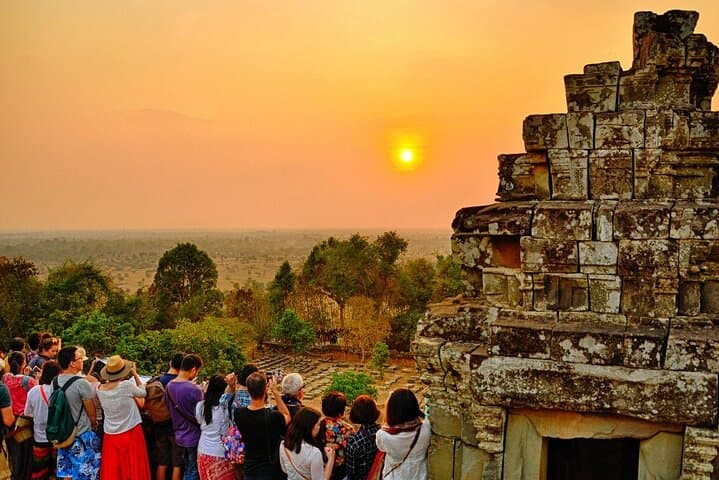
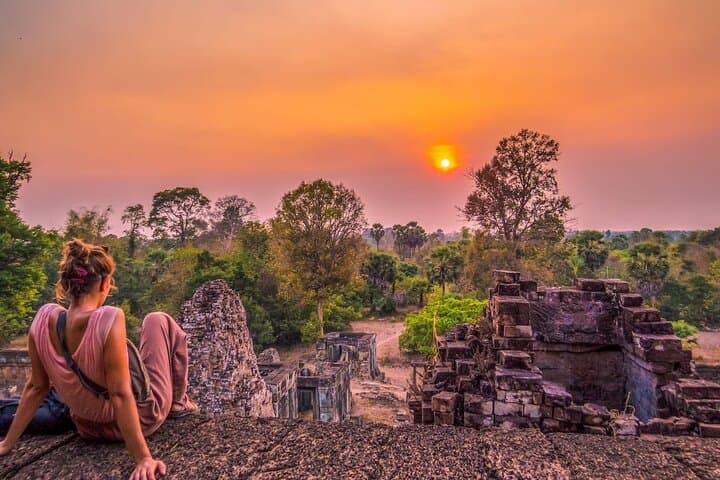
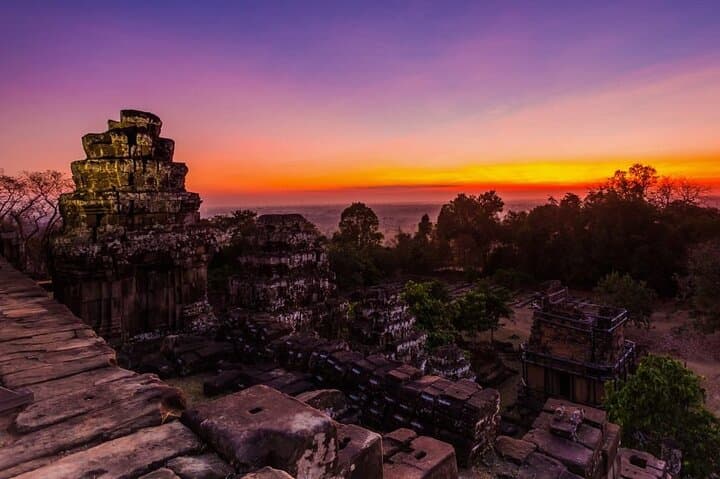

You step out of an air-conditioned minivan into the dust and heat of the lowland plains, temple towers rising like stone crowns through the morning haze. Guides lead the way beneath carved lintels, and the first shadows slip across bas-reliefs that still hold the faces of an empire. The day moves from the vast galleries of Angkor Wat to the carved faces of Bayon, through jungle-claimed corridors at Ta Prohm, and finally to Pre Rup where the sky steals color as the temple silhouettes darken.
You step out of an air-conditioned minivan into the dust and heat of the lowland plains, temple towers rising like stone crowns through the morning haze. Guides lead the way beneath carved lintels, and the first shadows slip across bas-reliefs that still hold the faces of an empire. The day moves from the vast galleries of Angkor Wat to the carved faces of Bayon, through jungle-claimed corridors at Ta Prohm, and finally to Pre Rup where the sky steals color as the temple silhouettes darken.
These monuments span the Khmer Empire (9th–15th centuries), with Angkor Wat—built in the early 12th century—standing as the largest religious complex ever created. The bedrock here is laterite and sandstone, quarried and transported from nearby ridges; the landscape of reservoirs and canals (barays) reflects a sophisticated hydraulic civilization that shaped both agriculture and ritual.
Local life still orbits the temple zone: markets around Siem Reap hum with produce and lacquerware, while monks move with quiet efficiency. Guides often weave stories of kings, inscriptions, and restoration efforts into the walk.
Practical notes: tours run about 10 hours with hotel pickup in Siem Reap, bottled water and a guide provided. Bring sun protection and closed-toe shoes for uneven steps; shoulders and knees must be covered for temple entry. Purchase your Angkor Pass (entry fee supports conservation) either before or on-site—card payment is available. Expect warm days, cobbled causeways, and plenty of stairs; pace yourself, hydrate frequently, and leave time in the schedule for slower exploration at Ta Prohm and the sunset climb at Pre Rup.