THE ADVENTURE COLLECTIVE® · Independent discovery and booking for outdoor travel

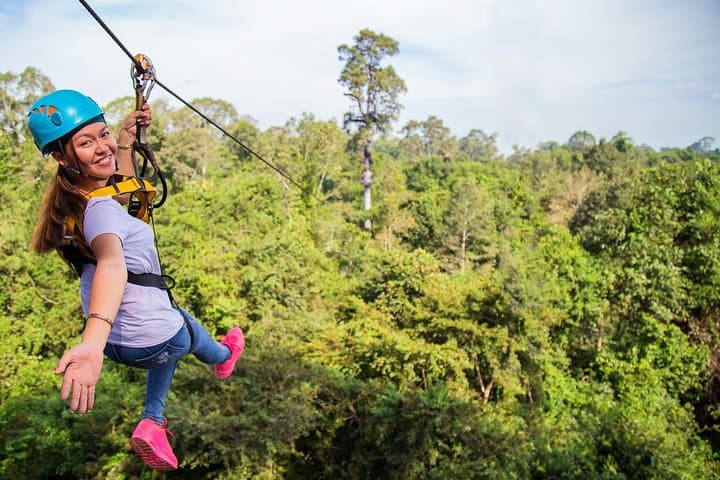
Fly through the treetops above Angkor Archaeological Park on a guided zipline course that pairs adrenaline with on-site history. Small groups, licensed guides and helmeted platforms make this a high-energy way to see the jungle around Angkor.
Fly through the treetops above Angkor Archaeological Park on a guided zipline course that pairs adrenaline with on-site history. Small groups, licensed guides and helmeted platforms make this a high-energy way to see the jungle around Angkor.
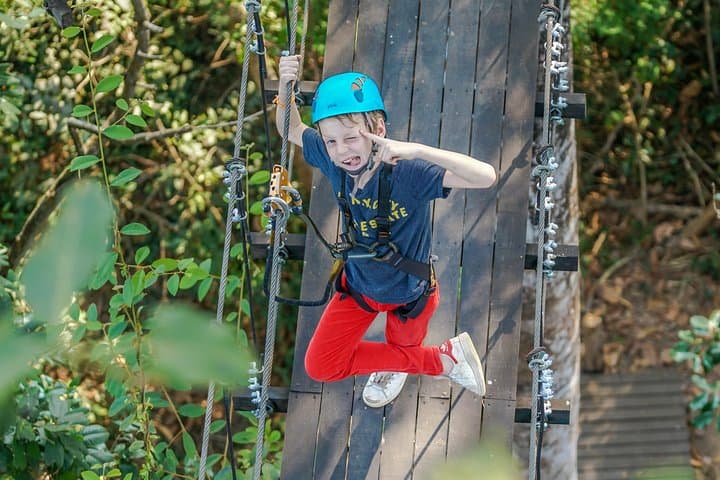
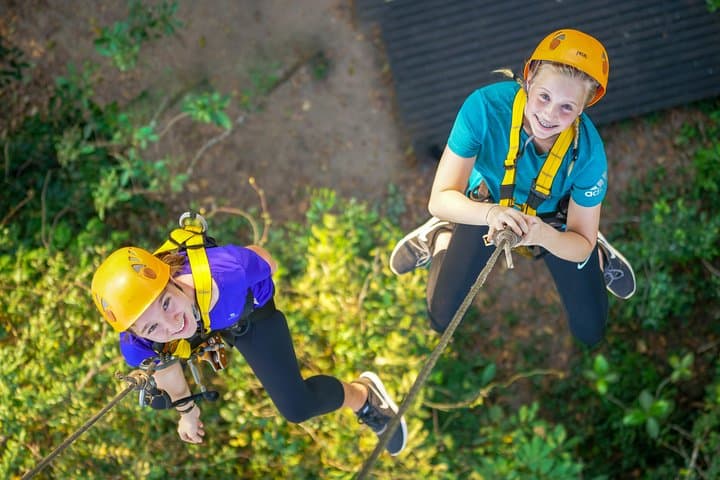
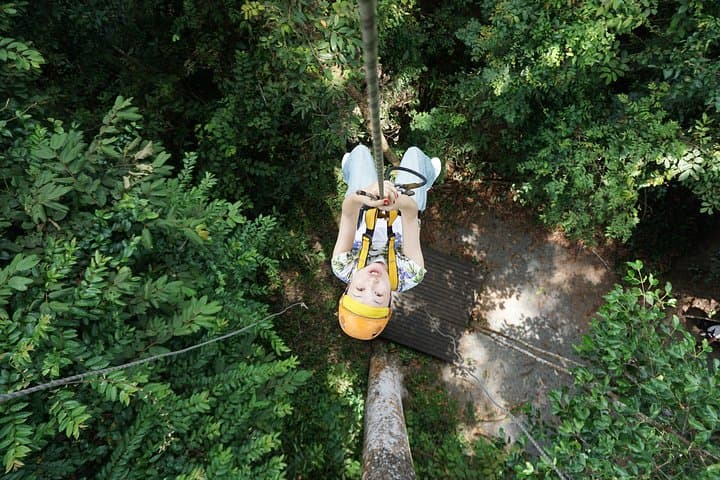
You step off a shaded trail and the stone silhouettes of Angkor peek through the leaves — sun-struck carved lintels to your left, a corridor of trees to your right. The guides clip your harness, point toward the first wooden platform and you climb: seven staircases, four hanging bridges and a rising heartbeat between each platform.
Verified experiences and guided adventures in the surrounding area.
Operated by Angkor Zipline · Siem Reap, Siem Reap Province
You step off a shaded trail and the stone silhouettes of Angkor peek through the leaves — sun-struck carved lintels to your left, a corridor of trees to your right. The guides clip your harness, point toward the first wooden platform and you climb: seven staircases, four hanging bridges and a rising heartbeat between each platform.
This zipline course threads through the Angkor Archaeological Park, whose sandstone temples were raised by the Khmer Empire from the 9th–13th centuries. The ground beneath is alluvial plain and sandstone outcrops; the canopy here has regrown around centuries-old ruins, creating a lived-in forest that supports kingfishers, hornbills and long-tailed macaques.
Operators run two course options — a shorter Silver route with roughly 10 ziplines, or a more extensive Gold course that spans 21 platforms with multiple single and double lines. Groups are small (max nine) and accompanied by two guides who combine safety instruction with natural- and cultural-history commentary.
Practicalities: plan on about 3 hours on-site, wear closed-toe shoes and long pants for harness rubbing, and expect stairs and uneven footing between platforms. Helmets are mandatory; flip-flops and dangling jewelry are prohibited. From June to October bring a lightweight rain jacket for sudden tropical showers. Hydrate before you go — the humid climate and short climbs between lines make even an easy course feel more demanding.
This is an eco-adventure that pairs adrenaline with a classroom on Khmer history — fast, grounded, and surprisingly informative.
moderate.
3 hours.
You should be able to climb stairs and stand on platforms; no advanced fitness required but basic mobility is needed.
Plan for about 3 hours on-site; the course time includes safety briefings, harnessing, and several ziplines and sky bridges.
Booking collects age, height and weight; participants must meet operator limits for safe harnessing—check at booking for exact thresholds.
Guides provide helmets, harnesses and safety briefings; helmets are mandatory and guides stay with small groups throughout.
Full refunds are available if you cancel at least 24 hours before departure; last-minute cancellations are typically non-refundable.
Angkor Archaeological Park contains temples and urban remains from the Khmer Empire (9th–13th centuries); Angkor Wat itself was completed in the early 12th century as a state temple and mausoleum.
The park is protected and visitor impact is managed—stay on marked trails, avoid touching carvings, and follow guides’ instructions to minimize erosion and wildlife disturbance.
Angkor Zipline operates guided outdoor trips and adventures with an emphasis on safety, stewardship, and memorable experiences.
You step off a shaded trail and the stone silhouettes of Angkor peek through the leaves — sun-struck carved lintels to your left, a corridor of trees to your right. The guides clip your harness, point toward the first wooden platform and you climb: seven staircases, four hanging bridges and a rising heartbeat between each platform.
You step off a shaded trail and the stone silhouettes of Angkor peek through the leaves — sun-struck carved lintels to your left, a corridor of trees to your right. The guides clip your harness, point toward the first wooden platform and you climb: seven staircases, four hanging bridges and a rising heartbeat between each platform.
This zipline course threads through the Angkor Archaeological Park, whose sandstone temples were raised by the Khmer Empire from the 9th–13th centuries. The ground beneath is alluvial plain and sandstone outcrops; the canopy here has regrown around centuries-old ruins, creating a lived-in forest that supports kingfishers, hornbills and long-tailed macaques.
Operators run two course options — a shorter Silver route with roughly 10 ziplines, or a more extensive Gold course that spans 21 platforms with multiple single and double lines. Groups are small (max nine) and accompanied by two guides who combine safety instruction with natural- and cultural-history commentary.
Practicalities: plan on about 3 hours on-site, wear closed-toe shoes and long pants for harness rubbing, and expect stairs and uneven footing between platforms. Helmets are mandatory; flip-flops and dangling jewelry are prohibited. From June to October bring a lightweight rain jacket for sudden tropical showers. Hydrate before you go — the humid climate and short climbs between lines make even an easy course feel more demanding.
This is an eco-adventure that pairs adrenaline with a classroom on Khmer history — fast, grounded, and surprisingly informative.