THE ADVENTURE COLLECTIVE® · Independent discovery and booking for outdoor travel

Spend a full day moving from the monumental galleries of Angkor Wat and the stone faces of the Bayon to an up-close, guided encounter with elephants at the Kulen Elephant Forest. This tour pairs Khmer history with a wildlife-focused visit and practical, on-the-ground guidance.
Spend a full day moving from the monumental galleries of Angkor Wat and the stone faces of the Bayon to an up-close, guided encounter with elephants at the Kulen Elephant Forest. This tour pairs Khmer history with a wildlife-focused visit and practical, on-the-ground guidance.
You arrive before the heat builds, stepping off an air-conditioned minivan onto the flagstone approach to Angkor Wat. The reflection pools tremble with early light and carved galleries hush the movement of tourists and prayer alike.
Verified experiences and guided adventures in the surrounding area.
Operated by Green Era Travel · Siem Reap, Siem Reap Province
You arrive before the heat builds, stepping off an air-conditioned minivan onto the flagstone approach to Angkor Wat. The reflection pools tremble with early light and carved galleries hush the movement of tourists and prayer alike.
This single-day circuit stitches together the major Angkor monuments and a nearby elephant sanctuary. Angkor Wat, begun in the early 12th century as a state temple for Suryavarman II, displays long galleries, bas-reliefs and a central quincunx tower that anchors Khmer cosmology. A short drive brings you to Angkor Thom and the Bayon, where more than 200 carved faces watch grain markets and battle scenes. Ta Prohm is raw and tactile — roots of strangler figs and silk-cotton trees drape over laterite and sandstone blocks.
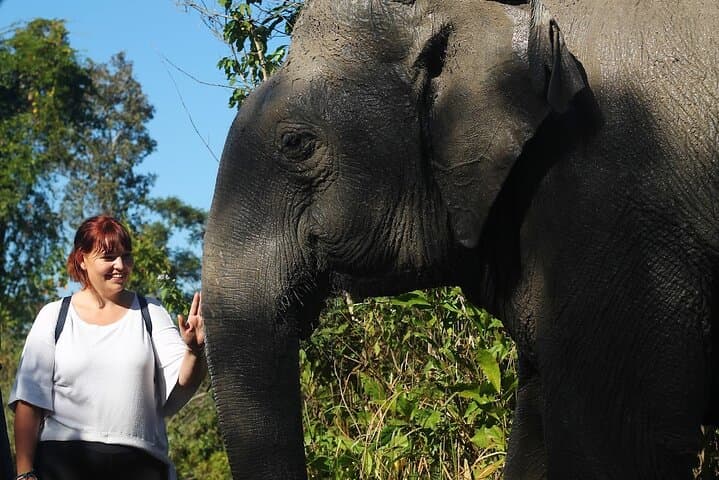
After a local lunch, the route moves out of the stone city to the Kulen Elephant Forest experience. Here you’ll meet rehabilitated elephants and observe feeding and gentle handling, an accessible introduction to their behavior outside of performance settings.
Practical guidance: the day runs 7–9 hours with a fair amount of walking on uneven steps and soft earth. Dress conservatively (shoulders and knees covered) for temple entry, wear sturdy shoes for slippery stone, and bring sun protection and insect repellent. Cash is useful for incidental purchases; the one-day Angkor pass is typically handled at the park entrance. Be prepared for humidity and conserve energy by hydrating often—cold bottled water is usually provided. This loop balances landmark archaeology with a measured wildlife encounter, suitable for travelers with moderate fitness who want a full, ground-level picture of Angkor’s cultural and natural heritage.
moderate.
7–9 hours.
Comfortable with several hours of walking and climbing temple steps; some standing on uneven terrain.
This tour indicates the 1-day Angkor Wat admission ticket is included; guides typically stop at the ticket counters to process passes.
The Kulen Elephant Forest visit is framed as observational and feeding-based; expect guided, supervised interactions and an emphasis on natural behaviors rather than riding.
Temples require modest dress—cover shoulders and knees; breathable clothing is best given the heat and humidity.
Yes—transport by air-conditioned minivan and a local lunch are included, plus bottled water during the tour.
Angkor was the capital of the Khmer Empire from the 9th–15th centuries; Suryavarman II built Angkor Wat in the 12th century and Jayavarman VII later commissioned many public works like the Bayon.
Sanctuary programs often focus on rehabilitation and natural behavior observation; support providers that prioritize non-performing care, humane feeding practices and local community engagement.
Green Era Travel operates guided outdoor trips and adventures with an emphasis on safety, stewardship, and memorable experiences.



You arrive before the heat builds, stepping off an air-conditioned minivan onto the flagstone approach to Angkor Wat. The reflection pools tremble with early light and carved galleries hush the movement of tourists and prayer alike.
You arrive before the heat builds, stepping off an air-conditioned minivan onto the flagstone approach to Angkor Wat. The reflection pools tremble with early light and carved galleries hush the movement of tourists and prayer alike.
This single-day circuit stitches together the major Angkor monuments and a nearby elephant sanctuary. Angkor Wat, begun in the early 12th century as a state temple for Suryavarman II, displays long galleries, bas-reliefs and a central quincunx tower that anchors Khmer cosmology. A short drive brings you to Angkor Thom and the Bayon, where more than 200 carved faces watch grain markets and battle scenes. Ta Prohm is raw and tactile — roots of strangler figs and silk-cotton trees drape over laterite and sandstone blocks.
After a local lunch, the route moves out of the stone city to the Kulen Elephant Forest experience. Here you’ll meet rehabilitated elephants and observe feeding and gentle handling, an accessible introduction to their behavior outside of performance settings.
Practical guidance: the day runs 7–9 hours with a fair amount of walking on uneven steps and soft earth. Dress conservatively (shoulders and knees covered) for temple entry, wear sturdy shoes for slippery stone, and bring sun protection and insect repellent. Cash is useful for incidental purchases; the one-day Angkor pass is typically handled at the park entrance. Be prepared for humidity and conserve energy by hydrating often—cold bottled water is usually provided. This loop balances landmark archaeology with a measured wildlife encounter, suitable for travelers with moderate fitness who want a full, ground-level picture of Angkor’s cultural and natural heritage.