THE ADVENTURE COLLECTIVE® · Independent discovery and booking for outdoor travel

Spend a full day exploring Angkor Wat, Bayon and Ta Prohm, then watch the sunset from Phnom Bakheng. This join-in guided tour blends archaeology, local history and practical tips for navigating uneven temple grounds.
Spend a full day exploring Angkor Wat, Bayon and Ta Prohm, then watch the sunset from Phnom Bakheng. This join-in guided tour blends archaeology, local history and practical tips for navigating uneven temple grounds.
The day begins beneath a wide, humid Cambodian sky as the tour vehicle eases through Siem Reap’s morning traffic and deposits you at the stepped causeway of Angkor Wat. Stone walls rise like pages of history; bas-reliefs whisper court scenes and mythic rivers. Midday light picks out the five towers of Angkor Wat while the guide explains Khmer cosmology and the temple’s 12th-century transformation from Hindu shrine to Buddhist pilgrimage site.
Verified experiences and guided adventures in the surrounding area.
Operated by Asia Voyage Tour · Siem Reap, Siem Reap Province
The day begins beneath a wide, humid Cambodian sky as the tour vehicle eases through Siem Reap’s morning traffic and deposits you at the stepped causeway of Angkor Wat. Stone walls rise like pages of history; bas-reliefs whisper court scenes and mythic rivers. Midday light picks out the five towers of Angkor Wat while the guide explains Khmer cosmology and the temple’s 12th-century transformation from Hindu shrine to Buddhist pilgrimage site.
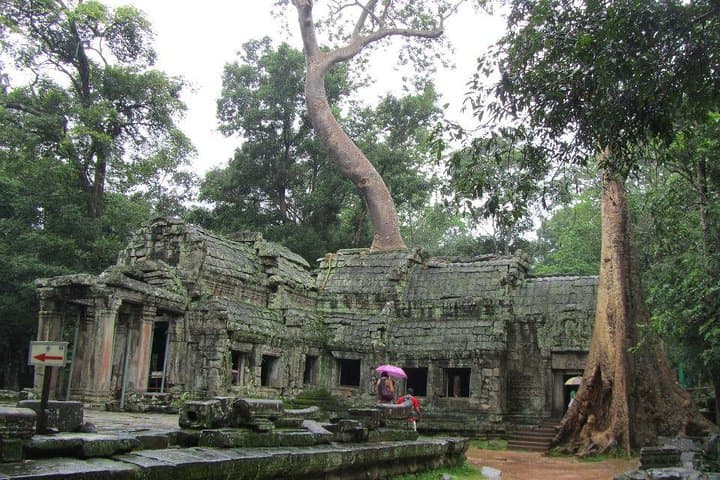
geology and human hands are evident in every block — sandstone quarried upriver and ferried across the Tonlé Sap plain — and sections of laterite foundations that hold these vast platforms. Bayon’s carved smiling faces and Ta Prohm’s roots-wrapped galleries show two very different attitudes toward time: one monumental, one reclaimed by jungle. Cultural context appears in the guide’s stories about Jayavarman VII, temple symbolism, and contemporary Khmer practices of reverence.
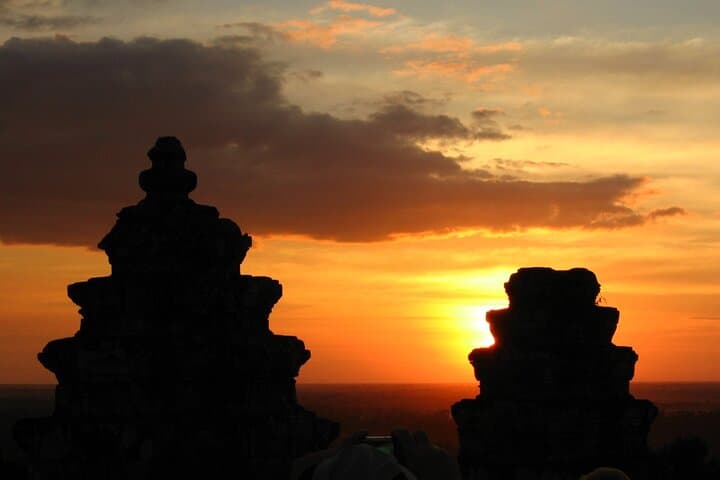
As evening approaches the group makes its way to Phnom Bakheng for sunset; the hill offers a panoramic silhouette of spires and palm flats. Weather can make or break the view, so patience and flexibility matter.
Practical guidance: bring a refillable water bottle, cover shoulders and knees out of respect and to pass entry checks, and wear comfortable closed-toe shoes for uneven steps. Purchase your Angkor pass in advance and arrive early to avoid the hottest hours. Expect lots of walking, photographic stops, and well-paced commentary — a day that combines archaeology, landscape, and a clear sense of Cambodia’s layered history.
easy.
10 hours.
Suitable for light to moderate fitness; expect several kilometers of walking on uneven ground and short stair climbs
No — the Angkor Archaeological Park pass is separate and must be purchased before or on arrival at the official ticket center.
Yes, the tour includes hotel pickup and drop-off within Siem Reap (confirm your pickup point when booking).
No — sunsets depend on weather; the tour will still visit Phnom Bakheng and other temples if clouds obscure the view.
Not recommended for those with significant walking disabilities due to uneven surfaces and many steps; stroller access is possible in some areas.
Angkor was the political and spiritual center of the Khmer Empire from the 9th to 15th centuries; Angkor Wat itself was built in the early 12th century under Suryavarman II and later became a major Buddhist site.
Visit with respect: avoid touching carvings or climbing ruins, use marked paths, and minimize single-use plastics to reduce impact on the fragile archaeological landscape.
Asia Voyage Tour operates guided outdoor trips and adventures with an emphasis on safety, stewardship, and memorable experiences.


The day begins beneath a wide, humid Cambodian sky as the tour vehicle eases through Siem Reap’s morning traffic and deposits you at the stepped causeway of Angkor Wat. Stone walls rise like pages of history; bas-reliefs whisper court scenes and mythic rivers. Midday light picks out the five towers of Angkor Wat while the guide explains Khmer cosmology and the temple’s 12th-century transformation from Hindu shrine to Buddhist pilgrimage site.
The day begins beneath a wide, humid Cambodian sky as the tour vehicle eases through Siem Reap’s morning traffic and deposits you at the stepped causeway of Angkor Wat. Stone walls rise like pages of history; bas-reliefs whisper court scenes and mythic rivers. Midday light picks out the five towers of Angkor Wat while the guide explains Khmer cosmology and the temple’s 12th-century transformation from Hindu shrine to Buddhist pilgrimage site.
geology and human hands are evident in every block — sandstone quarried upriver and ferried across the Tonlé Sap plain — and sections of laterite foundations that hold these vast platforms. Bayon’s carved smiling faces and Ta Prohm’s roots-wrapped galleries show two very different attitudes toward time: one monumental, one reclaimed by jungle. Cultural context appears in the guide’s stories about Jayavarman VII, temple symbolism, and contemporary Khmer practices of reverence.
As evening approaches the group makes its way to Phnom Bakheng for sunset; the hill offers a panoramic silhouette of spires and palm flats. Weather can make or break the view, so patience and flexibility matter.
Practical guidance: bring a refillable water bottle, cover shoulders and knees out of respect and to pass entry checks, and wear comfortable closed-toe shoes for uneven steps. Purchase your Angkor pass in advance and arrive early to avoid the hottest hours. Expect lots of walking, photographic stops, and well-paced commentary — a day that combines archaeology, landscape, and a clear sense of Cambodia’s layered history.