THE ADVENTURE COLLECTIVE® · Independent discovery and booking for outdoor travel

Watch Angkor Wat glow at dawn from a quieter vantage, then ride a Vespa through temples, rice paddies, and village lanes. This premium small-group tour combines early-morning views with local insights and short temple walks.
Watch Angkor Wat glow at dawn from a quieter vantage, then ride a Vespa through temples, rice paddies, and village lanes. This premium small-group tour combines early-morning views with local insights and short temple walks.
The sky over Angkor Wat loosens its first light like a slow exhale, and you feel the morning cool push against your Vespa helmet as the silhouette of towers sharpens against the horizon.
Verified experiences and guided adventures in the surrounding area.
Operated by Adventures Cambodia · Siem Reap, Siem Reap Province
The sky over Angkor Wat loosens its first light like a slow exhale, and you feel the morning cool push against your Vespa helmet as the silhouette of towers sharpens against the horizon.
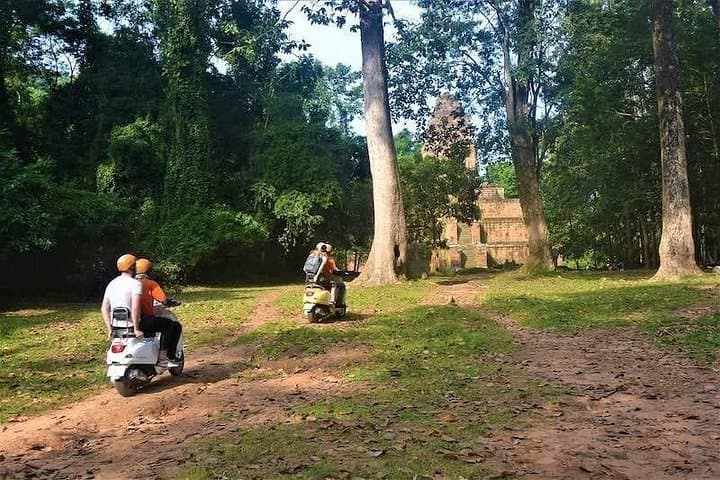
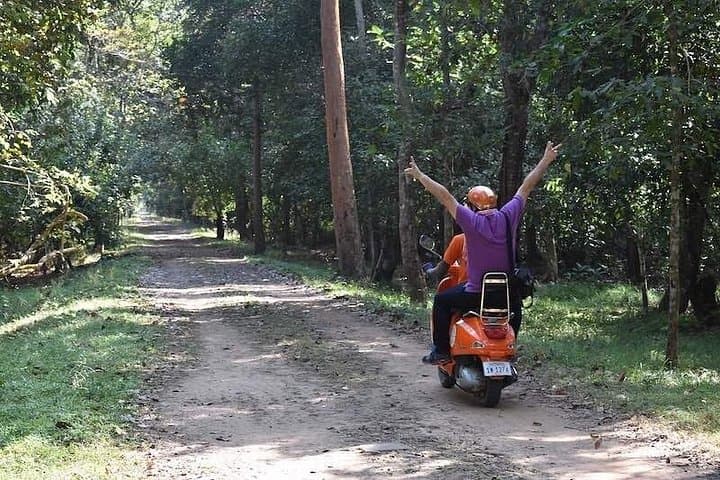
This premium sunrise Vespa tour moves away from the bus parking lots and toward a quieter vantage point where the temple’s reflection and first rays take center stage. After the light show, the route threads through rice paddies and village lanes, the drivers steering with practiced ease while guides point out Khmer-era details you might miss on your own.
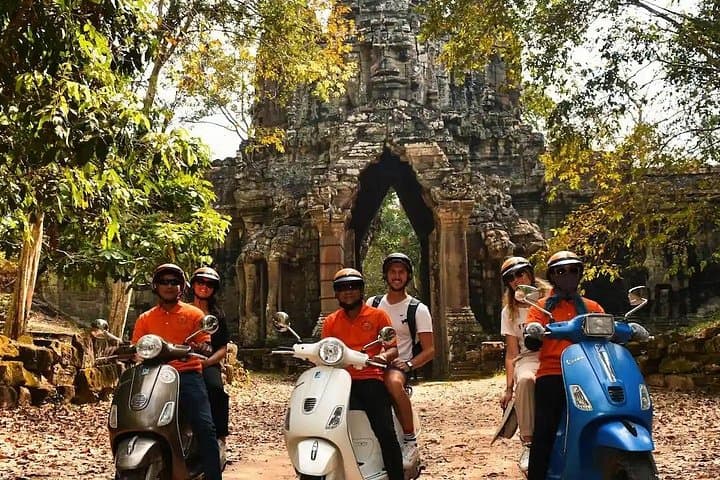
Angkor’s stonework spans centuries: the classical harmony of Angkor Wat built in the 12th century, the many-faced Bayon at Angkor Thom, and the jungle-entangled galleries of Ta Prohm that still hold the roots of later centuries. The landscape itself is engineered—barays (reservoirs) and laterite foundations kept this inland delta productive and supported the Khmer city-state.
Expect temple-focused cultural notes, close views of bas-reliefs, and short walks across uneven stone. Guides typically combine historical context with local life—farm plots, ox carts, and morning markets—so you get both monuments and living culture.
Practical guidance: bring a lightweight rain jacket in wet months, closed-toe shoes for temple walks, and a small daypack for water and camera gear. Plan for early starts (pre-dawn pickup), modest walking over steps and slick stone, and strict temple etiquette—cover shoulders and knees. With fewer crowds, the mood is contemplative; the light, the stone, and the steady hum of scooters make this a compact, vivid way to meet Angkor before midday heat and tour buses arrive.
easy.
7 hours.
Minimal fitness required—short walks over uneven temple stones and brief periods standing; suitable for most travelers.
No; most Vespa tours do not include the Angkor Archaeological Park pass—purchase your entrance ticket at the park entrance or online before arrival.
This premium shared option keeps groups small (often under eight) for a less crowded experience and easier mobility between sites.
The itinerary notes infants must sit on laps; evaluate comfort with early start times and moving between Vespas or a Jeep if available.
Handheld cameras and phones are fine; tripods may be restricted in crowded or sensitive areas—check with your guide for rules at each temple.
Angkor was the political and hydraulic heart of the Khmer Empire from the 9th to 15th centuries; its reservoirs and stone architecture reflect sophisticated urban planning and religious shifts.
Visitor pressure and humidity challenge the stone monuments; stick to marked paths, avoid touching bas-reliefs, and follow guide instructions to minimize impact.
Adventures Cambodia operates guided outdoor trips and adventures with an emphasis on safety, stewardship, and memorable experiences.
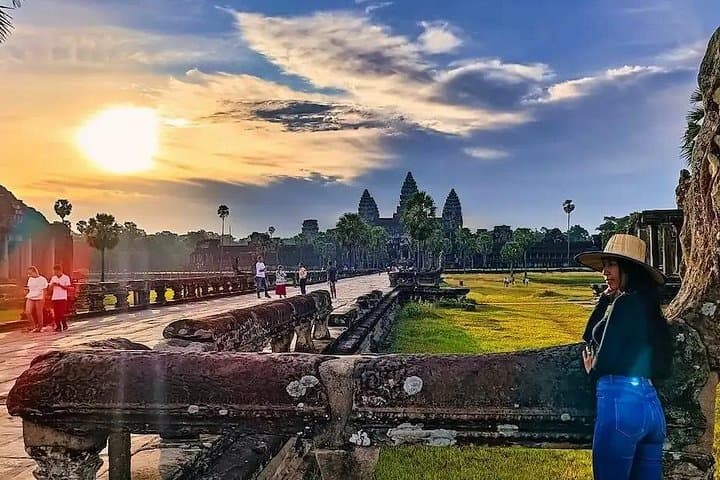
The sky over Angkor Wat loosens its first light like a slow exhale, and you feel the morning cool push against your Vespa helmet as the silhouette of towers sharpens against the horizon.
The sky over Angkor Wat loosens its first light like a slow exhale, and you feel the morning cool push against your Vespa helmet as the silhouette of towers sharpens against the horizon.
This premium sunrise Vespa tour moves away from the bus parking lots and toward a quieter vantage point where the temple’s reflection and first rays take center stage. After the light show, the route threads through rice paddies and village lanes, the drivers steering with practiced ease while guides point out Khmer-era details you might miss on your own.
Angkor’s stonework spans centuries: the classical harmony of Angkor Wat built in the 12th century, the many-faced Bayon at Angkor Thom, and the jungle-entangled galleries of Ta Prohm that still hold the roots of later centuries. The landscape itself is engineered—barays (reservoirs) and laterite foundations kept this inland delta productive and supported the Khmer city-state.
Expect temple-focused cultural notes, close views of bas-reliefs, and short walks across uneven stone. Guides typically combine historical context with local life—farm plots, ox carts, and morning markets—so you get both monuments and living culture.
Practical guidance: bring a lightweight rain jacket in wet months, closed-toe shoes for temple walks, and a small daypack for water and camera gear. Plan for early starts (pre-dawn pickup), modest walking over steps and slick stone, and strict temple etiquette—cover shoulders and knees. With fewer crowds, the mood is contemplative; the light, the stone, and the steady hum of scooters make this a compact, vivid way to meet Angkor before midday heat and tour buses arrive.