THE ADVENTURE COLLECTIVE® · Independent discovery and booking for outdoor travel

Catch the first light over Angkor Wat, then explore Ta Prohm’s root-wrapped corridors and Bayon’s stone faces on a guided half-day tour that includes breakfast and hotel transfer. Early start, big history, minimal fuss.
Catch the first light over Angkor Wat, then explore Ta Prohm’s root-wrapped corridors and Bayon’s stone faces on a guided half-day tour that includes breakfast and hotel transfer. Early start, big history, minimal fuss.
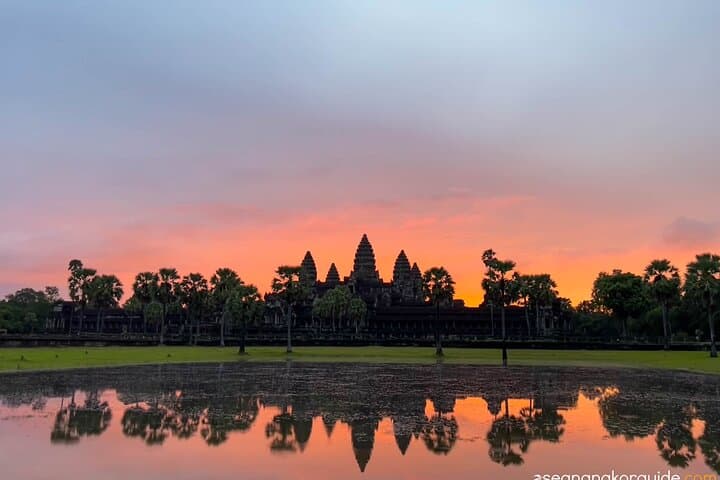
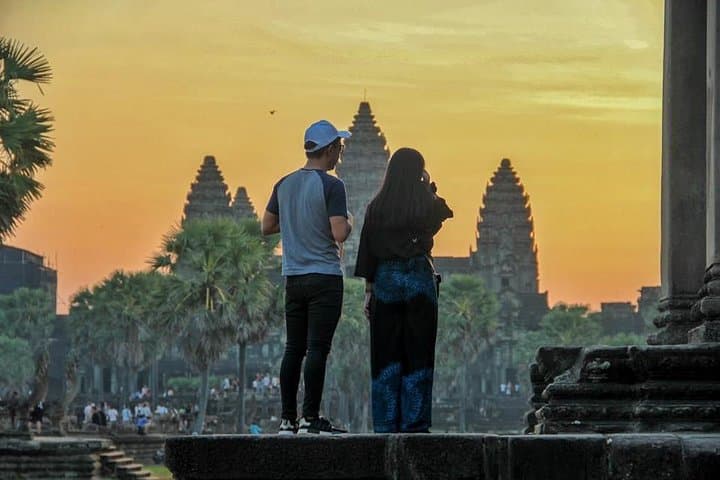
Before the sun clears the horizon, the minivan hums toward the gates of Angkor Park and the world is a palette of cool blues and whispering cicadas. You step from the vehicle onto packed earth as first light pulls gold across the five towers of Angkor Wat; reflected pools hold the temple like a slow-moving mirror and the air smells of wet stone and frangipani.
Verified experiences and guided adventures in the surrounding area.
Operated by Sightseeing Cambodia · Siem Reap, Siem Reap Province
Before the sun clears the horizon, the minivan hums toward the gates of Angkor Park and the world is a palette of cool blues and whispering cicadas. You step from the vehicle onto packed earth as first light pulls gold across the five towers of Angkor Wat; reflected pools hold the temple like a slow-moving mirror and the air smells of wet stone and frangipani.
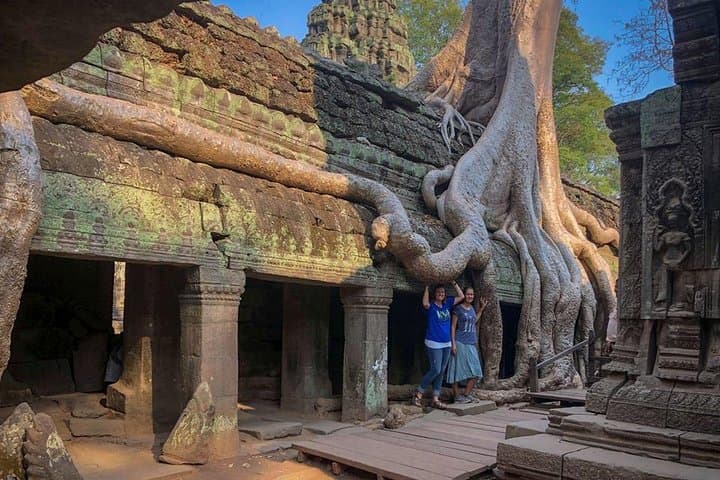
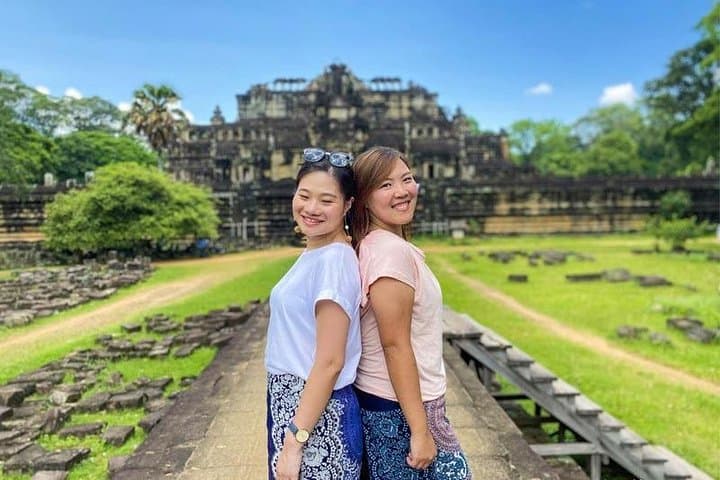
Built in the early 12th century for King Suryavarman II, Angkor Wat began as a Hindu temple and evolved into a Buddhist pilgrimage site; its sandstone bas-reliefs record myth and empire. The surrounding plain sits on weathered sandstone and laterite—stone that holds carvings but also slipperiness when wet. Nearby Ta Prohm tells a different story: massive roots of silk-cotton trees braid through galleries, a visible negotiation between jungle and monument. Bayon’s forest of carved faces, raised by Jayavarman VII, offers close-range details of Khmer iconography and city planning.
Expect guided narration that ties architecture to history, interspersed with practical stops: breakfast at Sras Srang, short walks, and photo pauses at the Victory Gate. Paths are uneven and include steep stone steps; mornings are cooler but humidity rises quickly. Bring layered, respectful clothing (shoulders and knees covered), steady footwear, and a small daypack for water and camera gear.
Timing is everything: arrive early for the sunrise light and aim to finish the busiest sites before midday heat. Respect temple rules, follow your guide’s route, and leave room in your schedule for quiet corners where the ruins feel less crowded and more alive.
easy.
8 hours.
Light walking and standing; able to climb uneven stone steps and walk short distances over variable terrain.
No—your guide typically assists with purchasing the Angkor Pass at the park entrance during the early pickup; ticket cost is separate.
Pickup is usually between 4:30–5:00 AM and returns to your hotel or Old Market area in the afternoon, roughly an 8-hour window.
Yes—a local village breakfast at Sras Srang is included as noted in the itinerary.
The tour is suitable for children but involves steps and uneven ground; it’s not ideal for significant mobility limitations—contact the operator to discuss accessibility options.
Angkor Wat was constructed in the early 1100s under King Suryavarman II as a state temple and mausoleum; later kings adapted monuments like Bayon and Ta Prohm, leaving a layered cultural landscape.
Heavy tourism stresses fragile stone and local communities; follow park rules, avoid climbing restricted carvings, and use licensed guides whose fees support preservation and local livelihoods.
Sightseeing Cambodia operates guided outdoor trips and adventures with an emphasis on safety, stewardship, and memorable experiences.
Before the sun clears the horizon, the minivan hums toward the gates of Angkor Park and the world is a palette of cool blues and whispering cicadas. You step from the vehicle onto packed earth as first light pulls gold across the five towers of Angkor Wat; reflected pools hold the temple like a slow-moving mirror and the air smells of wet stone and frangipani.
Before the sun clears the horizon, the minivan hums toward the gates of Angkor Park and the world is a palette of cool blues and whispering cicadas. You step from the vehicle onto packed earth as first light pulls gold across the five towers of Angkor Wat; reflected pools hold the temple like a slow-moving mirror and the air smells of wet stone and frangipani.
Built in the early 12th century for King Suryavarman II, Angkor Wat began as a Hindu temple and evolved into a Buddhist pilgrimage site; its sandstone bas-reliefs record myth and empire. The surrounding plain sits on weathered sandstone and laterite—stone that holds carvings but also slipperiness when wet. Nearby Ta Prohm tells a different story: massive roots of silk-cotton trees braid through galleries, a visible negotiation between jungle and monument. Bayon’s forest of carved faces, raised by Jayavarman VII, offers close-range details of Khmer iconography and city planning.
Expect guided narration that ties architecture to history, interspersed with practical stops: breakfast at Sras Srang, short walks, and photo pauses at the Victory Gate. Paths are uneven and include steep stone steps; mornings are cooler but humidity rises quickly. Bring layered, respectful clothing (shoulders and knees covered), steady footwear, and a small daypack for water and camera gear.
Timing is everything: arrive early for the sunrise light and aim to finish the busiest sites before midday heat. Respect temple rules, follow your guide’s route, and leave room in your schedule for quiet corners where the ruins feel less crowded and more alive.