THE ADVENTURE COLLECTIVE® · Independent discovery and booking for outdoor travel

Catch the sun lifting over Angkor Wat, watch roots reclaim Ta Prohm, and study Bayon’s watchful faces on a focused half‑day tour from Siem Reap. This itinerary pairs early-morning light with practical tips for navigating stone steps, seasonal weather, and ticketing.
Catch the sun lifting over Angkor Wat, watch roots reclaim Ta Prohm, and study Bayon’s watchful faces on a focused half‑day tour from Siem Reap. This itinerary pairs early-morning light with practical tips for navigating stone steps, seasonal weather, and ticketing.
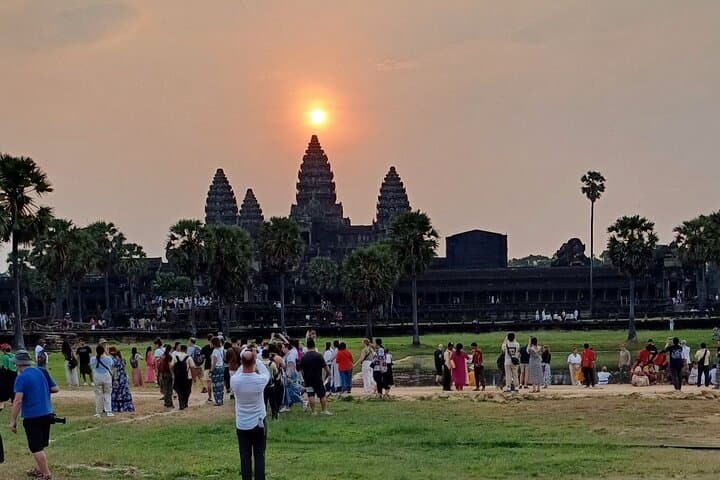
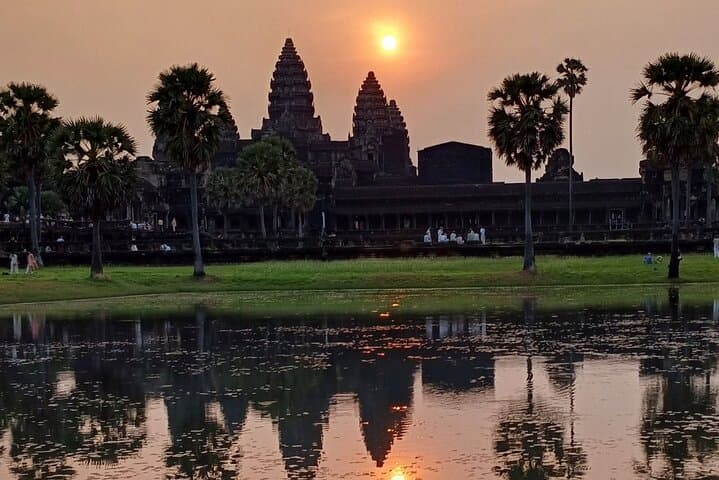
Before dawn the moat mirrors a thin band of light and the central towers of Angkor Wat silhouette against a sky that refuses to stay still. You arrive by causeway as vendors fold up their stalls and the temple inhales the first cool air; the reflection pool and lotus beds frame the moment, and the stone watches the sunrise like an old guardian coming awake.
Verified experiences and guided adventures in the surrounding area.
Operated by Van Express Tours · Siem Reap, Siem Reap Province
Before dawn the moat mirrors a thin band of light and the central towers of Angkor Wat silhouette against a sky that refuses to stay still. You arrive by causeway as vendors fold up their stalls and the temple inhales the first cool air; the reflection pool and lotus beds frame the moment, and the stone watches the sunrise like an old guardian coming awake.
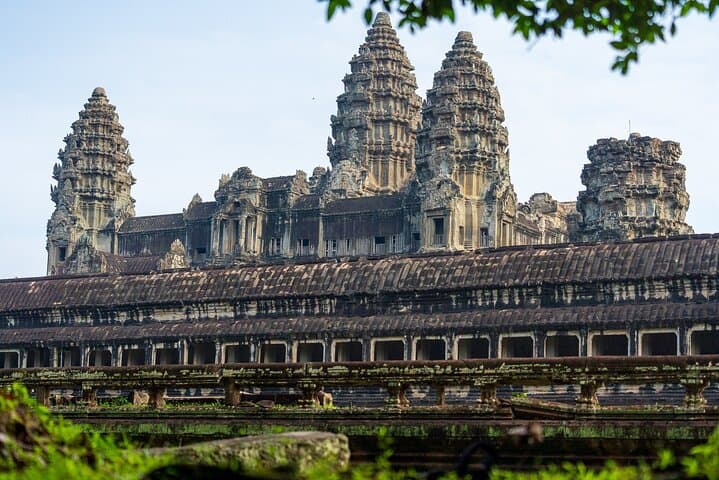
This morning tour moves through three distinct chapters of Khmer history: Angkor Wat’s 12th-century sandstone galleries carved under Suryavarman II; Ta Prohm’s dramatic union of fig roots and masonry made famous by film; and Bayon’s face-towered center of Angkor Thom, where bas‑reliefs map daily life and imperial reach. The geology—layered sandstone and laterite—lets carvings hold crisp detail but creates uneven, eroded steps that demand attention.
Practically: plan for early starts (sunrise varies seasonally), sturdy shoes for slick stone and steep temple steps, and modest clothing that covers shoulders and knees for respectful entry. The tour typically runs about six hours with vehicle transfers between sites; expect several short walks and some climbing. Bring water, sun protection, and insect repellent; a light rain layer helps in wet months. Purchase or arrange an Angkor Park pass at the official ticket center before entry. Respect barriers and sacred spaces—these sites are active cultural heritage places.
Timing your visit to avoid midday heat, moving from Angkor Wat’s reflection pools to the shaded roots at Ta Prohm, and finishing amid the carved faces of Bayon gives a natural rhythm to the day: stone, forest, and then the human stories written in relief.
moderate.
6 hours.
Moderate fitness: able to walk on uneven stone, climb steep temple steps, and tolerate warm, humid conditions.
Yes—entry to Angkor Archaeological Park requires a valid Angkor Park pass; most visitors purchase it at the official ticket center in Siem Reap or arrange it through their tour operator.
The tour is family-friendly but involves uneven terrain and stair climbing; consider mobility and heat tolerance for young children or older adults.
Admission is typically not included by default—confirm with the operator; many private tours offer to assist with ticket purchase but expect the park pass to be a separate cost.
Photography for personal use is allowed in most areas, but drones are regulated and usually require special permits—check local rules and operator policies before flying.
Angkor Wat was constructed in the early 12th century under King Suryavarman II as a state temple and mausoleum, later becoming a key religious site as the Khmer Empire transitioned from Hinduism to Buddhism.
The Angkor complex is a protected archaeological park; visitors should stick to designated paths, avoid touching fragile carvings, and minimize plastic and waste to reduce impact.
Van Express Tours operates guided outdoor trips and adventures with an emphasis on safety, stewardship, and memorable experiences.

Before dawn the moat mirrors a thin band of light and the central towers of Angkor Wat silhouette against a sky that refuses to stay still. You arrive by causeway as vendors fold up their stalls and the temple inhales the first cool air; the reflection pool and lotus beds frame the moment, and the stone watches the sunrise like an old guardian coming awake.
Before dawn the moat mirrors a thin band of light and the central towers of Angkor Wat silhouette against a sky that refuses to stay still. You arrive by causeway as vendors fold up their stalls and the temple inhales the first cool air; the reflection pool and lotus beds frame the moment, and the stone watches the sunrise like an old guardian coming awake.
This morning tour moves through three distinct chapters of Khmer history: Angkor Wat’s 12th-century sandstone galleries carved under Suryavarman II; Ta Prohm’s dramatic union of fig roots and masonry made famous by film; and Bayon’s face-towered center of Angkor Thom, where bas‑reliefs map daily life and imperial reach. The geology—layered sandstone and laterite—lets carvings hold crisp detail but creates uneven, eroded steps that demand attention.
Practically: plan for early starts (sunrise varies seasonally), sturdy shoes for slick stone and steep temple steps, and modest clothing that covers shoulders and knees for respectful entry. The tour typically runs about six hours with vehicle transfers between sites; expect several short walks and some climbing. Bring water, sun protection, and insect repellent; a light rain layer helps in wet months. Purchase or arrange an Angkor Park pass at the official ticket center before entry. Respect barriers and sacred spaces—these sites are active cultural heritage places.
Timing your visit to avoid midday heat, moving from Angkor Wat’s reflection pools to the shaded roots at Ta Prohm, and finishing amid the carved faces of Bayon gives a natural rhythm to the day: stone, forest, and then the human stories written in relief.