THE ADVENTURE COLLECTIVE® · Independent discovery and booking for outdoor travel

Catch dawn over Angkor Wat before the crowds and follow a local guide through Bayon’s carved faces and Ta Prohm’s jungle-wrapped corridors. This small-group, air-conditioned tour pairs early-morning light with cultural context and practical comfort.
Catch dawn over Angkor Wat before the crowds and follow a local guide through Bayon’s carved faces and Ta Prohm’s jungle-wrapped corridors. This small-group, air-conditioned tour pairs early-morning light with cultural context and practical comfort.
You pull the minivan onto a darkened road and the silhouette of Angkor Wat slices the eastern sky—stone towers catching first light as the world exhales. The tour begins before dawn (typically 4:00–4:30 a.m.), letting the sunrise claim the pools and causeways while the crowds are still thin and the air is cool.
Verified experiences and guided adventures in the surrounding area.
Operated by Cambodia Transport Service · Siem Reap, Siem Reap Province
You pull the minivan onto a darkened road and the silhouette of Angkor Wat slices the eastern sky—stone towers catching first light as the world exhales. The tour begins before dawn (typically 4:00–4:30 a.m.), letting the sunrise claim the pools and causeways while the crowds are still thin and the air is cool.
This eight-hour small-group circuit covers Angkor Wat, the South Gate of Angkor Thom and its Bayon faces, and the root-entwined halls of Ta Prohm. Angkor Wat was built in the 12th century under Suryavarman II as a Hindu cosmological temple and later became a Buddhist site; Bayon’s multi-faced towers are Khmer portraiture at scale, while Ta Prohm preserves the jungle-ruin romance that first captivated Western explorers.
Geologically, the sandstone blocks came from quarries tens of kilometers away and were floated on canals—ruins sit on a low alluvial plain that floods in monsoon season, feeding the reservoirs that once sustained the city.
Practical edge: arrive with your Angkor Pass, wear lightweight long sleeves and a sarong or long shorts for temple etiquette, and bring cash for tips and small purchases. Expect uneven steps, sandy corridors, and tight staircases in inner chambers.
The guide decodes bas-reliefs, times the light, and routes you to quieter viewpoints; the minivan returns you to your hotel mid-afternoon. Bring water, sun protection, and patience—these ruins reward an early rise with fewer people and clearer light for photos and reflection.
moderate.
8 hours.
Suitable for most fitness levels; expect walking on uneven stone, stairs, and several hours on your feet.
Yes—entry to the Angkor Archaeological Park requires an Angkor Pass (sold at the park gate); your tour operator can advise where to buy one before sunrise.
Pickup is usually 4:00–4:30 a.m.; timing shifts with the calendar so the guide plans the approach to catch the first light at the temple pools.
Photography is allowed in most outdoor and gallery areas; be respectful in active shrines and avoid tripods in congested areas during peak times.
Yes—physically it’s rated easy to moderate; however, pre-dawn starts, long walking periods, and uneven surfaces may be challenging for very young children or limited mobility.
Angkor Wat was constructed in the early 12th century under King Suryavarman II and functioned as a Hindu then Buddhist center reflecting the Khmer Empire’s power.
Heavy visitation strains fragile sandstone and foundations; stick to marked paths, avoid touching bas-reliefs, and support licensed local guides to promote responsible tourism.
Cambodia Transport Service operates guided outdoor trips and adventures with an emphasis on safety, stewardship, and memorable experiences.
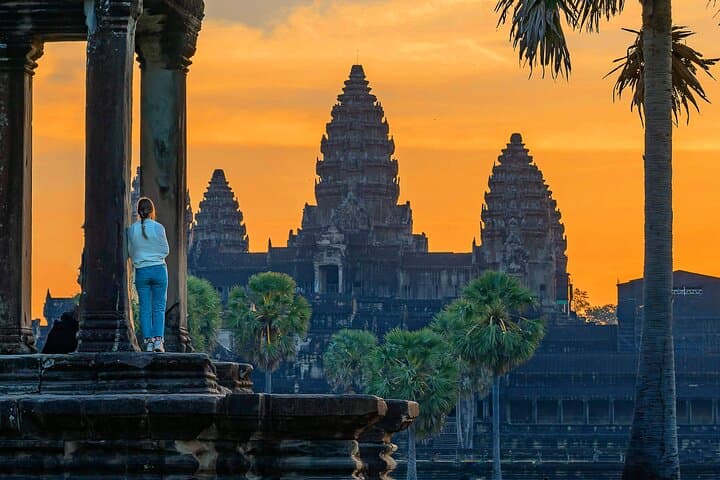
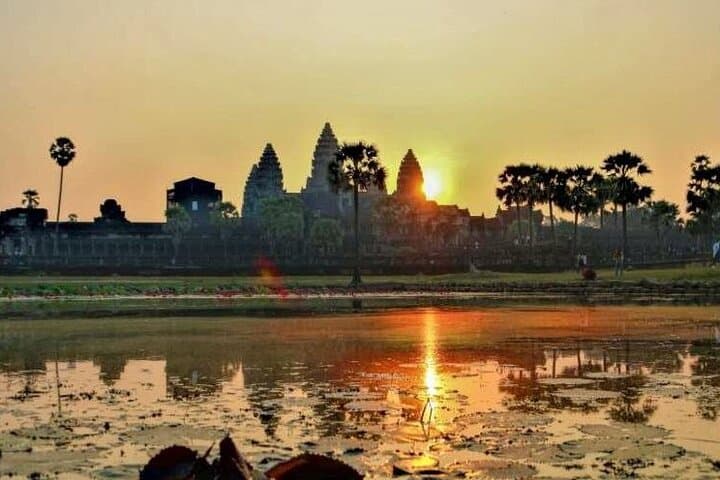
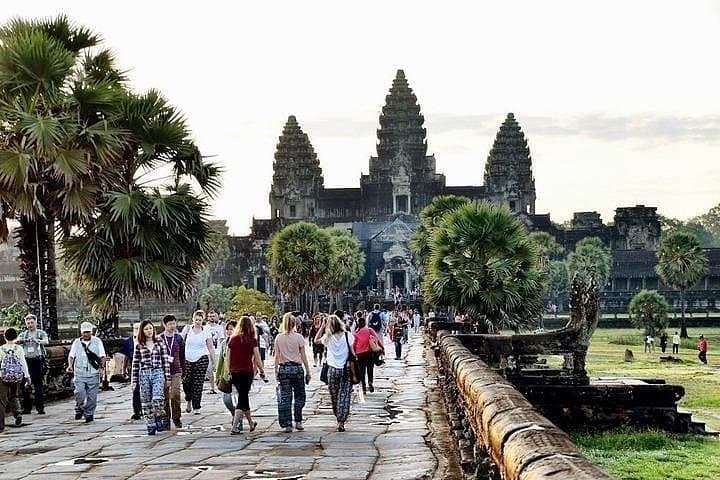
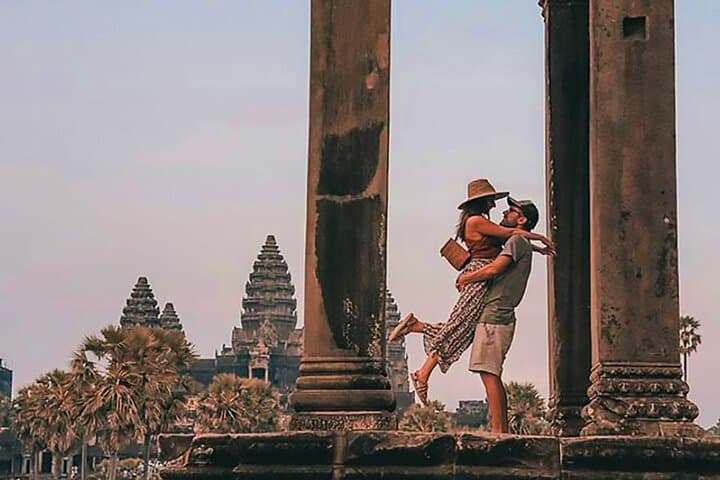
You pull the minivan onto a darkened road and the silhouette of Angkor Wat slices the eastern sky—stone towers catching first light as the world exhales. The tour begins before dawn (typically 4:00–4:30 a.m.), letting the sunrise claim the pools and causeways while the crowds are still thin and the air is cool.
You pull the minivan onto a darkened road and the silhouette of Angkor Wat slices the eastern sky—stone towers catching first light as the world exhales. The tour begins before dawn (typically 4:00–4:30 a.m.), letting the sunrise claim the pools and causeways while the crowds are still thin and the air is cool.
This eight-hour small-group circuit covers Angkor Wat, the South Gate of Angkor Thom and its Bayon faces, and the root-entwined halls of Ta Prohm. Angkor Wat was built in the 12th century under Suryavarman II as a Hindu cosmological temple and later became a Buddhist site; Bayon’s multi-faced towers are Khmer portraiture at scale, while Ta Prohm preserves the jungle-ruin romance that first captivated Western explorers.
Geologically, the sandstone blocks came from quarries tens of kilometers away and were floated on canals—ruins sit on a low alluvial plain that floods in monsoon season, feeding the reservoirs that once sustained the city.
Practical edge: arrive with your Angkor Pass, wear lightweight long sleeves and a sarong or long shorts for temple etiquette, and bring cash for tips and small purchases. Expect uneven steps, sandy corridors, and tight staircases in inner chambers.
The guide decodes bas-reliefs, times the light, and routes you to quieter viewpoints; the minivan returns you to your hotel mid-afternoon. Bring water, sun protection, and patience—these ruins reward an early rise with fewer people and clearer light for photos and reflection.