THE ADVENTURE COLLECTIVE® · Independent discovery and booking for outdoor travel

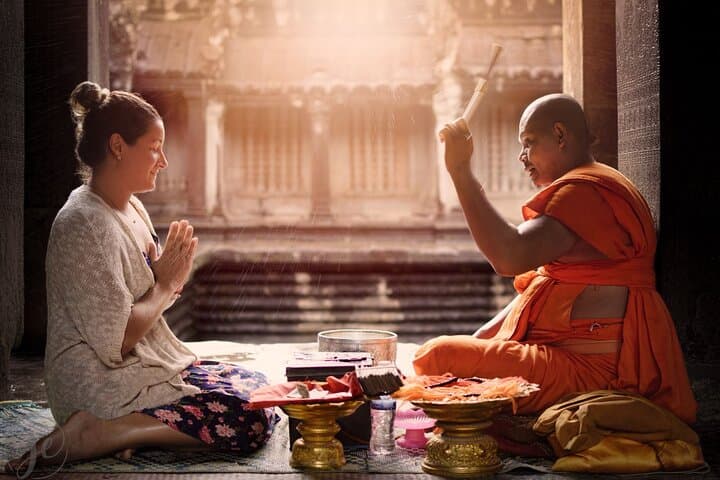
Catch sunrise at Angkor Wat, explore Bayon and Ta Prohm, then cruise Tonle Sap and witness a traditional monk blessing. This focused two-day itinerary pairs iconic temples with a living lake culture — perfect for travelers who want deep context with practical pacing.
Catch sunrise at Angkor Wat, explore Bayon and Ta Prohm, then cruise Tonle Sap and witness a traditional monk blessing. This focused two-day itinerary pairs iconic temples with a living lake culture — perfect for travelers who want deep context with practical pacing.
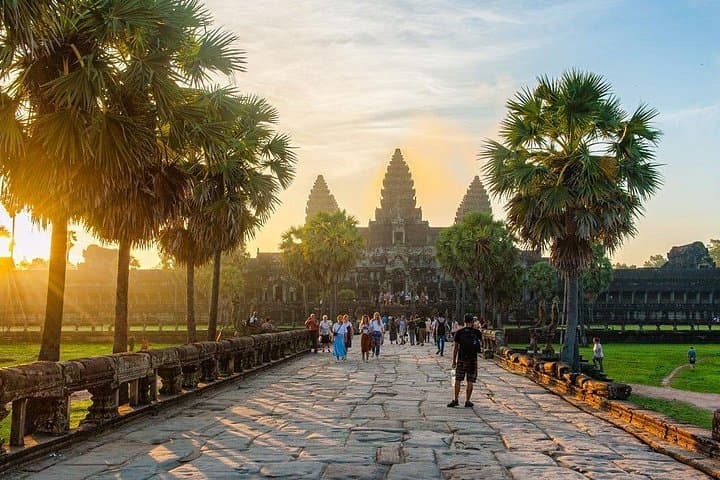
Before dawn you stand at the edge of the reflecting pool and the temple silhouette tightens against a violet sky. The first light unspools across Angkor Wat’s galleries and bas-reliefs, and the stones — warmed by centuries of sun and rain — seem to breathe history. Day one moves from the quiet, shadowed corridors of the great temple to the smiling faces of Bayon and the root-wrapped walls of Ta Prohm, where trees press into masonry as if reclaiming a story.
Verified experiences and guided adventures in the surrounding area.
Operated by Angkor Focus Travel · Siem Reap, Siem Reap Province
Before dawn you stand at the edge of the reflecting pool and the temple silhouette tightens against a violet sky. The first light unspools across Angkor Wat’s galleries and bas-reliefs, and the stones — warmed by centuries of sun and rain — seem to breathe history. Day one moves from the quiet, shadowed corridors of the great temple to the smiling faces of Bayon and the root-wrapped walls of Ta Prohm, where trees press into masonry as if reclaiming a story.
The Khmer Empire’s 12th-century capital still speaks in sandstone: carved narratives of royal life, gods and war. Geologically, the complex is built from transported sandstone blocks set on laterite foundations; erosion and humidity shape the surfaces you’ll trace with your eyes, not your hands. On day two, the landscape changes — Tonle Sap swells and retreats with the seasons, pushing its floating villages out into the water; the lake is a UNESCO biosphere and a living system that feeds much of Cambodia.
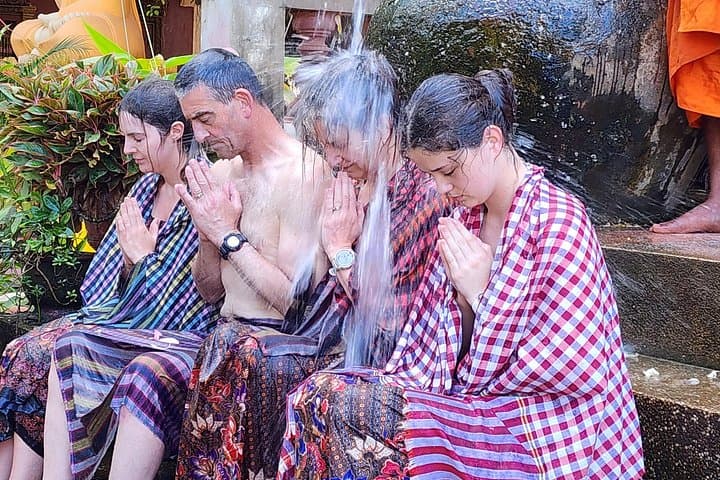
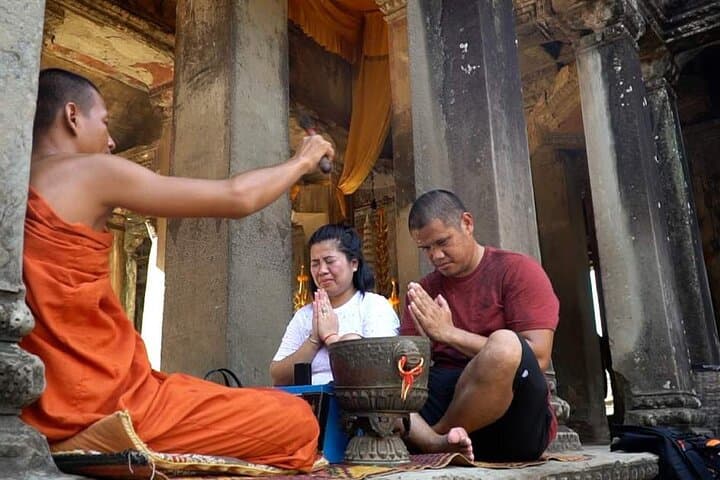
Practical guidance: expect a 5:00am start for sunrise and long walking days on uneven steps and soft sand. Bring a valid Angkor pass (sold at the official ticket center), modest clothing to cover shoulders and knees for temple and blessing ceremonies, and insect repellent for the lake. Cash is useful in small denominations; boat rides vary with season and can be choppy during high water. During the monk blessing, observe quietly, remove hats, and follow your guide’s directions — the ceremony is brief but culturally significant.
This two-day combo balances temple immersion and riverine life: early mornings, hot afternoons, and unforgettable close-ups of both stone and water cultures.
easy.
2 days (full-day activities).
Suitable for most fitness levels; requires stamina for early starts, standing through sunrise crowds, and walking on uneven temple steps.
Yes — purchase a 1-, 3- or 7-day Angkor Pass at the official ticket center; bring your passport photo or be prepared for on-site photoing.
Meals are generally not included; the itinerary notes breakfast on day one from your hotel and other meals are at your expense so plan for local restaurants or packed food.
Yes — the tour includes private car or tuk-tuk transfers for temple circuits and to/from Tonle Sap, with hotel pickup and drop-off arranged by your operator.
The blessing is primarily observational; participants can sometimes receive a blessing if arranged in advance — follow the guide’s lead and local protocol for participation.
Angkor Wat and Angkor Thom were built and expanded during the Khmer Empire (9th–15th centuries), with Jayavarman VII credited for many Bayon constructions and Buddhist influences in the later phases.
Tonle Sap is a UNESCO biosphere reserve under pressure from overfishing and development; visitors can reduce impact by using local guides, avoiding single-use plastics and sticking to marked paths at temple sites.
Angkor Focus Travel operates guided outdoor trips and adventures with an emphasis on safety, stewardship, and memorable experiences.
Before dawn you stand at the edge of the reflecting pool and the temple silhouette tightens against a violet sky. The first light unspools across Angkor Wat’s galleries and bas-reliefs, and the stones — warmed by centuries of sun and rain — seem to breathe history. Day one moves from the quiet, shadowed corridors of the great temple to the smiling faces of Bayon and the root-wrapped walls of Ta Prohm, where trees press into masonry as if reclaiming a story.
Before dawn you stand at the edge of the reflecting pool and the temple silhouette tightens against a violet sky. The first light unspools across Angkor Wat’s galleries and bas-reliefs, and the stones — warmed by centuries of sun and rain — seem to breathe history. Day one moves from the quiet, shadowed corridors of the great temple to the smiling faces of Bayon and the root-wrapped walls of Ta Prohm, where trees press into masonry as if reclaiming a story.
The Khmer Empire’s 12th-century capital still speaks in sandstone: carved narratives of royal life, gods and war. Geologically, the complex is built from transported sandstone blocks set on laterite foundations; erosion and humidity shape the surfaces you’ll trace with your eyes, not your hands. On day two, the landscape changes — Tonle Sap swells and retreats with the seasons, pushing its floating villages out into the water; the lake is a UNESCO biosphere and a living system that feeds much of Cambodia.
Practical guidance: expect a 5:00am start for sunrise and long walking days on uneven steps and soft sand. Bring a valid Angkor pass (sold at the official ticket center), modest clothing to cover shoulders and knees for temple and blessing ceremonies, and insect repellent for the lake. Cash is useful in small denominations; boat rides vary with season and can be choppy during high water. During the monk blessing, observe quietly, remove hats, and follow your guide’s directions — the ceremony is brief but culturally significant.
This two-day combo balances temple immersion and riverine life: early mornings, hot afternoons, and unforgettable close-ups of both stone and water cultures.