THE ADVENTURE COLLECTIVE® · Independent discovery and booking for outdoor travel

See Angkor Wat at sunrise, visit Ta Prohm and the Bayon, then climb Phnom Bakheng for sunset — a full private day that covers the main Angkor highlights with a local guide. Expect a long but manageable day of walking and short vehicle transfers.
See Angkor Wat at sunrise, visit Ta Prohm and the Bayon, then climb Phnom Bakheng for sunset — a full private day that covers the main Angkor highlights with a local guide. Expect a long but manageable day of walking and short vehicle transfers.
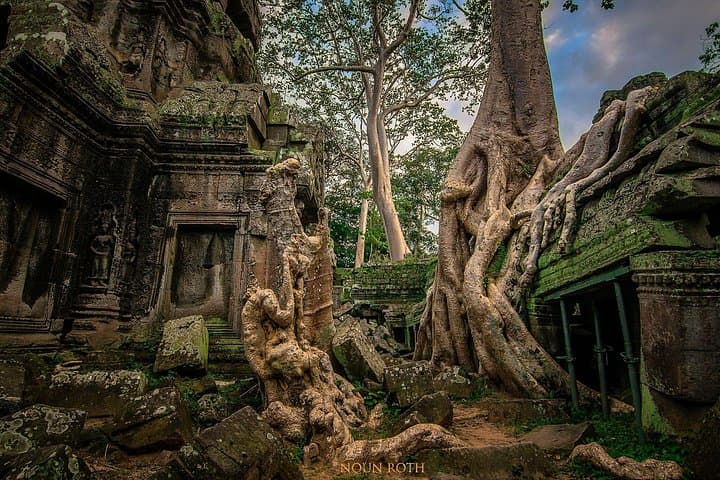
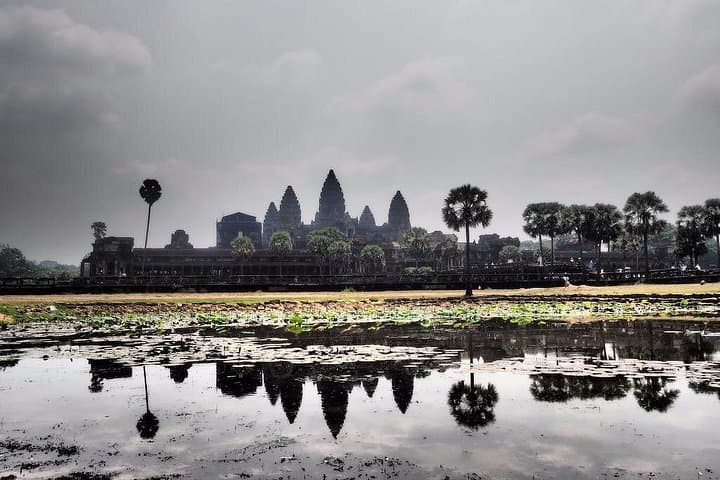
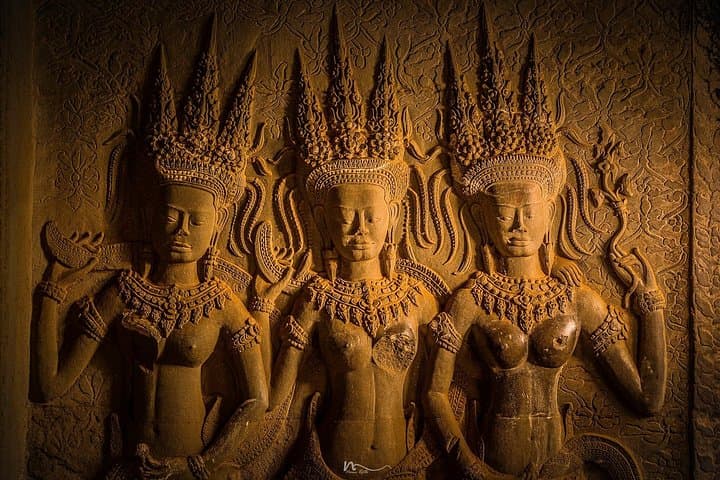
Pre-dawn light softens the outer moat as you stand before Angkor Wat, the central towers cutting a jagged silhouette against a cooling sky. The day that follows moves between dense fig-rooted temples and broad stone terraces; steam of the humid air rises off carved bas-reliefs as you walk from one chamber of history to the next.
Verified experiences and guided adventures in the surrounding area.
Operated by Happy Angkor Tour · Siem Reap, Siem Reap Province
Pre-dawn light softens the outer moat as you stand before Angkor Wat, the central towers cutting a jagged silhouette against a cooling sky. The day that follows moves between dense fig-rooted temples and broad stone terraces; steam of the humid air rises off carved bas-reliefs as you walk from one chamber of history to the next.
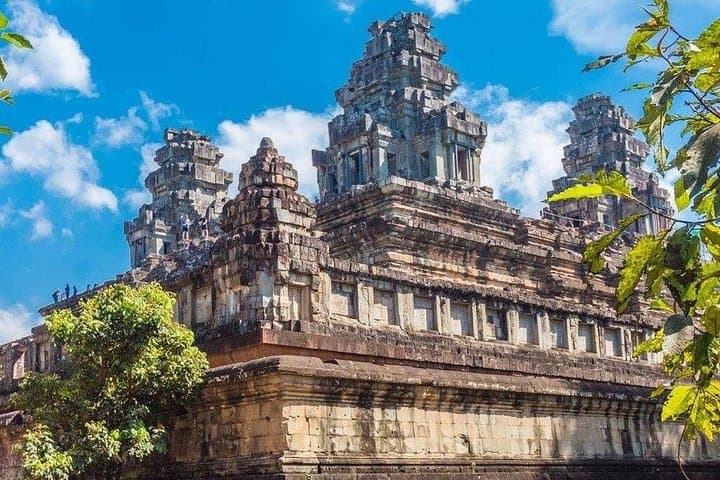
Built by the Khmer Empire in the 12th century, Angkor Wat began as a Hindu state temple and evolved into a vast complex of Buddhist and royal monuments. Geologically the site sits on a flat alluvial plain — ancient sandstone blocks quarried and moved into stacked galleries — while the surrounding forests reclaim later structures like Ta Nei and Ta Prohm. Local culture is visible in temple carvings, modern village life around Siem Reap, and the APSARA-managed conservation efforts funded in part by Angkor pass revenues.
Practical guidance: this private itinerary runs ~11–12 hours and mixes short walks (expect 10–15 km total walking dispersed across the day) with vehicle transfers. Wear breathable, respectful clothing (knees and shoulders covered), sturdy walking shoes, and carry at least 2–3 liters of water. Sunrise at Angkor Wat is crowded — arrive early. Phnom Bakheng requires a brief steep climb of roughly 60–70 m; plan extra time for sunset crowds. Buy your Angkor pass before entering, bring cash for lunch and tips, and use a local guide to read the reliefs and manage logistics. Mosquito repellent, sun protection, and a light rain layer for the wet season will keep the day smooth.
moderate.
11–12 hours.
Moderate endurance for a long day: able to walk several short sections totaling up to 10–15 km with brief stair climbs
You can buy the Angkor pass at the ticket center before entry, but allow time during early pickup; many visitors ask their tour operator to purchase it en route to the site.
Expect 10–15 km of walking spread across the day with vehicle transfers between sites; many sections are short but repeatedly climb stairs or uneven stone.
The itinerary is flexible and marked as suitable for all fitness levels, but the long day and sunset climb may be tiring for very young children or those with limited mobility.
This private tour typically includes bottled water and wet towels; lunch and the Angkor pass are not included and should be budgeted separately unless specified.
Angkor Wat and the surrounding Angkor complex were built by the Khmer Empire between the 9th and 15th centuries, with Angkor Wat itself completed in the 12th century under King Suryavarman II.
Visitor revenue supports APSARA Authority conservation programs; follow site rules, avoid touching bas‑reliefs, and use marked paths to reduce wear on fragile stone.
Happy Angkor Tour operates guided outdoor trips and adventures with an emphasis on safety, stewardship, and memorable experiences.
Pre-dawn light softens the outer moat as you stand before Angkor Wat, the central towers cutting a jagged silhouette against a cooling sky. The day that follows moves between dense fig-rooted temples and broad stone terraces; steam of the humid air rises off carved bas-reliefs as you walk from one chamber of history to the next.
Pre-dawn light softens the outer moat as you stand before Angkor Wat, the central towers cutting a jagged silhouette against a cooling sky. The day that follows moves between dense fig-rooted temples and broad stone terraces; steam of the humid air rises off carved bas-reliefs as you walk from one chamber of history to the next.
Built by the Khmer Empire in the 12th century, Angkor Wat began as a Hindu state temple and evolved into a vast complex of Buddhist and royal monuments. Geologically the site sits on a flat alluvial plain — ancient sandstone blocks quarried and moved into stacked galleries — while the surrounding forests reclaim later structures like Ta Nei and Ta Prohm. Local culture is visible in temple carvings, modern village life around Siem Reap, and the APSARA-managed conservation efforts funded in part by Angkor pass revenues.
Practical guidance: this private itinerary runs ~11–12 hours and mixes short walks (expect 10–15 km total walking dispersed across the day) with vehicle transfers. Wear breathable, respectful clothing (knees and shoulders covered), sturdy walking shoes, and carry at least 2–3 liters of water. Sunrise at Angkor Wat is crowded — arrive early. Phnom Bakheng requires a brief steep climb of roughly 60–70 m; plan extra time for sunset crowds. Buy your Angkor pass before entering, bring cash for lunch and tips, and use a local guide to read the reliefs and manage logistics. Mosquito repellent, sun protection, and a light rain layer for the wet season will keep the day smooth.