THE ADVENTURE COLLECTIVE® · Independent discovery and booking for outdoor travel

Catch dawn at Angkor Wat and follow a small-group route through Bayon, Ta Prohm and Banteay Kdei. This full-day sunrise tour pairs dramatic morning light with guided cultural context and easy walking between major temples.
Catch dawn at Angkor Wat and follow a small-group route through Bayon, Ta Prohm and Banteay Kdei. This full-day sunrise tour pairs dramatic morning light with guided cultural context and easy walking between major temples.
Before the sun clears the horizon, the long causeway across Angkor Wat’s moat becomes a stage: silhouettes of towers and early walkers cut a crisp line against a pale sky. The reflection in still water holds the first colors of the day, and for an hour the temple seems to hold its breath — tourists hush, cameras click, and the complex reveals itself slowly.
Verified experiences and guided adventures in the surrounding area.
Operated by Mekong Tourist · Siem Reap, Siem Reap Province
Before the sun clears the horizon, the long causeway across Angkor Wat’s moat becomes a stage: silhouettes of towers and early walkers cut a crisp line against a pale sky. The reflection in still water holds the first colors of the day, and for an hour the temple seems to hold its breath — tourists hush, cameras click, and the complex reveals itself slowly.
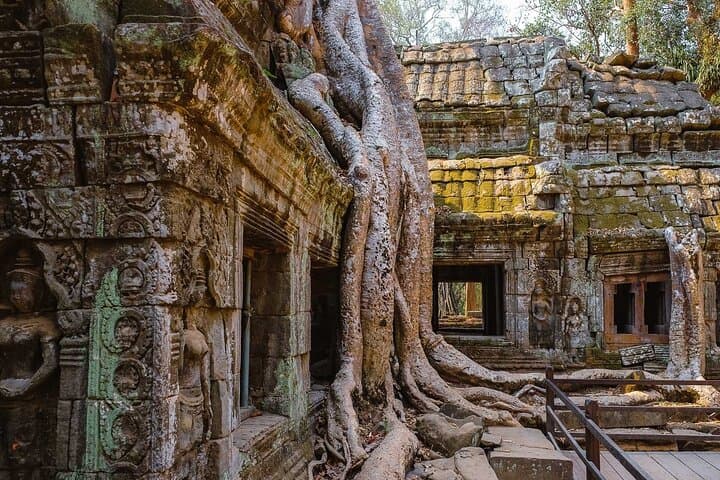
Built in the 12th century by King Suryavarman II, Angkor Wat began as a Hindu state temple and became a Buddhist site over centuries. The complex sits on Cambrian and Triassic sandstone and laterite; the carved bas-reliefs and towering galleries show both spiritual intent and extraordinary engineering. Ta Prohm’s trees seem to be reclaiming stone, roots draping walls like slow-moving hands. Nearby, Bayon’s 54 towers wear dozens of calm faces that watch over the old city of Angkor Thom.
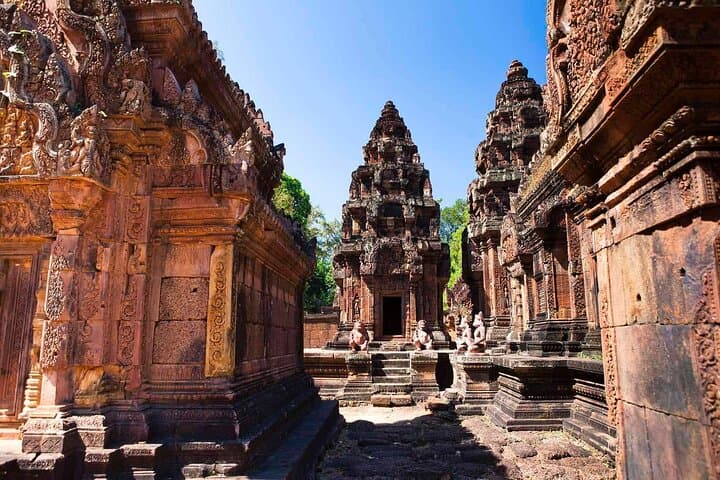
On a small-group sunrise tour you’ll move deliberately: early pickup from Siem Reap, an Angkor Park pass stop, sunrise at Angkor Wat, then Bayon, Terrace of the Elephants, Ta Prohm, and Banteay Kdei. Expect mostly flat walking with uneven temple steps and sandy paths; light rain in monsoon months can turn paths slick.
Practical guidance: arrive with a valid Angkor Park pass, wear a respectful, knee-and-shoulder-covering outfit, bring water and a headlamp for pre-dawn walks, and budget time for photography and short rests. Guides manage logistics and history; tip if service enhances your experience. With patience and a steady pace, this full-day route delivers sunrise drama and layered history in one compact, unforgettable sweep.
easy.
7–8 hours.
Suitable for travelers comfortable walking on flat ground and climbing short uneven steps; minimal endurance required.
Pickup is pre-dawn (usually around 4:00–5:00 AM depending on season and hotel location) to reach Angkor Wat before sunrise and pass the ticket counter.
Yes — the tour includes all entrance tickets; guides typically stop at the ticket counter so your pass is ready for entry.
Shoulders and knees should be covered inside temples; avoid shorts, sleeveless tops, and revealing clothing out of respect for religious sites.
The tour is family-friendly, but some temple areas have uneven steps and narrow passages — not ideal for wheelchair users; infants must sit on an adult’s lap during transport.
Angkor Wat was constructed in the early 12th century by King Suryavarman II as both a state temple and mausoleum, later evolving into a major Buddhist pilgrimage site.
Visitor pressure has accelerated erosion on sandstone carvings; follow signage, avoid touching bas-reliefs, and hire licensed guides to support conservation-minded tourism.
Mekong Tourist operates guided outdoor trips and adventures with an emphasis on safety, stewardship, and memorable experiences.

Before the sun clears the horizon, the long causeway across Angkor Wat’s moat becomes a stage: silhouettes of towers and early walkers cut a crisp line against a pale sky. The reflection in still water holds the first colors of the day, and for an hour the temple seems to hold its breath — tourists hush, cameras click, and the complex reveals itself slowly.
Before the sun clears the horizon, the long causeway across Angkor Wat’s moat becomes a stage: silhouettes of towers and early walkers cut a crisp line against a pale sky. The reflection in still water holds the first colors of the day, and for an hour the temple seems to hold its breath — tourists hush, cameras click, and the complex reveals itself slowly.
Built in the 12th century by King Suryavarman II, Angkor Wat began as a Hindu state temple and became a Buddhist site over centuries. The complex sits on Cambrian and Triassic sandstone and laterite; the carved bas-reliefs and towering galleries show both spiritual intent and extraordinary engineering. Ta Prohm’s trees seem to be reclaiming stone, roots draping walls like slow-moving hands. Nearby, Bayon’s 54 towers wear dozens of calm faces that watch over the old city of Angkor Thom.
On a small-group sunrise tour you’ll move deliberately: early pickup from Siem Reap, an Angkor Park pass stop, sunrise at Angkor Wat, then Bayon, Terrace of the Elephants, Ta Prohm, and Banteay Kdei. Expect mostly flat walking with uneven temple steps and sandy paths; light rain in monsoon months can turn paths slick.
Practical guidance: arrive with a valid Angkor Park pass, wear a respectful, knee-and-shoulder-covering outfit, bring water and a headlamp for pre-dawn walks, and budget time for photography and short rests. Guides manage logistics and history; tip if service enhances your experience. With patience and a steady pace, this full-day route delivers sunrise drama and layered history in one compact, unforgettable sweep.