THE ADVENTURE COLLECTIVE® · Independent discovery and booking for outdoor travel

Catch Angkor Wat’s iconic sunrise then tour Angkor Thom, Bayon and Ta Prohm with an expert guide. This accessible small-group option pairs early-morning light with detailed historical context and convenient transport.
Catch Angkor Wat’s iconic sunrise then tour Angkor Thom, Bayon and Ta Prohm with an expert guide. This accessible small-group option pairs early-morning light with detailed historical context and convenient transport.
Before first light the moat around Angkor Wat holds a cool, mirror-flat silence; silhouettes of towers sharpen as the sky warms and the sun dares to push gold across sandstone.
Verified experiences and guided adventures in the surrounding area.
Operated by Ta Prohm Temple Tour · Siem Reap, Siem Reap Province
Before first light the moat around Angkor Wat holds a cool, mirror-flat silence; silhouettes of towers sharpen as the sky warms and the sun dares to push gold across sandstone.
This small-group, full-day circuit moves from the sunrise terraces of Angkor Wat through the carved faces of Bayon and the gate-lined avenues of Angkor Thom, finishing amid the root-choked corridors of Ta Prohm. The experience threads natural drama with deep history: Angkor was the heart of the Khmer Empire from the 9th–15th centuries, its temples cut from sandstone and laterite and built to align with cosmology and water-management systems that still shape the plain.
Geology here is literal: quarried blocks bear fossilized marine shells, reminders that this was once seabed uplifted by deep earth processes. Culturally, temples shift between Hindu and Buddhist iconography—stone reliefs narrate daily life, war, and devotion. Ta Prohm’s fig roots pull at stones like slow hands, a visual cue to the contest between stone and forest.
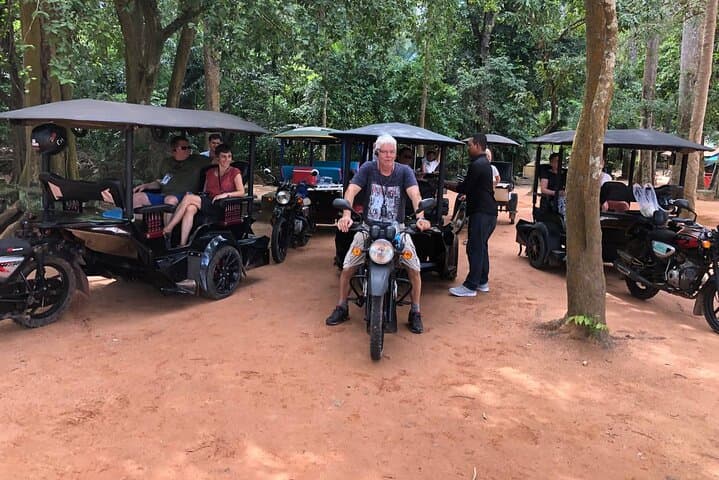
Practically: expect a 7-hour outing with short walks of a few hundred metres to a kilometre at each site across uneven stone and dirt. Angkor Park admission is not included—buy your pass before arrival. Dress modestly for temple entry, carry water, sun protection, and small local currency for tips and purchases. Photography at sunrise is crowded; move quickly or aim for quieter angles. The guide handles logistics and context—bring questions and respect: stay on marked paths, don’t climb fragile carvings, and leave no trace of your passing.
easy.
7 hours.
Suitable for most fitness levels; expect intermittent walking on uneven stone and short stair sections.
No; Angkor Park admission is not included—buy your pass at the official ticket center near the park before entry.
Pickup is typically pre-dawn (around 4:30–5:00 a.m.) to reach Angkor Wat for sunrise and avoid later crowds.
The tour is marked suitable for all fitness levels; however, there are uneven paths and steps—ask about accessible routes or vehicle drop-offs if mobility is limited.
Yes—if you hold a valid Angkor Pass you can return independently; use the guide’s timing to plan quieter windows.
Angkor was the political and hydraulic center of the Khmer Empire between roughly the 9th and 15th centuries, built around temple-mountains and a sophisticated water-management network.
Heavy visitation stresses fragile stone and local resources—stick to paths, avoid touching reliefs, and support local guides and conservation fees.
Ta Prohm Temple Tour operates guided outdoor trips and adventures with an emphasis on safety, stewardship, and memorable experiences.
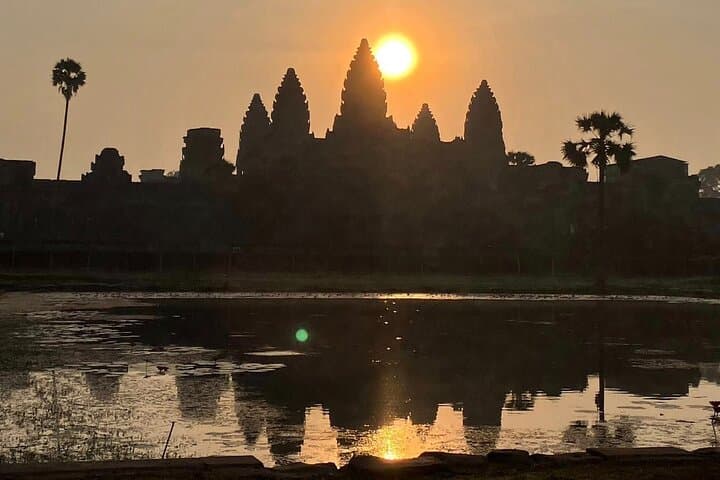
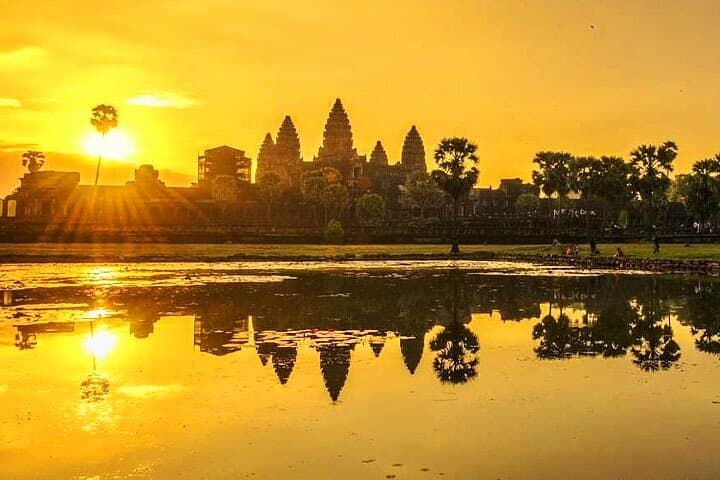

Before first light the moat around Angkor Wat holds a cool, mirror-flat silence; silhouettes of towers sharpen as the sky warms and the sun dares to push gold across sandstone.
Before first light the moat around Angkor Wat holds a cool, mirror-flat silence; silhouettes of towers sharpen as the sky warms and the sun dares to push gold across sandstone.
This small-group, full-day circuit moves from the sunrise terraces of Angkor Wat through the carved faces of Bayon and the gate-lined avenues of Angkor Thom, finishing amid the root-choked corridors of Ta Prohm. The experience threads natural drama with deep history: Angkor was the heart of the Khmer Empire from the 9th–15th centuries, its temples cut from sandstone and laterite and built to align with cosmology and water-management systems that still shape the plain.
Geology here is literal: quarried blocks bear fossilized marine shells, reminders that this was once seabed uplifted by deep earth processes. Culturally, temples shift between Hindu and Buddhist iconography—stone reliefs narrate daily life, war, and devotion. Ta Prohm’s fig roots pull at stones like slow hands, a visual cue to the contest between stone and forest.
Practically: expect a 7-hour outing with short walks of a few hundred metres to a kilometre at each site across uneven stone and dirt. Angkor Park admission is not included—buy your pass before arrival. Dress modestly for temple entry, carry water, sun protection, and small local currency for tips and purchases. Photography at sunrise is crowded; move quickly or aim for quieter angles. The guide handles logistics and context—bring questions and respect: stay on marked paths, don’t climb fragile carvings, and leave no trace of your passing.