THE ADVENTURE COLLECTIVE® · Independent discovery and booking for outdoor travel

Witness Angkor Wat at first light with a small-group tour that pairs sunrise views with a traditional breakfast hosted by a local family. Early pickup, moderated walking, and a knowledgeable guide make this an efficient way to experience Angkor’s major temples before the crowds arrive.
Witness Angkor Wat at first light with a small-group tour that pairs sunrise views with a traditional breakfast hosted by a local family. Early pickup, moderated walking, and a knowledgeable guide make this an efficient way to experience Angkor’s major temples before the crowds arrive.
Before dawn the moat becomes a band of ink and the central towers of Angkor Wat silhouette like chiropteran sentries. You arrive with other quiet travelers and a local guide who times your approach so the first light slips across lotus-fringed reflection pools and the temple’s carved bas-reliefs catch a soft gold. After the spectacle you move through the quiet inner galleries, climbing ancient sandstone steps before the day’s heat and crowds set in.
Verified experiences and guided adventures in the surrounding area.
Operated by Asean Angkor Guide · Siem Reap, Siem Reap Province
Before dawn the moat becomes a band of ink and the central towers of Angkor Wat silhouette like chiropteran sentries. You arrive with other quiet travelers and a local guide who times your approach so the first light slips across lotus-fringed reflection pools and the temple’s carved bas-reliefs catch a soft gold. After the spectacle you move through the quiet inner galleries, climbing ancient sandstone steps before the day’s heat and crowds set in.
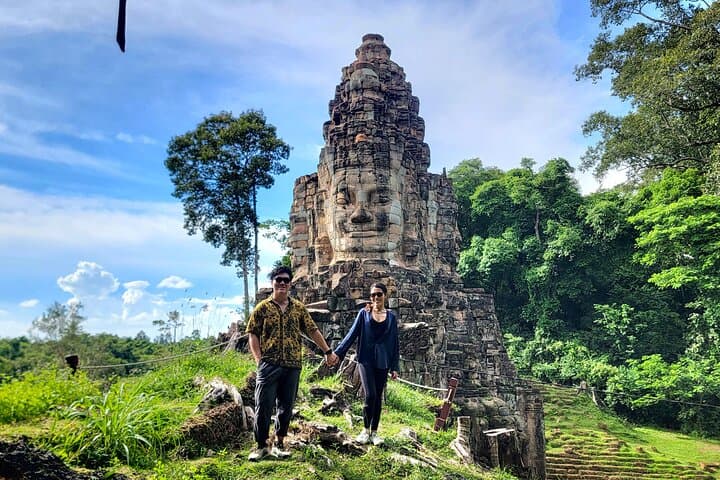
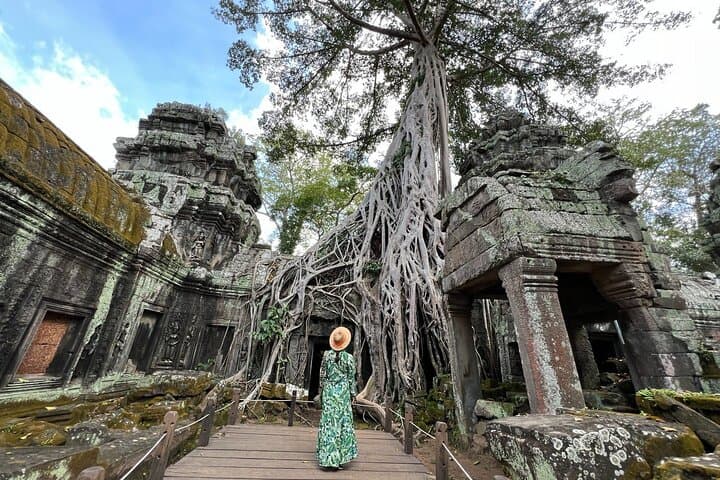
Angkor Wat dates to the early 12th century under King Suryavarman II and stands on layers of sandstone hewn and stacked with mathematical precision. The surrounding complex—Ta Prohm’s tangled fig roots, the Baphuon’s pyramid mound, and the Terrace of the Elephants—shows both Khmer religious devotion and imperial urban planning. Local culture lives on in nearby villages; this tour includes breakfast prepared by a family in Preah Dak village, where palm cakes and rice porridge reflect rural ingredients and community income from tourism.
Practically, expect a very early hotel pickup (around 4:30–5:00 AM), several hours of walking on uneven stone and staircases, and brief transfers between sites. Bring sun protection, insect repellent, and a lightweight cover to meet temple dress codes that require covered knees and shoulders. The sunrise window is weather-dependent—dawn can be spectacular or muted—so flexibility and patience reward you with memorable photographs and a quieter look at one of Southeast Asia’s most iconic archaeological landscapes.
easy.
9 hours.
Suitable for most fitness levels; expect multiple short walks, uneven stone steps and standing during the sunrise viewing.
Yes—an Angkor temple pass is required for entry. Buy it in advance online or at the official ticket office to avoid delays; the operator can advise if you need help.
Pickup is typically between 4:30 and 5:00 AM; the full experience runs roughly nine hours including transfers, temple visits, and breakfast.
The tour is rated easy and generally suitable for all ages, but there is early pickup and some stair climbing—travelers with mobility issues should inquire ahead.
Cover shoulders and knees; breathable fabrics are best. Avoid ripped shorts and sleeveless tops to comply with site rules and local customs.
Angkor Wat was built in the early 12th century under King Suryavarman II as a Hindu temple that later became part of the Khmer Empire’s Buddhist landscape.
The Angkor pass funds conservation and site management; visitors should avoid climbing fragile carvings, carry out trash, and favor community-run services that support local livelihoods.
Asean Angkor Guide operates guided outdoor trips and adventures with an emphasis on safety, stewardship, and memorable experiences.
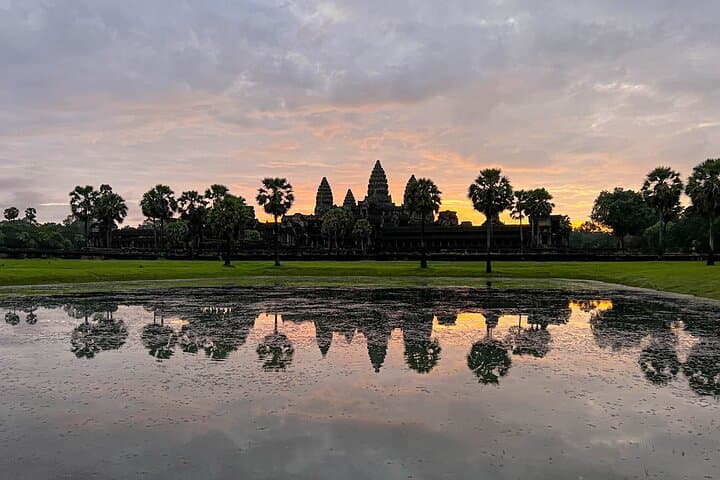
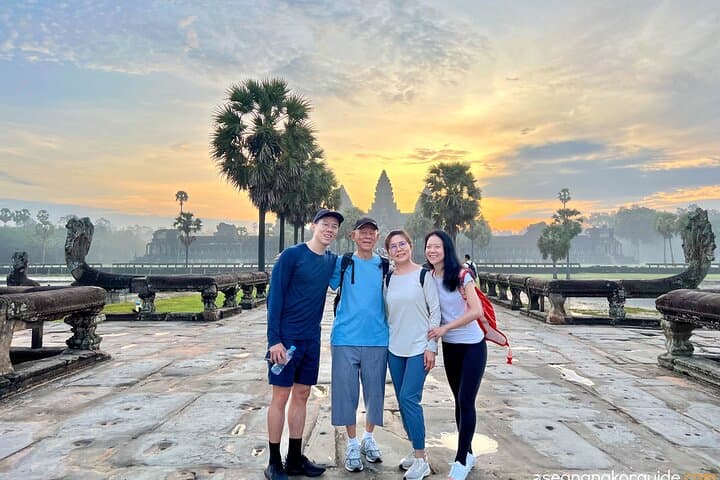
Before dawn the moat becomes a band of ink and the central towers of Angkor Wat silhouette like chiropteran sentries. You arrive with other quiet travelers and a local guide who times your approach so the first light slips across lotus-fringed reflection pools and the temple’s carved bas-reliefs catch a soft gold. After the spectacle you move through the quiet inner galleries, climbing ancient sandstone steps before the day’s heat and crowds set in.
Before dawn the moat becomes a band of ink and the central towers of Angkor Wat silhouette like chiropteran sentries. You arrive with other quiet travelers and a local guide who times your approach so the first light slips across lotus-fringed reflection pools and the temple’s carved bas-reliefs catch a soft gold. After the spectacle you move through the quiet inner galleries, climbing ancient sandstone steps before the day’s heat and crowds set in.
Angkor Wat dates to the early 12th century under King Suryavarman II and stands on layers of sandstone hewn and stacked with mathematical precision. The surrounding complex—Ta Prohm’s tangled fig roots, the Baphuon’s pyramid mound, and the Terrace of the Elephants—shows both Khmer religious devotion and imperial urban planning. Local culture lives on in nearby villages; this tour includes breakfast prepared by a family in Preah Dak village, where palm cakes and rice porridge reflect rural ingredients and community income from tourism.
Practically, expect a very early hotel pickup (around 4:30–5:00 AM), several hours of walking on uneven stone and staircases, and brief transfers between sites. Bring sun protection, insect repellent, and a lightweight cover to meet temple dress codes that require covered knees and shoulders. The sunrise window is weather-dependent—dawn can be spectacular or muted—so flexibility and patience reward you with memorable photographs and a quieter look at one of Southeast Asia’s most iconic archaeological landscapes.