THE ADVENTURE COLLECTIVE® · Independent discovery and booking for outdoor travel

Watch sunrise spill over Angkor Wat in near‑silence, then spend a full day guided through the Angkor complex—Bayon, Ta Prohm and the Victory Gate—returning to Siem Reap with local breakfast and snacks included. This private tour times photo stops and avoids crowds for a focused temple experience.
Watch sunrise spill over Angkor Wat in near‑silence, then spend a full day guided through the Angkor complex—Bayon, Ta Prohm and the Victory Gate—returning to Siem Reap with local breakfast and snacks included. This private tour times photo stops and avoids crowds for a focused temple experience.
You step from the tuk‑tuk into a cool, lantern-pale morning and the moat breathes mist across the causeway. The silhouette of Angkor Wat—towers like watchful guardians—softens as the sky slips from indigo to gold; the guide gestures quietly, timing your vantage so light reveals the bas‑reliefs and pools without the crush of mid‑day crowds.
Verified experiences and guided adventures in the surrounding area.
Operated by CWE Travel · Siem Reap, Siem Reap Province
You step from the tuk‑tuk into a cool, lantern-pale morning and the moat breathes mist across the causeway. The silhouette of Angkor Wat—towers like watchful guardians—softens as the sky slips from indigo to gold; the guide gestures quietly, timing your vantage so light reveals the bas‑reliefs and pools without the crush of mid‑day crowds.
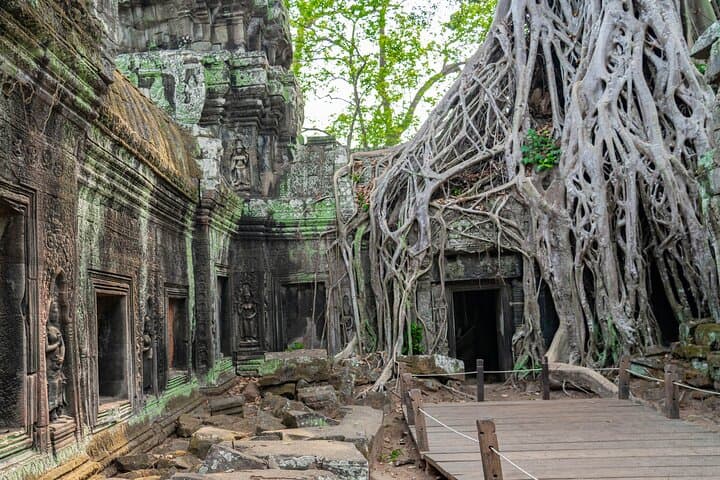
The complex grew from 12th‑century imperial ambition: King Suryavarman II carved a Hindu temple that later became a Buddhist pilgrimage center. The sandstone blocks here tell geological and cultural stories—the Cambrian and Cretaceous deposits beneath the plain yielding the compact sandstone the Khmer masons favored. Nearby Ta Prohm shows nature’s persistence: banyan roots claiming roof and lintel, vines that seem to test the stone’s resolve.
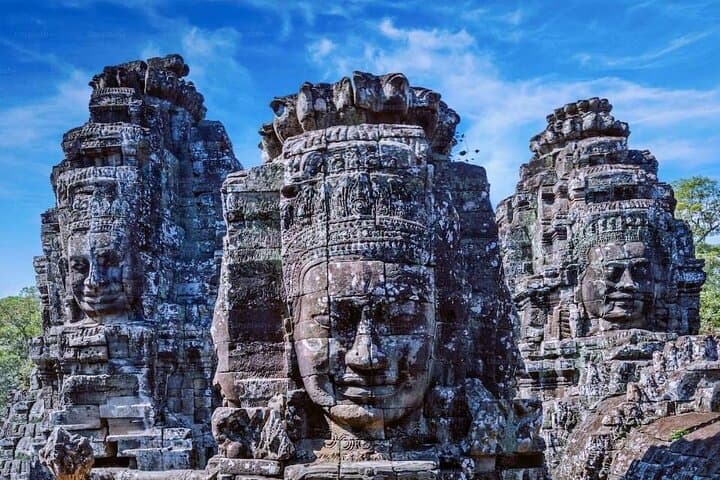
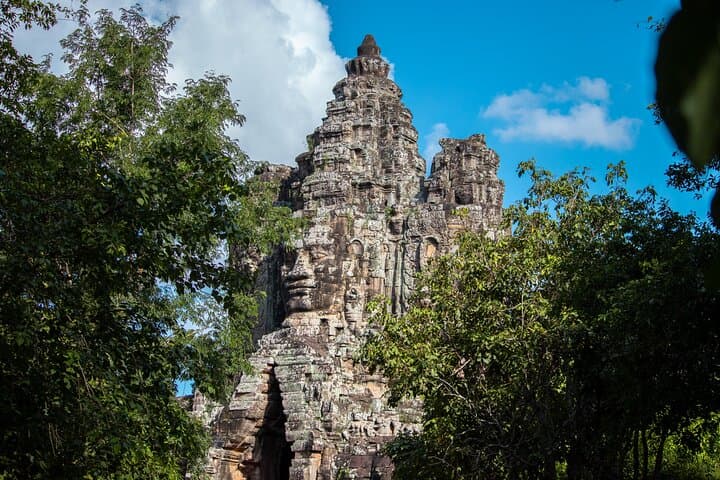
After sunrise the tour unfolds at a measured pace—walks past the world’s longest bas‑relief, a pause at Bayon’s many stone faces, and a quick stop at the Victory Gate—before a local breakfast restores energy. Practicalities matter: buy your Angkor pass in advance, dress to cover shoulders and knees, and expect a 7–8 hour day with several hours on your feet.
Bring a refillable bottle, sun protection, and modest footwear; humidity rises fast after dawn and paths can be uneven. The private format means fewer interruptions and flexible photo stops, but the temple ticket fund supports ongoing conservation—your visit directly aids maintenance. Plan for an early pickup (around 4:00–4:45 a.m.), and you’ll leave with images of light running along carved stone and the rare quiet of Angkor before the park wakes.
moderate.
7–8 hours.
Able to walk on uneven ground for several hours with short, flat climbs; basic stamina required for a long day outdoors.
Yes—the Angkor pass must be purchased separately; buying online before arrival saves time and secures entry during busy periods.
Pickup is typically scheduled between 4:00–4:45 a.m. depending on the season; be ready in your hotel lobby at the confirmed time.
Photography is allowed at most sites, but avoid tripods in crowded areas and respect signs that prohibit flash or close contact with carvings.
Children can join, but the tour involves uneven surfaces and steps; travelers with serious mobility or spinal issues should discuss limitations with the operator beforehand.
Angkor Wat was constructed in the early 12th century under King Suryavarman II as a Hindu temple that later transitioned to Buddhist use, reflecting Cambodia’s religious evolution.
Entrance fees fund conservation and maintenance; stick to marked paths, avoid touching fragile carvings, and use refillable bottles to minimize plastic waste.
CWE Travel operates guided outdoor trips and adventures with an emphasis on safety, stewardship, and memorable experiences.
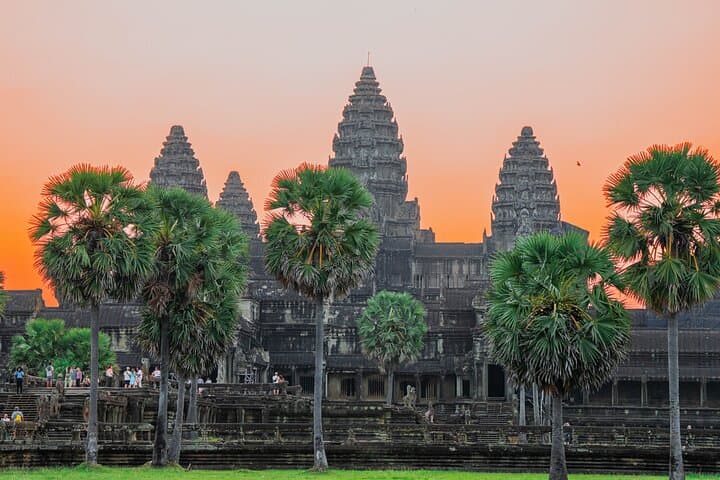
You step from the tuk‑tuk into a cool, lantern-pale morning and the moat breathes mist across the causeway. The silhouette of Angkor Wat—towers like watchful guardians—softens as the sky slips from indigo to gold; the guide gestures quietly, timing your vantage so light reveals the bas‑reliefs and pools without the crush of mid‑day crowds.
You step from the tuk‑tuk into a cool, lantern-pale morning and the moat breathes mist across the causeway. The silhouette of Angkor Wat—towers like watchful guardians—softens as the sky slips from indigo to gold; the guide gestures quietly, timing your vantage so light reveals the bas‑reliefs and pools without the crush of mid‑day crowds.
The complex grew from 12th‑century imperial ambition: King Suryavarman II carved a Hindu temple that later became a Buddhist pilgrimage center. The sandstone blocks here tell geological and cultural stories—the Cambrian and Cretaceous deposits beneath the plain yielding the compact sandstone the Khmer masons favored. Nearby Ta Prohm shows nature’s persistence: banyan roots claiming roof and lintel, vines that seem to test the stone’s resolve.
After sunrise the tour unfolds at a measured pace—walks past the world’s longest bas‑relief, a pause at Bayon’s many stone faces, and a quick stop at the Victory Gate—before a local breakfast restores energy. Practicalities matter: buy your Angkor pass in advance, dress to cover shoulders and knees, and expect a 7–8 hour day with several hours on your feet.
Bring a refillable bottle, sun protection, and modest footwear; humidity rises fast after dawn and paths can be uneven. The private format means fewer interruptions and flexible photo stops, but the temple ticket fund supports ongoing conservation—your visit directly aids maintenance. Plan for an early pickup (around 4:00–4:45 a.m.), and you’ll leave with images of light running along carved stone and the rare quiet of Angkor before the park wakes.