THE ADVENTURE COLLECTIVE® · Independent discovery and booking for outdoor travel

Watch the sun lift over Angkor Wat’s spires on a private guided tour that pairs a pre-dawn spectacle with the major temples of Angkor Thom, Ta Prohm and Banteay Kdei. Practical tips on tickets, timing and what to wear help you make the most of an eight-hour cultural day-trip from Siem Reap.
Watch the sun lift over Angkor Wat’s spires on a private guided tour that pairs a pre-dawn spectacle with the major temples of Angkor Thom, Ta Prohm and Banteay Kdei. Practical tips on tickets, timing and what to wear help you make the most of an eight-hour cultural day-trip from Siem Reap.
You stand at the edge of Angkor Wat’s reflecting pool before dawn; the spires silhouette the sky and the first light slides up the carved galleries. The still water dares you to hold your breath and watch history unfold as the temple moves from shadow into gold.
Verified experiences and guided adventures in the surrounding area.
Operated by Angkor Wat Travel Tour · Siem Reap, Siem Reap Province
You stand at the edge of Angkor Wat’s reflecting pool before dawn; the spires silhouette the sky and the first light slides up the carved galleries. The still water dares you to hold your breath and watch history unfold as the temple moves from shadow into gold.
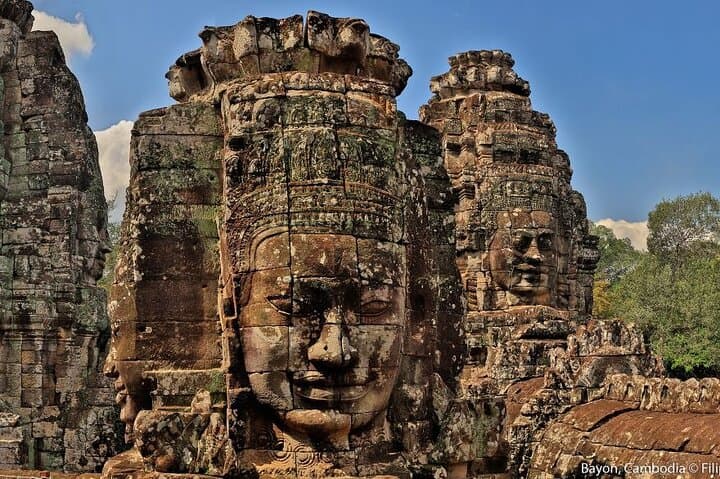
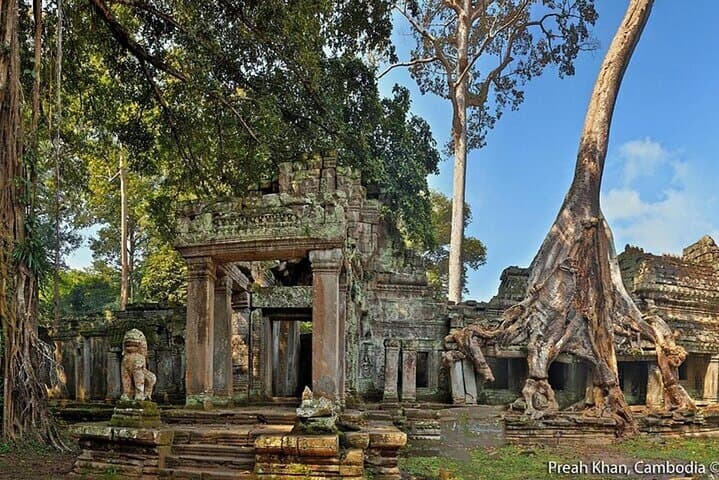
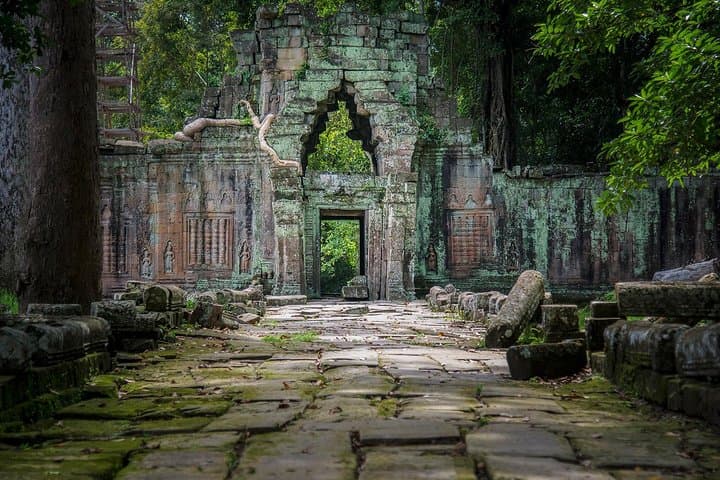
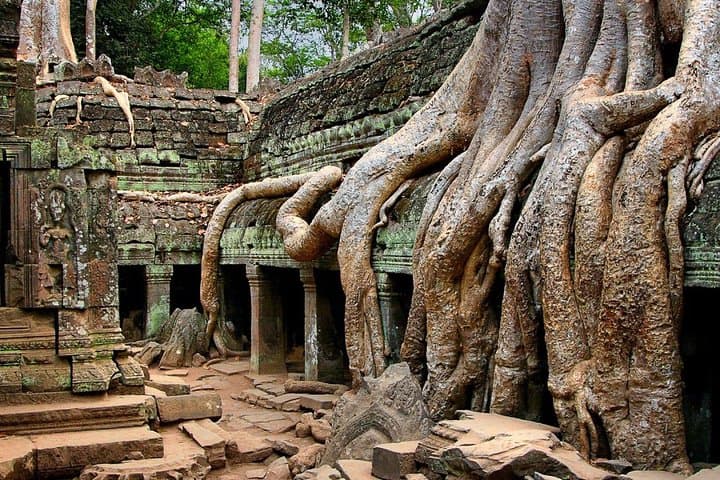
This private, full-day experience begins with sunrise at Angkor Wat—built by King Suryavarman II in the early 12th century as a Hindu temple dedicated to Vishnu and now a UNESCO World Heritage Site. The tour then threads through Angkor Thom and the Bayon, where Jayavarman VII’s smiling faces and terraces (Elephant, Leper King) reveal the city’s political and religious transformations. Ta Prohm’s strangling fig roots and Banteay Kdei’s quiet monastic ruins speak to the jungle’s slow reclaiming of stone.
Geologically the site sits on low alluvial plains; expect flat walking between temple clusters and steep stone staircases at some shrines. Culturally, these monuments remain living markers—local guides will point out Khmer iconography, restoration histories, and the APSARA Authority’s preservation work.
Practical guidance: this is an early start—pickups commonly happen before 5:00 a.m.—so dress modestly (shoulders and knees covered), wear sturdy shoes for uneven steps, and bring a refillable water bottle and sunscreen. The Angkor Pass (entrance fee) is not included—purchase at the ticket center or arrange in advance. The tour includes an English guide, air-conditioned transport, and basic refreshments; plan for cash for tips and small purchases. Timing your visit in the dry season gives clearer sunrises, while the wet season offers quieter paths and greener temple surrounds.
easy.
8 hours.
Suitable for most fitness levels; requires standing, walking on uneven ground and climbing short steep stairs.
No—Angkor Pass (1-, 3- or 7-day) is required and is typically purchased at the official ticket center; tours often advise buying it on arrival or arranging in advance.
Pickups are usually before 5:00 a.m. to reach the reflection pool in time; exact pickup times depend on your hotel location and tour operator.
Yes—most sites are accessible with walking and short stair climbs; some areas have steep steps and uneven terrain, so assess mobility needs beforehand.
Photography is generally allowed in most areas, but avoid flash in sensitive chambers and follow guide instructions where photography is restricted for conservation or religious reasons.
Angkor was the political and religious center of the Khmer Empire from the 9th to 15th centuries; different kings—most notably Suryavarman II and Jayavarman VII—left distinct architectural layers.
The site is managed by the APSARA Authority and restoration projects continue; visitors should stay on marked paths, avoid touching reliefs, and minimize plastic waste.
Angkor Wat Travel Tour operates guided outdoor trips and adventures with an emphasis on safety, stewardship, and memorable experiences.
You stand at the edge of Angkor Wat’s reflecting pool before dawn; the spires silhouette the sky and the first light slides up the carved galleries. The still water dares you to hold your breath and watch history unfold as the temple moves from shadow into gold.
You stand at the edge of Angkor Wat’s reflecting pool before dawn; the spires silhouette the sky and the first light slides up the carved galleries. The still water dares you to hold your breath and watch history unfold as the temple moves from shadow into gold.
This private, full-day experience begins with sunrise at Angkor Wat—built by King Suryavarman II in the early 12th century as a Hindu temple dedicated to Vishnu and now a UNESCO World Heritage Site. The tour then threads through Angkor Thom and the Bayon, where Jayavarman VII’s smiling faces and terraces (Elephant, Leper King) reveal the city’s political and religious transformations. Ta Prohm’s strangling fig roots and Banteay Kdei’s quiet monastic ruins speak to the jungle’s slow reclaiming of stone.
Geologically the site sits on low alluvial plains; expect flat walking between temple clusters and steep stone staircases at some shrines. Culturally, these monuments remain living markers—local guides will point out Khmer iconography, restoration histories, and the APSARA Authority’s preservation work.
Practical guidance: this is an early start—pickups commonly happen before 5:00 a.m.—so dress modestly (shoulders and knees covered), wear sturdy shoes for uneven steps, and bring a refillable water bottle and sunscreen. The Angkor Pass (entrance fee) is not included—purchase at the ticket center or arrange in advance. The tour includes an English guide, air-conditioned transport, and basic refreshments; plan for cash for tips and small purchases. Timing your visit in the dry season gives clearer sunrises, while the wet season offers quieter paths and greener temple surrounds.