THE ADVENTURE COLLECTIVE® · Independent discovery and booking for outdoor travel

Catch sunrise at Angkor Wat, thread through the root-choked halls of Beng Mealea, then float into village life on Tonle Sap. This two-day private tour from Siem Reap pairs monumental temples with watery communities for a concise, immersive Cambodia experience.
Catch sunrise at Angkor Wat, thread through the root-choked halls of Beng Mealea, then float into village life on Tonle Sap. This two-day private tour from Siem Reap pairs monumental temples with watery communities for a concise, immersive Cambodia experience.
You stand at the reflecting pool before dawn as the first light lifts the silhouette of Angkor Wat—spires cutting into a lavender sky, the air heavy with insects and expectation. The stones hum with centuries; later you’ll trade the formal lines of Angkor for the unruly, root-entangled corridors of Beng Mealea and the open, watery world of Tonle Sap where houses ride the lake like small islands.
Verified experiences and guided adventures in the surrounding area.
Operated by Cambodia Taxi Driver · Siem Reap, Siem Reap Province
You stand at the reflecting pool before dawn as the first light lifts the silhouette of Angkor Wat—spires cutting into a lavender sky, the air heavy with insects and expectation. The stones hum with centuries; later you’ll trade the formal lines of Angkor for the unruly, root-entangled corridors of Beng Mealea and the open, watery world of Tonle Sap where houses ride the lake like small islands.
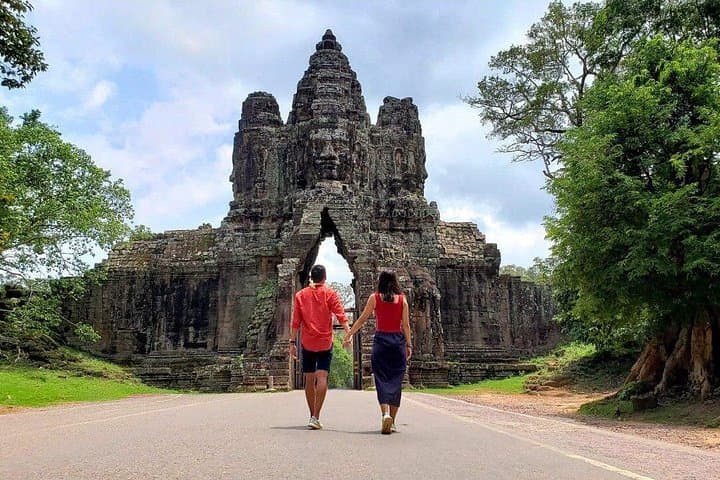
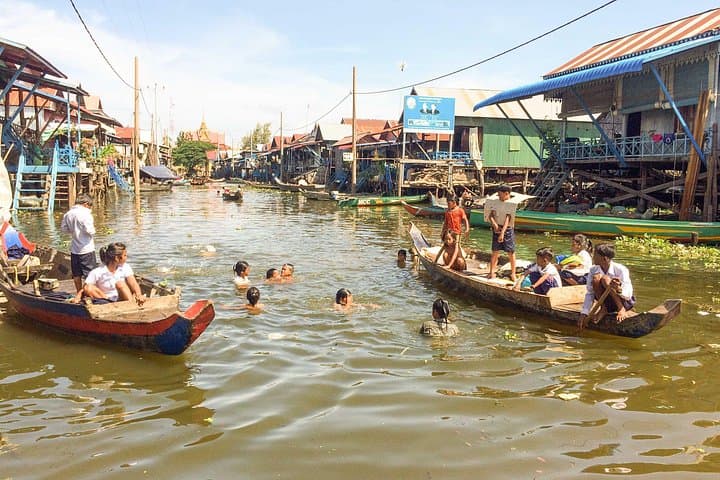
Angkor Wat, covering roughly 162.6 hectares, began as a twelfth-century Hindu temple dedicated to Vishnu and later took on Buddhist meanings as empires shifted. Angkor Thom and the Bayon nearby record Jayavarman VII’s era in carved faces and terraced platforms. Beng Mealea, about 50 km east of the main group, is a ruined jungle temple where roots pry at blocks and light finds its own paths through fallen galleries. Tonle Sap sustains Cambodia’s largest fishing communities; seasonal floods expand the lake dramatically and animate village life on stilts and boats.
Practical guidance: sunrise is early—expect a 4:30–5:00 a.m. pickup from Siem Reap during peak season. An Angkor pass is required to enter the main parks; carry cash for on-site purchases and tips. Wear sturdy walking shoes for uneven temple stones and bring insect repellent for riverside and mangrove sections. Beng Mealea has rough trails and loose masonry—give yourself extra time to explore safely.
This two-day loop blends monumental architecture, raw jungle atmosphere, and living-water culture—ideal for travelers who want both photo-ready dawns and the quieter, human-scaled corners of Cambodia.
easy.
2 days.
Suitable for travelers in general good health; includes moderate walking on uneven temple stones and short boat rides
Yes — an Angkor pass is required to enter Angkor Wat, Angkor Thom and many associated temples; guides typically help with logistics but you should obtain the pass before entry.
Most private tours include hotel pickup and drop-off in Siem Reap—confirm your pickup point and time when booking.
Walking is moderate: expect repeated short hikes across temple complexes and uneven surfaces; Beng Mealea adds rougher, informal paths.
Boat rides at Tonle Sap and basic inclusions like cold water and transport are usually provided, but check whether meals and temple tickets are covered in your booking.
Angkor was the political and spiritual center of the Khmer Empire from the 9th–15th centuries; Angkor Wat began as a 12th-century Hindu temple later used for Buddhist worship.
Tourism revenues help fund park management, but visitors should avoid touching bas-reliefs, stick to paths, and support community-based tourism to reduce local impact.
Cambodia Taxi Driver operates guided outdoor trips and adventures with an emphasis on safety, stewardship, and memorable experiences.
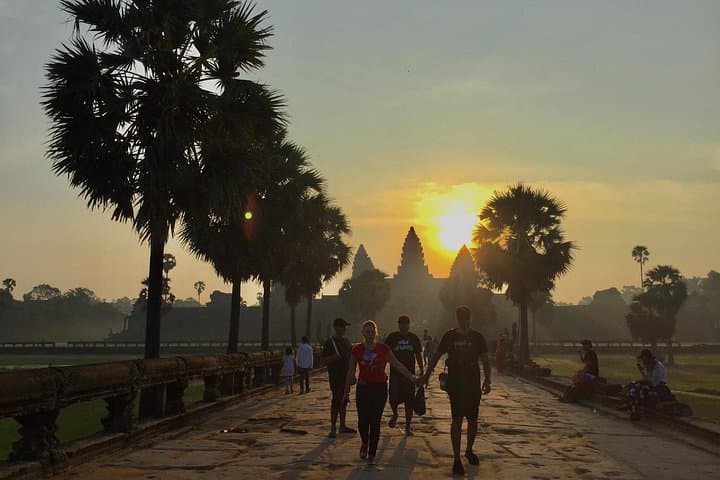
You stand at the reflecting pool before dawn as the first light lifts the silhouette of Angkor Wat—spires cutting into a lavender sky, the air heavy with insects and expectation. The stones hum with centuries; later you’ll trade the formal lines of Angkor for the unruly, root-entangled corridors of Beng Mealea and the open, watery world of Tonle Sap where houses ride the lake like small islands.
You stand at the reflecting pool before dawn as the first light lifts the silhouette of Angkor Wat—spires cutting into a lavender sky, the air heavy with insects and expectation. The stones hum with centuries; later you’ll trade the formal lines of Angkor for the unruly, root-entangled corridors of Beng Mealea and the open, watery world of Tonle Sap where houses ride the lake like small islands.
Angkor Wat, covering roughly 162.6 hectares, began as a twelfth-century Hindu temple dedicated to Vishnu and later took on Buddhist meanings as empires shifted. Angkor Thom and the Bayon nearby record Jayavarman VII’s era in carved faces and terraced platforms. Beng Mealea, about 50 km east of the main group, is a ruined jungle temple where roots pry at blocks and light finds its own paths through fallen galleries. Tonle Sap sustains Cambodia’s largest fishing communities; seasonal floods expand the lake dramatically and animate village life on stilts and boats.
Practical guidance: sunrise is early—expect a 4:30–5:00 a.m. pickup from Siem Reap during peak season. An Angkor pass is required to enter the main parks; carry cash for on-site purchases and tips. Wear sturdy walking shoes for uneven temple stones and bring insect repellent for riverside and mangrove sections. Beng Mealea has rough trails and loose masonry—give yourself extra time to explore safely.
This two-day loop blends monumental architecture, raw jungle atmosphere, and living-water culture—ideal for travelers who want both photo-ready dawns and the quieter, human-scaled corners of Cambodia.