THE ADVENTURE COLLECTIVE® · Independent discovery and booking for outdoor travel

See Angkor Wat, Ta Prohm, and the Bayon in one day with an English-speaking guide, air-conditioned transfers, and a local lunch. Finish with sunset at Phnom Bakheng and practical insights to make the most of a full-day temple circuit.
See Angkor Wat, Ta Prohm, and the Bayon in one day with an English-speaking guide, air-conditioned transfers, and a local lunch. Finish with sunset at Phnom Bakheng and practical insights to make the most of a full-day temple circuit.
You step out of the minivan into a warm river of light that slants across sandstone galleries—students and sellers filter past as temple towers puncture the sky. The guide folds a map, points to reliefs that read like history in stone, and the day begins with deliberate calm.
Verified experiences and guided adventures in the surrounding area.
Operated by Asean Angkor Guide · Siem Reap, Siem Reap Province
You step out of the minivan into a warm river of light that slants across sandstone galleries—students and sellers filter past as temple towers puncture the sky. The guide folds a map, points to reliefs that read like history in stone, and the day begins with deliberate calm.
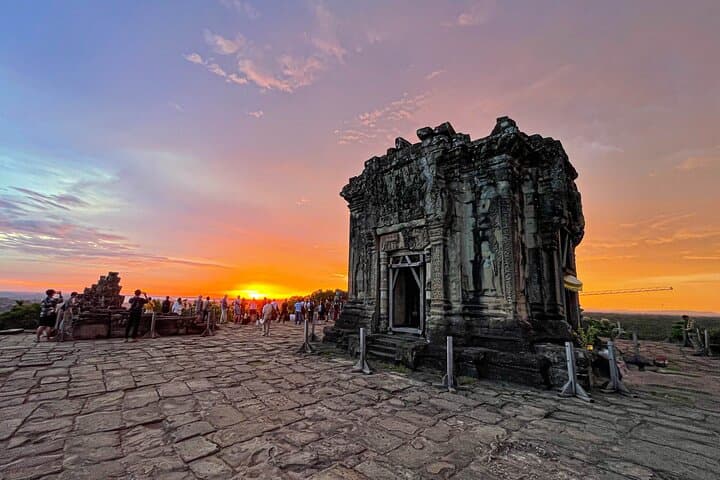
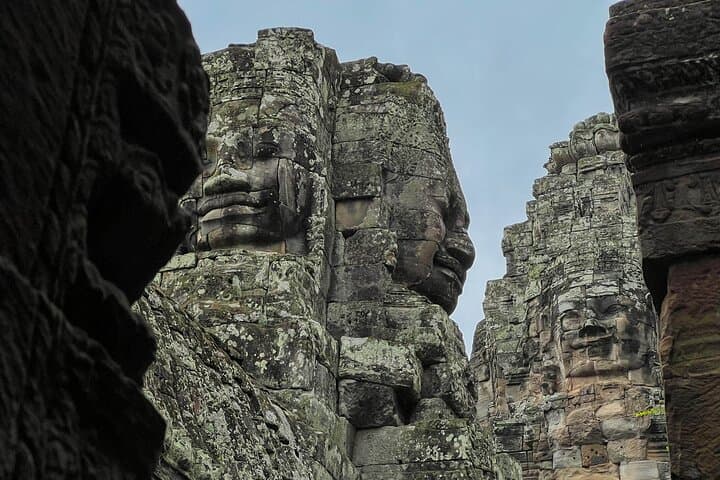
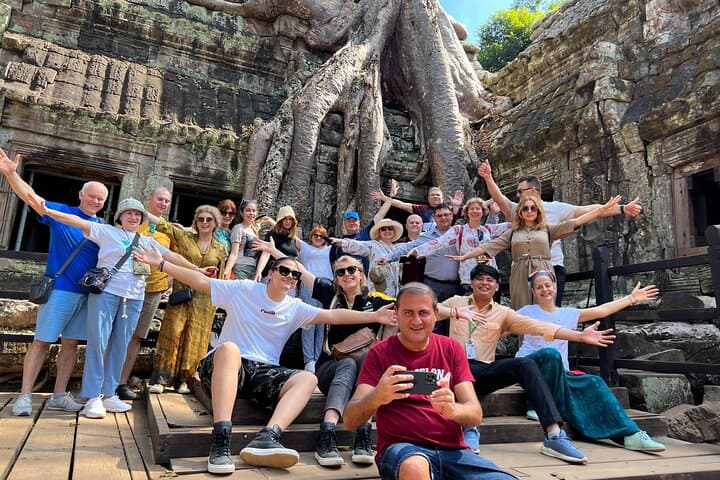
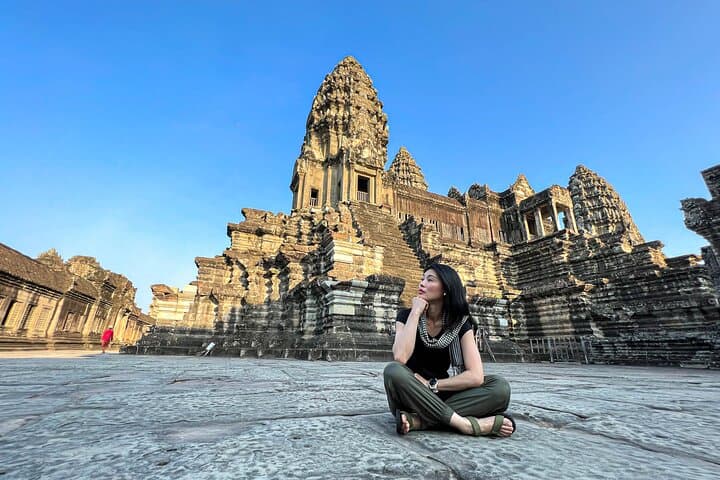
This itinerary threads the best-preserved hearts of the Khmer capital: Angkor Wat’s vaulted bas-reliefs built in the 12th century for King Suryavarman II, the enigmatic face-towers of Bayon added under Jayavarman VII, and the root-entwined Ta Prohm that literature and film have made instantly recognizable. Phnom Bakheng’s small summit earns its reputation at sunset, an amphitheater of sky and jungle.
Expect hot, humid walking on packed-earth paths and uneven stone steps—some climbs are steep but short. The tour includes hotel pickup by air‑conditioned vehicle, a local guide, lunch at a nearby restaurant, bottled water and cold towels, and the listed temple admissions. A visit to a local village segment offers a glimpse of rural crafts like palm‑sugar production.
Plan for sun, mosquitoes and crowds: start strong and keep a slow rhythm between monuments. Respect dress codes—shoulders and knees covered—and stay on roped paths to protect delicate bas‑reliefs. Carry a refillable bottle, light layers for cool early-morning or evening breezes, and comfortable shoes with grip for wet or worn stone. By dusk, when the towers throw long shadows, the temples seem to lean in and listen—a landscape that rewards attention and restraint.
easy.
10 hours.
Suitable for casual walkers able to do several hours on foot and climb short stone staircases; not strenuous but expect extended standing and walking.
This tour listing includes the admissions noted in the itinerary; confirm at booking whether your Angkor Pass type (one‑day, three‑day) is provided or needs to be purchased on arrival.
Expect several hours of walking on packed dirt and stone plus short climbs up temple staircases—nothing technical, but be prepared for stairs without handrails.
Lunch at a local restaurant and bottled water with cold towels are included; bring extra snacks if you have specific dietary needs beyond the provided vegetarian option.
Many temple areas have uneven terrain, steps and narrow galleries; accessibility is limited—contact the operator in advance to discuss specific needs.
Angkor Wat was built in the early 12th century as a Hindu temple to Vishnu under Suryavarman II; Jayavarman VII later expanded Angkor Thom and added the Bayon with its famous smiling faces.
Visitor pressure and humidity accelerate stone erosion and biological growth; stick to marked paths, avoid touching carvings, and support local guides who promote responsible visitation.
Asean Angkor Guide operates guided outdoor trips and adventures with an emphasis on safety, stewardship, and memorable experiences.
You step out of the minivan into a warm river of light that slants across sandstone galleries—students and sellers filter past as temple towers puncture the sky. The guide folds a map, points to reliefs that read like history in stone, and the day begins with deliberate calm.
You step out of the minivan into a warm river of light that slants across sandstone galleries—students and sellers filter past as temple towers puncture the sky. The guide folds a map, points to reliefs that read like history in stone, and the day begins with deliberate calm.
This itinerary threads the best-preserved hearts of the Khmer capital: Angkor Wat’s vaulted bas-reliefs built in the 12th century for King Suryavarman II, the enigmatic face-towers of Bayon added under Jayavarman VII, and the root-entwined Ta Prohm that literature and film have made instantly recognizable. Phnom Bakheng’s small summit earns its reputation at sunset, an amphitheater of sky and jungle.
Expect hot, humid walking on packed-earth paths and uneven stone steps—some climbs are steep but short. The tour includes hotel pickup by air‑conditioned vehicle, a local guide, lunch at a nearby restaurant, bottled water and cold towels, and the listed temple admissions. A visit to a local village segment offers a glimpse of rural crafts like palm‑sugar production.
Plan for sun, mosquitoes and crowds: start strong and keep a slow rhythm between monuments. Respect dress codes—shoulders and knees covered—and stay on roped paths to protect delicate bas‑reliefs. Carry a refillable bottle, light layers for cool early-morning or evening breezes, and comfortable shoes with grip for wet or worn stone. By dusk, when the towers throw long shadows, the temples seem to lean in and listen—a landscape that rewards attention and restraint.