THE ADVENTURE COLLECTIVE® · Independent discovery and booking for outdoor travel

Explore Angkor Wat, Angkor Thom, Bayon and Ta Prohm on a guided full-day loop through the UNESCO Angkor Archaeological Park. Expect detailed history, uneven sandstone steps, and a practical, full-day pace with hotel pickup in Siem Reap.
Explore Angkor Wat, Angkor Thom, Bayon and Ta Prohm on a guided full-day loop through the UNESCO Angkor Archaeological Park. Expect detailed history, uneven sandstone steps, and a practical, full-day pace with hotel pickup in Siem Reap.
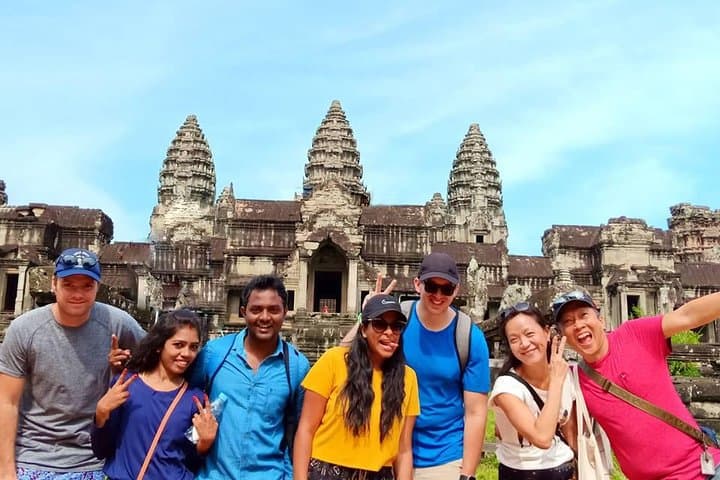
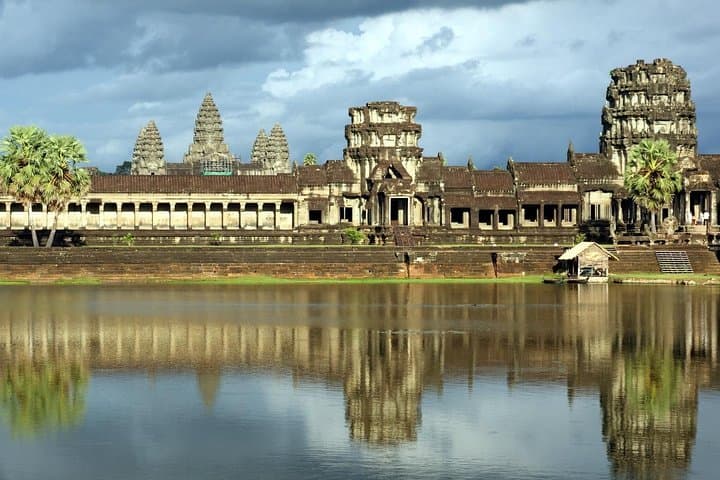
Morning mist lifts off the moat and the west-facing towers of Angkor Wat reappear like architecture emerging from water — tourists gather, cameras ready, while centuries of stone hold their quiet. This small-group tour threads through the park’s major highlights: an extended visit at Angkor Wat itself, the fortified city of Angkor Thom, the carved galleries of the Bayon and the root-entangled corridors of Ta Prohm.
Verified experiences and guided adventures in the surrounding area.
Operated by Green Era Travel · Siem Reap, Siem Reap Province
Morning mist lifts off the moat and the west-facing towers of Angkor Wat reappear like architecture emerging from water — tourists gather, cameras ready, while centuries of stone hold their quiet. This small-group tour threads through the park’s major highlights: an extended visit at Angkor Wat itself, the fortified city of Angkor Thom, the carved galleries of the Bayon and the root-entangled corridors of Ta Prohm.
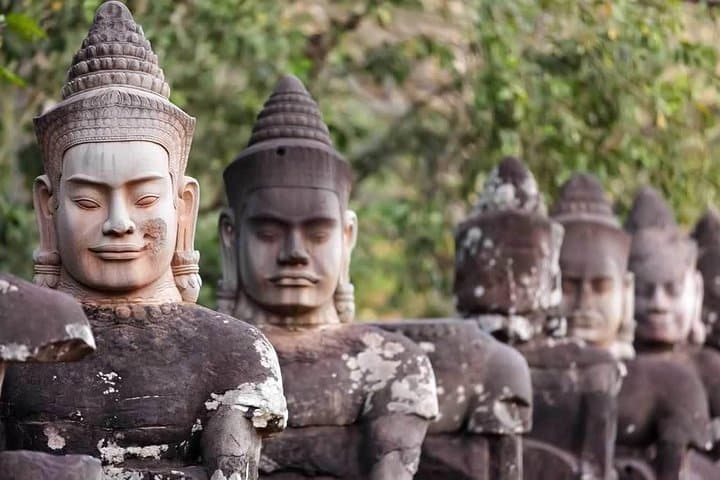
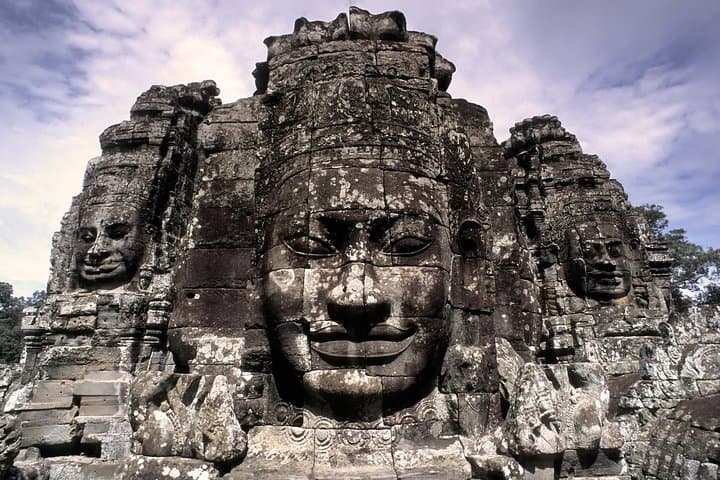
The itinerary follows layers of history. Angkor Wat, begun under Suryavarman II in the early 12th century, presents a disciplined quincunx of towers and bas-reliefs; Angkor Thom and the Bayon reflect Jayavarman VII’s 12th–13th century Mahayana Buddhist vision and its carved faces. Ta Prohm tells a different story — trees assert themselves, roots draping walls and doorways as if the jungle were still negotiating ownership.
Geology is simple: sandstone galleries and laterite foundations weather under tropical cycles, producing slick steps and soft-edged carvings. Culturally, the site is active — monks, pilgrims and market sellers share the same circulation paths as visitors. The tour typically runs 6–7 hours with tuk‑tuk or minivan transfers, and groups up to a dozen.
Practical guidance: buy the Angkor pass at park entry (1-day pass commonly US$37), wear long pants or knee-length skirts and covered shoulders, and choose sturdy shoes for uneven laterite and steep temple stairs. Start early to avoid midday heat, carry 2–3 liters of water, and leave time for slow photography at bas-reliefs and shaded galleries. The guide’s commentary turns stone into story; your job is to listen, look closely, and move at a respectful pace.
moderate.
6–7 hours.
Moderate fitness: able to walk several kilometers over uneven surfaces and climb steep temple steps in tropical heat.
No — the tour price does not include the Angkor Archaeological Park pass; buy it at the ticket center before entering (1‑day pass commonly around US$37).
No — long pants or knee-length skirts and covered shoulders are required for temple entry; lightweight fabrics are recommended for comfort.
Yes with caveats — children must be accompanied by an adult and travelers should have moderate fitness; steep steps and uneven ground can be challenging.
Transport is by tuk‑tuk for small groups of 1–2 and by minivan for larger groups, with hotel pickup and drop-off in Siem Reap city center.
The core Angkor monuments span the 9th–13th centuries; Angkor Wat was built under Suryavarman II in the early 12th century, while Jayavarman VII later reshaped the landscape with Angkor Thom and the Bayon.
Visitor fees support conservation and site management; stick to marked paths, don’t lean on carvings, and avoid flash photography where prohibited to reduce wear.
Green Era Travel operates guided outdoor trips and adventures with an emphasis on safety, stewardship, and memorable experiences.
Morning mist lifts off the moat and the west-facing towers of Angkor Wat reappear like architecture emerging from water — tourists gather, cameras ready, while centuries of stone hold their quiet. This small-group tour threads through the park’s major highlights: an extended visit at Angkor Wat itself, the fortified city of Angkor Thom, the carved galleries of the Bayon and the root-entangled corridors of Ta Prohm.
Morning mist lifts off the moat and the west-facing towers of Angkor Wat reappear like architecture emerging from water — tourists gather, cameras ready, while centuries of stone hold their quiet. This small-group tour threads through the park’s major highlights: an extended visit at Angkor Wat itself, the fortified city of Angkor Thom, the carved galleries of the Bayon and the root-entangled corridors of Ta Prohm.
The itinerary follows layers of history. Angkor Wat, begun under Suryavarman II in the early 12th century, presents a disciplined quincunx of towers and bas-reliefs; Angkor Thom and the Bayon reflect Jayavarman VII’s 12th–13th century Mahayana Buddhist vision and its carved faces. Ta Prohm tells a different story — trees assert themselves, roots draping walls and doorways as if the jungle were still negotiating ownership.
Geology is simple: sandstone galleries and laterite foundations weather under tropical cycles, producing slick steps and soft-edged carvings. Culturally, the site is active — monks, pilgrims and market sellers share the same circulation paths as visitors. The tour typically runs 6–7 hours with tuk‑tuk or minivan transfers, and groups up to a dozen.
Practical guidance: buy the Angkor pass at park entry (1-day pass commonly US$37), wear long pants or knee-length skirts and covered shoulders, and choose sturdy shoes for uneven laterite and steep temple stairs. Start early to avoid midday heat, carry 2–3 liters of water, and leave time for slow photography at bas-reliefs and shaded galleries. The guide’s commentary turns stone into story; your job is to listen, look closely, and move at a respectful pace.