THE ADVENTURE COLLECTIVE® · Independent discovery and booking for outdoor travel

Explore Angkor Wat and the Small Circuit temples from Siem Reap with private transport and an English‑speaking driver. This day tour balances uninterrupted temple time with practical comforts—air‑conditioned transfers, bottled water and flexible pacing.
Explore Angkor Wat and the Small Circuit temples from Siem Reap with private transport and an English‑speaking driver. This day tour balances uninterrupted temple time with practical comforts—air‑conditioned transfers, bottled water and flexible pacing.
Dawn light carves the first shadows across the moat as a driver eases an air‑conditioned minivan toward the temple gates. The stone galleries of Angkor Wat loom like a slow-moving story, bas-reliefs revealing scenes that once filled palaces and courtyards. A private transport tour puts the ruins within reach—no scrambling for tuk‑tuk space, just a steady rhythm of walking, listening and pausing where the architecture demands it.
Verified experiences and guided adventures in the surrounding area.
Operated by Journey Cambodia · Siem Reap, Siem Reap Province
Dawn light carves the first shadows across the moat as a driver eases an air‑conditioned minivan toward the temple gates. The stone galleries of Angkor Wat loom like a slow-moving story, bas-reliefs revealing scenes that once filled palaces and courtyards. A private transport tour puts the ruins within reach—no scrambling for tuk‑tuk space, just a steady rhythm of walking, listening and pausing where the architecture demands it.
These monuments were raised by the Khmer Empire between the 9th and 13th centuries; Angkor Wat itself was completed under Suryavarman II and later adapted from Hindu to Buddhist use. Geologically the site sits on low alluvial plains, the temple stones weathered by seasonal monsoons while strangler figs and banyans press roots into lintels, daring the masonry to yield. Local culture still orients around rice cycles and pagoda life—offerings and incense in nearby villages are part of the living backdrop.
Practically, this is a day of moderate walking on uneven sandstone and packed earth; expect stairs, narrow corridors and sun‑exposed courtyards. Start early to avoid mid‑day heat and crowds; bring light, modest clothing that covers shoulders and knees out of respect for active worship sites. Buy an Angkor pass at the park entrance, carry water and a cooling towel supplied by many private tours, and allow time for Ta Prohm’s tree‑choked corridors and the carved faces at Bayon. Restroom and food stops are available near main sites, but cash is useful in small shops. With a guidebook or guide notes, a private transport itinerary gives rhythm to the complex—time to linger where the stones whisper and move on when the map asks for the next view.
easy.
7 hours.
Low to moderate fitness required; mostly short walks and standing, but expect uneven ground and stairs.
Yes—every visitor must buy an Angkor pass at the park entrance; the driver can assist but bring cash for purchase.
The standard itinerary runs about seven hours and private transport makes it easy to adjust stops or linger at specific temples.
Yes—basic facilities and cafés are available near major temples; bring small change as some services are cash‑only.
Yes—transport is private and air‑conditioned with minimal strenuous activity, but expect walking on uneven ground and many steps.
Angkor was the political and spiritual heart of the Khmer Empire from the 9th to 15th centuries; Angkor Wat was built as a state temple and mausoleum for Suryavarman II.
Visitor pressure and monsoon weather accelerate wear on sandstone; stick to marked paths, avoid touching bas‑reliefs and carry out any trash to help protect the site.
Journey Cambodia operates guided outdoor trips and adventures with an emphasis on safety, stewardship, and memorable experiences.
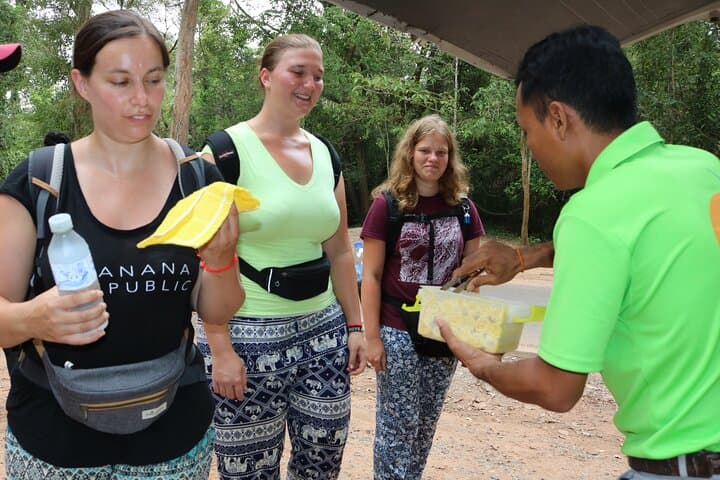
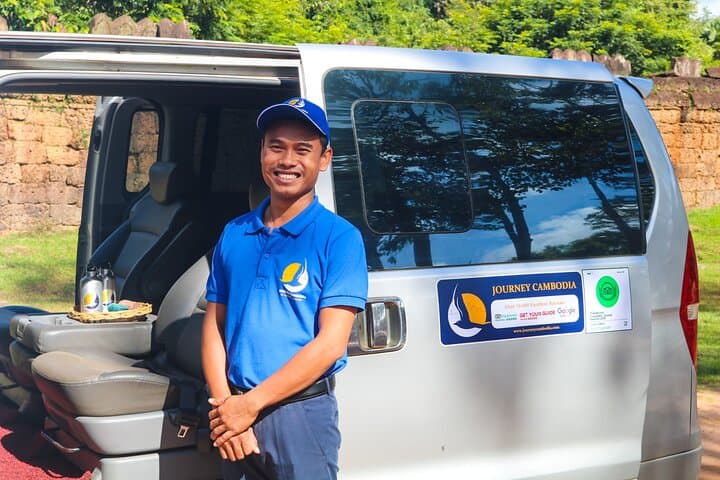
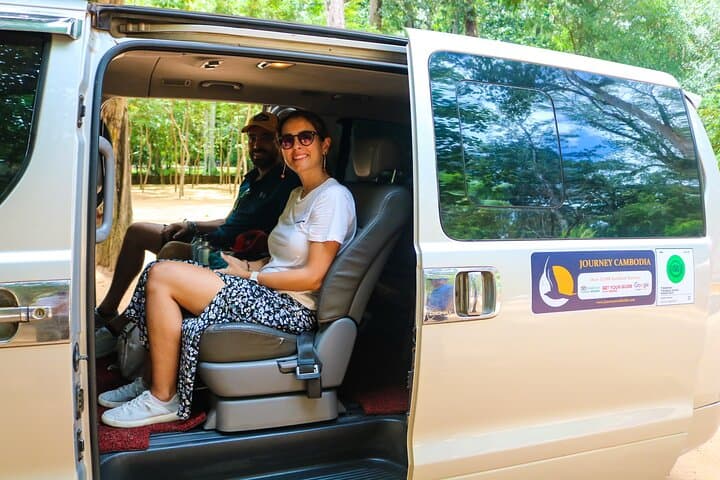
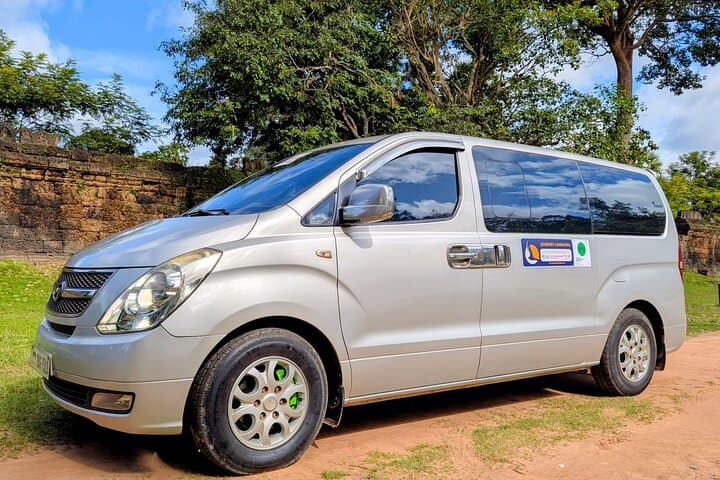
Dawn light carves the first shadows across the moat as a driver eases an air‑conditioned minivan toward the temple gates. The stone galleries of Angkor Wat loom like a slow-moving story, bas-reliefs revealing scenes that once filled palaces and courtyards. A private transport tour puts the ruins within reach—no scrambling for tuk‑tuk space, just a steady rhythm of walking, listening and pausing where the architecture demands it.
Dawn light carves the first shadows across the moat as a driver eases an air‑conditioned minivan toward the temple gates. The stone galleries of Angkor Wat loom like a slow-moving story, bas-reliefs revealing scenes that once filled palaces and courtyards. A private transport tour puts the ruins within reach—no scrambling for tuk‑tuk space, just a steady rhythm of walking, listening and pausing where the architecture demands it.
These monuments were raised by the Khmer Empire between the 9th and 13th centuries; Angkor Wat itself was completed under Suryavarman II and later adapted from Hindu to Buddhist use. Geologically the site sits on low alluvial plains, the temple stones weathered by seasonal monsoons while strangler figs and banyans press roots into lintels, daring the masonry to yield. Local culture still orients around rice cycles and pagoda life—offerings and incense in nearby villages are part of the living backdrop.
Practically, this is a day of moderate walking on uneven sandstone and packed earth; expect stairs, narrow corridors and sun‑exposed courtyards. Start early to avoid mid‑day heat and crowds; bring light, modest clothing that covers shoulders and knees out of respect for active worship sites. Buy an Angkor pass at the park entrance, carry water and a cooling towel supplied by many private tours, and allow time for Ta Prohm’s tree‑choked corridors and the carved faces at Bayon. Restroom and food stops are available near main sites, but cash is useful in small shops. With a guidebook or guide notes, a private transport itinerary gives rhythm to the complex—time to linger where the stones whisper and move on when the map asks for the next view.