THE ADVENTURE COLLECTIVE® · Independent discovery and booking for outdoor travel

Hike 10–15 km through Angkor’s temple corridors and shaded trails on a private full-day tour that pairs major monuments with quieter forested stretches. Start early, pack water, and expect dusty steps, low rises, and close encounters with temple wildlife.
Hike 10–15 km through Angkor’s temple corridors and shaded trails on a private full-day tour that pairs major monuments with quieter forested stretches. Start early, pack water, and expect dusty steps, low rises, and close encounters with temple wildlife.
A dry wind lifts dust from laterite steps as the group threads a shaded trail between temple walls, the stone warm under a morning sun. On the Special Angkor Wat Hiking Day Tour travelers move on foot through quiet galleries and wooded stretches, keeping close to nature while visiting the major temples.
Verified experiences and guided adventures in the surrounding area.
A dry wind lifts dust from laterite steps as the group threads a shaded trail between temple walls, the stone warm under a morning sun. On the Special Angkor Wat Hiking Day Tour travelers move on foot through quiet galleries and wooded stretches, keeping close to nature while visiting the major temples.
Angkor sits on a low, flat plain carved from sandstone and laterite during the Khmer Empire (9th–15th centuries). Temples like Angkor Wat and Ta Prohm were temple-cities and hydraulic systems once fed by vast barays; today their roots and vines press gently against carved bas-reliefs. The area’s geology creates soft rises and stepped terraces rather than steep climbs, and the cultural fabric is a living one—monks, markets, and local guides shape how visitors experience these sites.
Expect a 10–15 km day of mixed terrain: compacted temple courtyards, packed earth trails, occasional muddy patches in the wet season, and many stone stairways. Elevation change is minimal, but the heat and humidity are the real challenges—trees will shade you, but the sun pushes through at midday. Wildlife is modest and familiar: macaques patrol ruins, and monitor lizards sun near water.
Practical guidance: start at first light to avoid heat and crowds, carry 2–3 liters of water and sun protection, wear grippy walking shoes for uneven steps, and bring a lightweight rain layer in the wet months. Respect sacred spaces—cover shoulders and knees, follow your guide’s route, and avoid stepping on fragile carvings. The private format keeps pace flexible and offers chances to slip into quieter corridors others miss.
moderate.
6–8 hours.
Good walking fitness for 10–15 km in heat; used to uneven ground and repeated stone steps.
The route covers about 10–15 km and runs roughly 6–8 hours depending on pace, stops, and time spent at temples.
Families and older adults can join if comfortable walking several kilometers and navigating steps; request a gentler pace when booking.
General park entry passes are required for Angkor; your operator typically arranges these or instructs you how to purchase them at park entrances.
Temperatures are hot and humid much of the year; prepare with sun protection, hydration, and a rain layer in the wet season.
Angkor was the heart of the Khmer Empire between the 9th and 15th centuries; many temple complexes combined religious function with massive water management systems.
Visitor pressure affects delicate carvings and root-stressed masonry—stay on designated paths, avoid climbing on fragile structures, and support local guides and conservation fees.
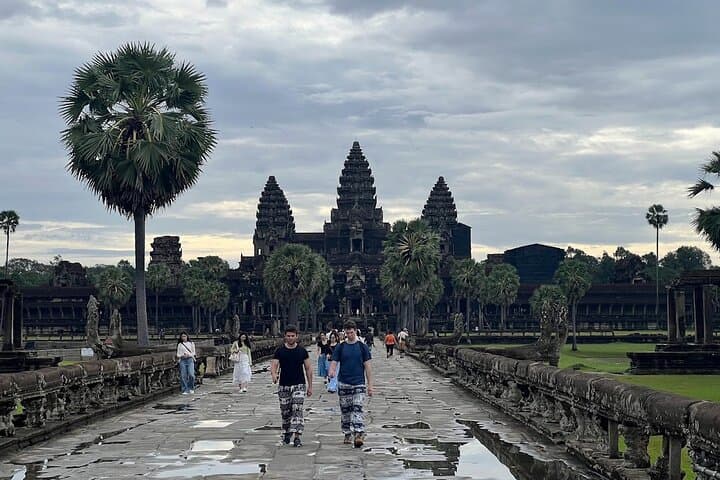
A dry wind lifts dust from laterite steps as the group threads a shaded trail between temple walls, the stone warm under a morning sun. On the Special Angkor Wat Hiking Day Tour travelers move on foot through quiet galleries and wooded stretches, keeping close to nature while visiting the major temples.
A dry wind lifts dust from laterite steps as the group threads a shaded trail between temple walls, the stone warm under a morning sun. On the Special Angkor Wat Hiking Day Tour travelers move on foot through quiet galleries and wooded stretches, keeping close to nature while visiting the major temples.
Angkor sits on a low, flat plain carved from sandstone and laterite during the Khmer Empire (9th–15th centuries). Temples like Angkor Wat and Ta Prohm were temple-cities and hydraulic systems once fed by vast barays; today their roots and vines press gently against carved bas-reliefs. The area’s geology creates soft rises and stepped terraces rather than steep climbs, and the cultural fabric is a living one—monks, markets, and local guides shape how visitors experience these sites.
Expect a 10–15 km day of mixed terrain: compacted temple courtyards, packed earth trails, occasional muddy patches in the wet season, and many stone stairways. Elevation change is minimal, but the heat and humidity are the real challenges—trees will shade you, but the sun pushes through at midday. Wildlife is modest and familiar: macaques patrol ruins, and monitor lizards sun near water.
Practical guidance: start at first light to avoid heat and crowds, carry 2–3 liters of water and sun protection, wear grippy walking shoes for uneven steps, and bring a lightweight rain layer in the wet months. Respect sacred spaces—cover shoulders and knees, follow your guide’s route, and avoid stepping on fragile carvings. The private format keeps pace flexible and offers chances to slip into quieter corridors others miss.