THE ADVENTURE COLLECTIVE® · Independent discovery and booking for outdoor travel

Spend a full day exploring Angkor Wat, Bayon, Ta Prohm and a hilltop sunset with tickets and hotel transfers included. This guided route pairs history, temple climbs, and practical support for a seamless cultural day trip from Siem Reap.
Spend a full day exploring Angkor Wat, Bayon, Ta Prohm and a hilltop sunset with tickets and hotel transfers included. This guided route pairs history, temple climbs, and practical support for a seamless cultural day trip from Siem Reap.
The day opens with a low, humid light over a stone horizon—lanes of palms and paddy fields funnel you toward a skyline of towers. On arrival, the guide slips a ticket into your hand and the enormous gallery of Angkor Wat unfolds: the central temple rises like a carved mountain, bas-reliefs marching along its walls.
Verified experiences and guided adventures in the surrounding area.
Operated by MyProGuide Cambodia · Siem Reap, Siem Reap Province
The day opens with a low, humid light over a stone horizon—lanes of palms and paddy fields funnel you toward a skyline of towers. On arrival, the guide slips a ticket into your hand and the enormous gallery of Angkor Wat unfolds: the central temple rises like a carved mountain, bas-reliefs marching along its walls.
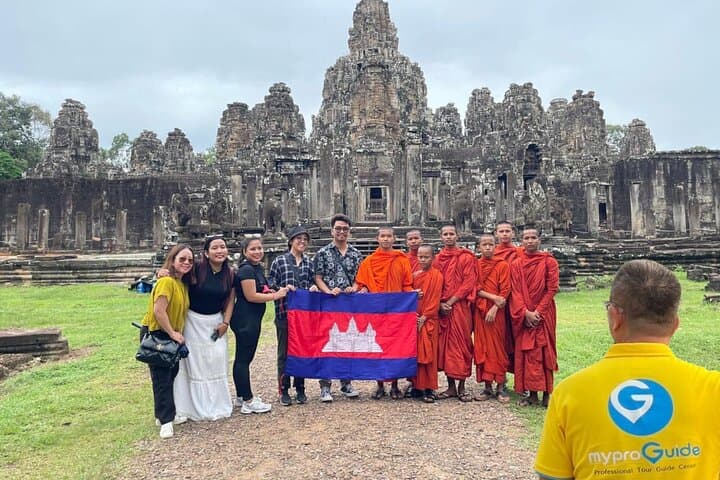
This is a journey through Khmer history and geology: sandstone blocks quarried and artfully stacked centuries ago, river systems that once supported a sprawling capital, and temples reworked as Buddhism spread through the region. Bayon’s carved faces watch calmly as roots from the surrounding jungle pry ancient mortar free at Ta Prohm. Local culture remains close to the temples—monks in saffron, vendors selling sweet sticky rice, and villagers who still trace family stories back to the Angkor period.
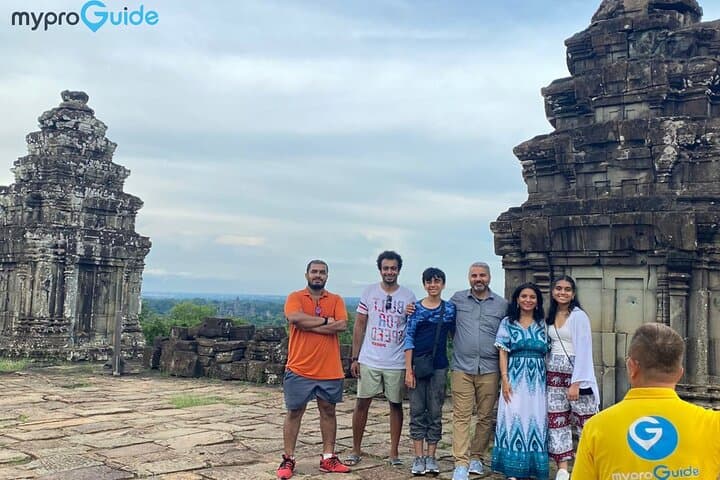
Practical guidance shapes the visit. Expect 8–9 hours on the road with multiple short walks and stair climbs; comfortable shoes are essential. The operator provides round-trip hotel pickup, the Angkor pass, and an English-speaking guide—ideal for first-time visitors who want context for the carvings and layout. Plan water and sun protection: the midday heat can push you off pace and into the shade.
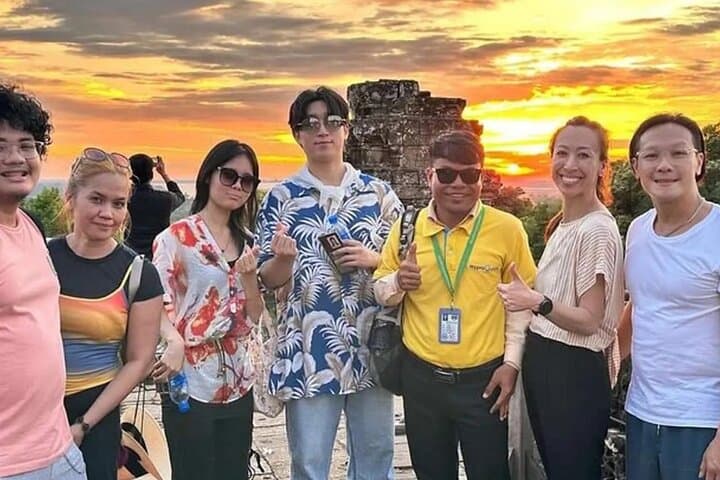
Timing choices matter: sunrise at Angkor Wat rewards patience and crowds but requires an early start; a sunset viewpoint from a nearby hill delivers a quiet, expansive end to a full day. Move deliberately, respect temple rules—no bare shoulders or loud behavior in active shrines—and let the stone and jungle decide the rhythm of your exploration.
moderate.
8–9 hours.
Basic walking endurance; able to climb uneven stone steps and stand for guided explanations.
Yes; the tour includes the Angkor Wat admission ticket and handles entry logistics.
Round-trip transfers from central Siem Reap hotels are included—pickup details are requested at booking.
The tour is suitable for most ages; infants must sit on laps and routes include stairs and uneven ground.
Sunrise at Angkor Wat and a sunset from a nearby hill are possible but make for a very long day; consider focusing on sunrise or sunset for a less rushed visit.
Angkor was the heart of the Khmer Empire (9th–15th centuries); Angkor Wat itself transitioned from a Hindu state temple to a major Buddhist site over centuries.
Visitor flow is managed with tickets and site rules to protect stonework; stick to marked paths and avoid climbing on fragile carvings to reduce erosion and wear.
MyProGuide Cambodia operates guided outdoor trips and adventures with an emphasis on safety, stewardship, and memorable experiences.

The day opens with a low, humid light over a stone horizon—lanes of palms and paddy fields funnel you toward a skyline of towers. On arrival, the guide slips a ticket into your hand and the enormous gallery of Angkor Wat unfolds: the central temple rises like a carved mountain, bas-reliefs marching along its walls.
The day opens with a low, humid light over a stone horizon—lanes of palms and paddy fields funnel you toward a skyline of towers. On arrival, the guide slips a ticket into your hand and the enormous gallery of Angkor Wat unfolds: the central temple rises like a carved mountain, bas-reliefs marching along its walls.
This is a journey through Khmer history and geology: sandstone blocks quarried and artfully stacked centuries ago, river systems that once supported a sprawling capital, and temples reworked as Buddhism spread through the region. Bayon’s carved faces watch calmly as roots from the surrounding jungle pry ancient mortar free at Ta Prohm. Local culture remains close to the temples—monks in saffron, vendors selling sweet sticky rice, and villagers who still trace family stories back to the Angkor period.
Practical guidance shapes the visit. Expect 8–9 hours on the road with multiple short walks and stair climbs; comfortable shoes are essential. The operator provides round-trip hotel pickup, the Angkor pass, and an English-speaking guide—ideal for first-time visitors who want context for the carvings and layout. Plan water and sun protection: the midday heat can push you off pace and into the shade.
Timing choices matter: sunrise at Angkor Wat rewards patience and crowds but requires an early start; a sunset viewpoint from a nearby hill delivers a quiet, expansive end to a full day. Move deliberately, respect temple rules—no bare shoulders or loud behavior in active shrines—and let the stone and jungle decide the rhythm of your exploration.