THE ADVENTURE COLLECTIVE® · Independent discovery and booking for outdoor travel

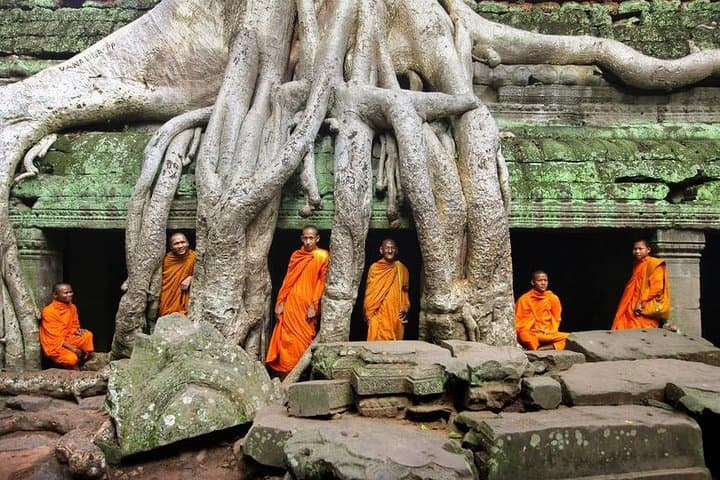
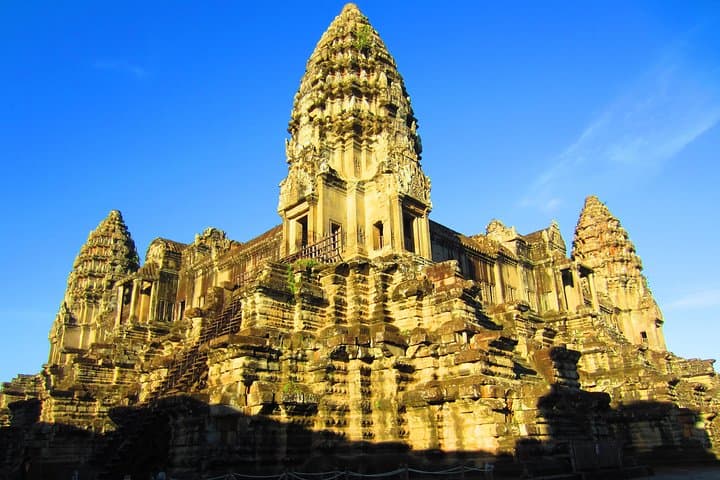
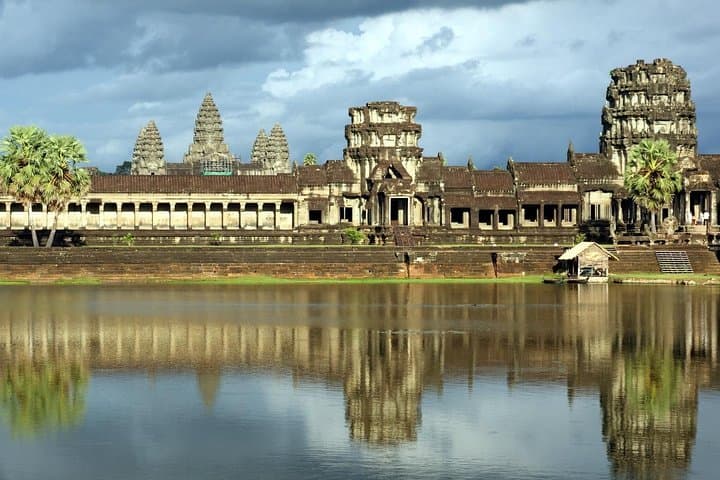
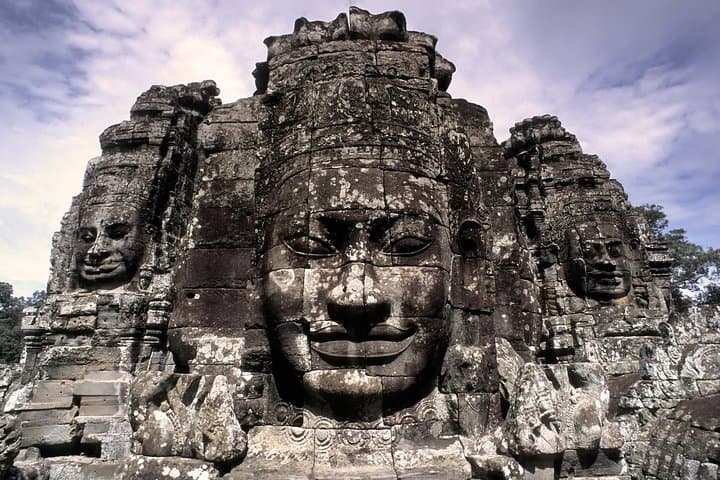
Spend a focused day moving from Angkor Wat’s grand courtyards to Bayon’s smiling faces and Ta Prohm’s tree‑engulfed ruins. This shared full‑day tour includes your Angkor Pass, hotel transfer, bottled water and local lunch—ideal for first‑time visitors looking to cover the essential temples in one practical day.
Spend a focused day moving from Angkor Wat’s grand courtyards to Bayon’s smiling faces and Ta Prohm’s tree‑engulfed ruins. This shared full‑day tour includes your Angkor Pass, hotel transfer, bottled water and local lunch—ideal for first‑time visitors looking to cover the essential temples in one practical day.
You arrive in the humid morning air as a tuk‑tuk threads quiet lanes toward the vast moat; stone walls appear from the mist and the first carved apsaras greet you. The tour begins with the practical ritual of securing an Angkor Pass at the ticket office, then moves through corridors of history where sandstone blocks still hum with the weight of centuries.
Verified experiences and guided adventures in the surrounding area.
Operated by Green Era Travel · Siem Reap, Siem Reap Province
You arrive in the humid morning air as a tuk‑tuk threads quiet lanes toward the vast moat; stone walls appear from the mist and the first carved apsaras greet you. The tour begins with the practical ritual of securing an Angkor Pass at the ticket office, then moves through corridors of history where sandstone blocks still hum with the weight of centuries.
Angkor Wat, raised in the early 12th century by King Suryavarman II, anchors a landscape shaped by seasonal rivers and hard, iron-rich laterite. The Bayon’s enigmatic stone faces watch over Angkor Thom’s causeways, while Ta Prohm shows the relentless appetite of the jungle—roots pulling at lintels, vines claiming towers. Local guides thread Khmer history, explaining religious shifts, temple restoration choices and the living practices of villagers who still use small shrines.
Practical guidance is straightforward: this is a 6–7 hour, moderate day—expect uneven steps, dusty paths and stretches of sun. The tour includes hotel pickup and drop‑off, cold bottled water, lunch at a local restaurant and an English‑speaking guide; transport alternates between air‑conditioned vehicle and shared tuk‑tuk. Dress respectfully (shoulders and knees covered), wear sturdy shoes for rubble and steps, and carry sun protection and cash for small donations or snacks. Take photos but don’t climb fragile reliefs; when rain comes, stone becomes slick and the forest seems to press closer.
Timing matters—early starts dodge heat and crowds. The itinerary concentrates the park’s highlights so you leave with context as well as views: the empire’s scale, the forest’s reclaiming energy, and practical knowledge to explore further on your own.
moderate.
6–7 hours.
Moderate fitness: you should be comfortable walking several kilometres over uneven ground and steps.
Yes—the tour includes a 1‑day Angkor Pass obtained at the ticket office during pickup.
Pickups are scheduled between about 8:00–8:45 AM from hotels in Siem Reap; exact time is confirmed at booking.
No; this is a shared tour with up to 10 travelers using a shared tuk‑tuk or air‑conditioned vehicle as arranged.
Not recommended for pregnant travelers or those with serious cardiovascular issues; terrain includes uneven steps and some climbing.
Angkor was the capital of the Khmer Empire between the 9th and 15th centuries; Angkor Wat was converted from a Hindu to a Buddhist temple and remains a cultural symbol of Cambodia.
Visitor pressure and tropical climate stress sandstone reliefs—stick to paths, avoid touching bas‑reliefs and support local guides who follow conservation protocols.
Green Era Travel operates guided outdoor trips and adventures with an emphasis on safety, stewardship, and memorable experiences.
You arrive in the humid morning air as a tuk‑tuk threads quiet lanes toward the vast moat; stone walls appear from the mist and the first carved apsaras greet you. The tour begins with the practical ritual of securing an Angkor Pass at the ticket office, then moves through corridors of history where sandstone blocks still hum with the weight of centuries.
You arrive in the humid morning air as a tuk‑tuk threads quiet lanes toward the vast moat; stone walls appear from the mist and the first carved apsaras greet you. The tour begins with the practical ritual of securing an Angkor Pass at the ticket office, then moves through corridors of history where sandstone blocks still hum with the weight of centuries.
Angkor Wat, raised in the early 12th century by King Suryavarman II, anchors a landscape shaped by seasonal rivers and hard, iron-rich laterite. The Bayon’s enigmatic stone faces watch over Angkor Thom’s causeways, while Ta Prohm shows the relentless appetite of the jungle—roots pulling at lintels, vines claiming towers. Local guides thread Khmer history, explaining religious shifts, temple restoration choices and the living practices of villagers who still use small shrines.
Practical guidance is straightforward: this is a 6–7 hour, moderate day—expect uneven steps, dusty paths and stretches of sun. The tour includes hotel pickup and drop‑off, cold bottled water, lunch at a local restaurant and an English‑speaking guide; transport alternates between air‑conditioned vehicle and shared tuk‑tuk. Dress respectfully (shoulders and knees covered), wear sturdy shoes for rubble and steps, and carry sun protection and cash for small donations or snacks. Take photos but don’t climb fragile reliefs; when rain comes, stone becomes slick and the forest seems to press closer.
Timing matters—early starts dodge heat and crowds. The itinerary concentrates the park’s highlights so you leave with context as well as views: the empire’s scale, the forest’s reclaiming energy, and practical knowledge to explore further on your own.