THE ADVENTURE COLLECTIVE® · Independent discovery and booking for outdoor travel

Spend a private day exploring Angkor’s grand temples, from the vaulted galleries of Angkor Wat to the root‑choked walls of Ta Prohm and the early Khmer Bakong at Roluos. This guided itinerary blends archaeology, local insight, and practical pacing to cover the highlights without rushing.
Spend a private day exploring Angkor’s grand temples, from the vaulted galleries of Angkor Wat to the root‑choked walls of Ta Prohm and the early Khmer Bakong at Roluos. This guided itinerary blends archaeology, local insight, and practical pacing to cover the highlights without rushing.
Morning light slides across a reflecting pool as a private vehicle leaves Siem Reap and the ancient stones of Angkor loom into view. The first hour is a slow reveal: towering gopuras, endless bas‑reliefs and the carved faces of Bayon that watch the rising day. By midmorning the tour moves through temple corridors where roots pry open masonry and the jungle seems to be reclaiming its stories.
Verified experiences and guided adventures in the surrounding area.
Operated by Green Cultural Travel · Siem Reap, Siem Reap Province
Morning light slides across a reflecting pool as a private vehicle leaves Siem Reap and the ancient stones of Angkor loom into view. The first hour is a slow reveal: towering gopuras, endless bas‑reliefs and the carved faces of Bayon that watch the rising day. By midmorning the tour moves through temple corridors where roots pry open masonry and the jungle seems to be reclaiming its stories.
This full-day private guide traces Angkor’s arc — from the sandstone grandeur of Angkor Wat, a 12th‑century religious and funerary complex, to the later mix of Buddhist iconography at Angkor Thom and the jungle-entwined Ta Prohm. The day finishes at the Roluos group, where 9th‑century brick and laterite mark the shift to classical Khmer architecture. Along the way, local guides explain inscriptions, Khmer royal ritual spaces and how the Baray reservoirs shaped settlement and rice agriculture.
Practical guidance is straightforward: carry an Angkor pass (available at the park gate), wear shoulders- and knee-covering clothing for temples, and expect uneven stone, steps and short, hot walks between sites. A knowledgeable guide times visits to avoid the largest crowds and offers context — why terraces served as royal audience halls, how restoration balances tourism with structural stability.
Plan for strong sun, sticky heat and occasional rain; schedule breaks for a traditional Khmer lunch mid‑day. This is an immersive cultural trek as much as a walk: keep water handy, move deliberately on slick stones, and allow the rhythm of the ruins to set the pace.
moderate.
6–8 hours.
Expect several hours of walking on uneven ground with short stair climbs; average fitness and good balance recommended
Yes. Visitors must purchase an Angkor pass at the park entrance; single‑day and multi‑day options are available and the pass must be carried while visiting.
The tour is private and can accommodate families, but it requires walking on uneven surfaces; children and older travelers should be supervised and pace breaks accordingly.
Most major temples have steep steps and uneven surfaces; accessibility is limited, though some areas and museums offer easier access — check with the operator beforehand.
Modest clothing that covers shoulders and knees is required; breathable fabrics are best in the heat and humidity.
Angkor served as the Khmer Empire’s capital from roughly the 9th to the 15th centuries; its monumental hydraulic and temple complexes reflect advanced engineering and royal ritual.
Angkor Pass fees and UNESCO partnerships fund conservation, but visitor pressure and tropical vegetation require continued active management to protect fragile stonework.
Green Cultural Travel operates guided outdoor trips and adventures with an emphasis on safety, stewardship, and memorable experiences.
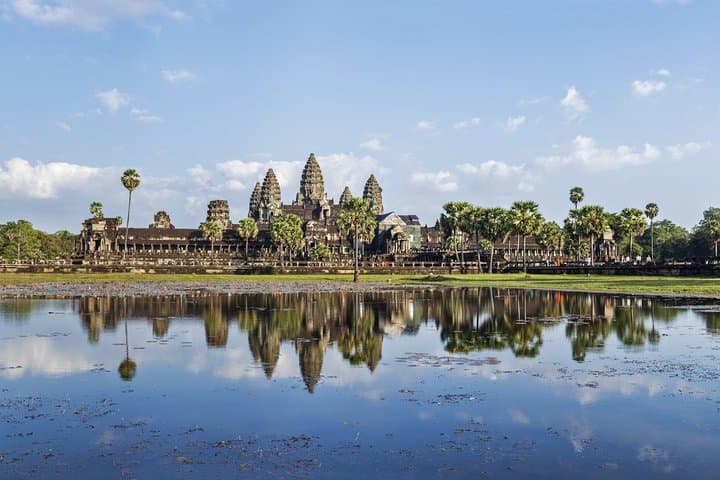
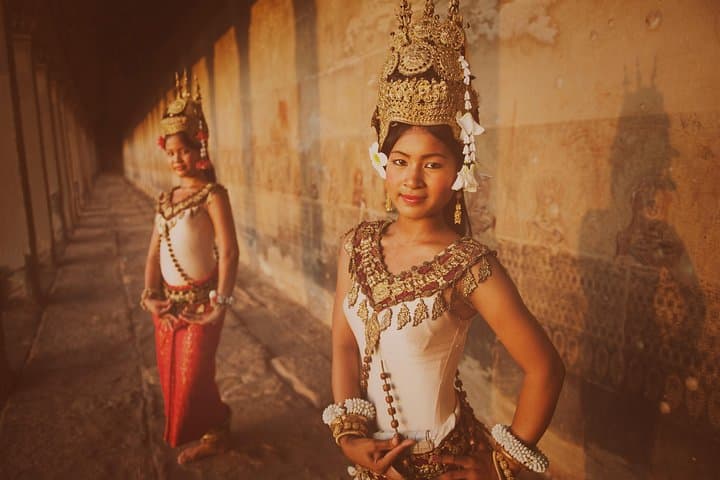
Morning light slides across a reflecting pool as a private vehicle leaves Siem Reap and the ancient stones of Angkor loom into view. The first hour is a slow reveal: towering gopuras, endless bas‑reliefs and the carved faces of Bayon that watch the rising day. By midmorning the tour moves through temple corridors where roots pry open masonry and the jungle seems to be reclaiming its stories.
Morning light slides across a reflecting pool as a private vehicle leaves Siem Reap and the ancient stones of Angkor loom into view. The first hour is a slow reveal: towering gopuras, endless bas‑reliefs and the carved faces of Bayon that watch the rising day. By midmorning the tour moves through temple corridors where roots pry open masonry and the jungle seems to be reclaiming its stories.
This full-day private guide traces Angkor’s arc — from the sandstone grandeur of Angkor Wat, a 12th‑century religious and funerary complex, to the later mix of Buddhist iconography at Angkor Thom and the jungle-entwined Ta Prohm. The day finishes at the Roluos group, where 9th‑century brick and laterite mark the shift to classical Khmer architecture. Along the way, local guides explain inscriptions, Khmer royal ritual spaces and how the Baray reservoirs shaped settlement and rice agriculture.
Practical guidance is straightforward: carry an Angkor pass (available at the park gate), wear shoulders- and knee-covering clothing for temples, and expect uneven stone, steps and short, hot walks between sites. A knowledgeable guide times visits to avoid the largest crowds and offers context — why terraces served as royal audience halls, how restoration balances tourism with structural stability.
Plan for strong sun, sticky heat and occasional rain; schedule breaks for a traditional Khmer lunch mid‑day. This is an immersive cultural trek as much as a walk: keep water handy, move deliberately on slick stones, and allow the rhythm of the ruins to set the pace.