THE ADVENTURE COLLECTIVE® · Independent discovery and booking for outdoor travel

Spend a private full day exploring Angkor’s major temples by tuk‑tuk, moving from village lanes to Bayon’s stone faces and Ta Prohm’s tree‑swallowed galleries. This guided route pairs cultural context with manageable walking and flexible timing.
Spend a private full day exploring Angkor’s major temples by tuk‑tuk, moving from village lanes to Bayon’s stone faces and Ta Prohm’s tree‑swallowed galleries. This guided route pairs cultural context with manageable walking and flexible timing.
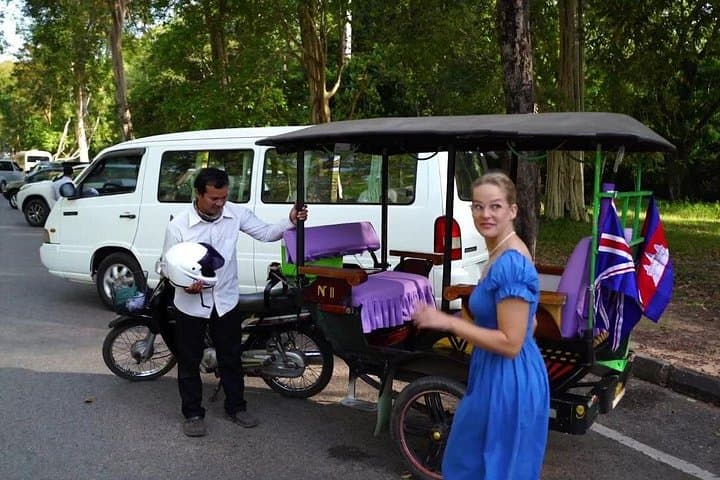
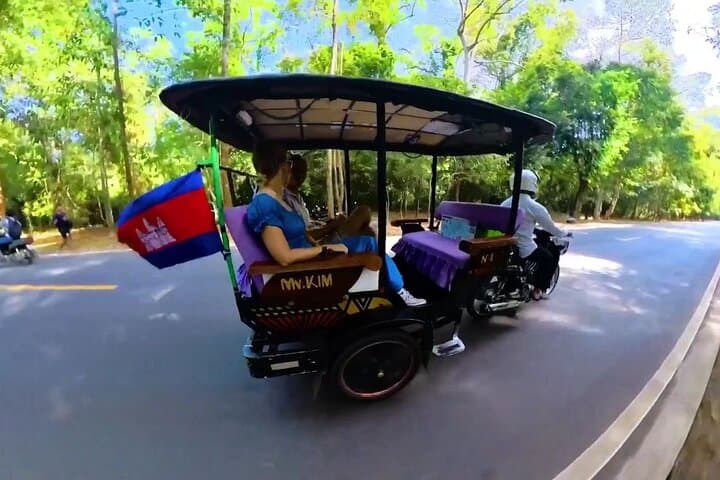
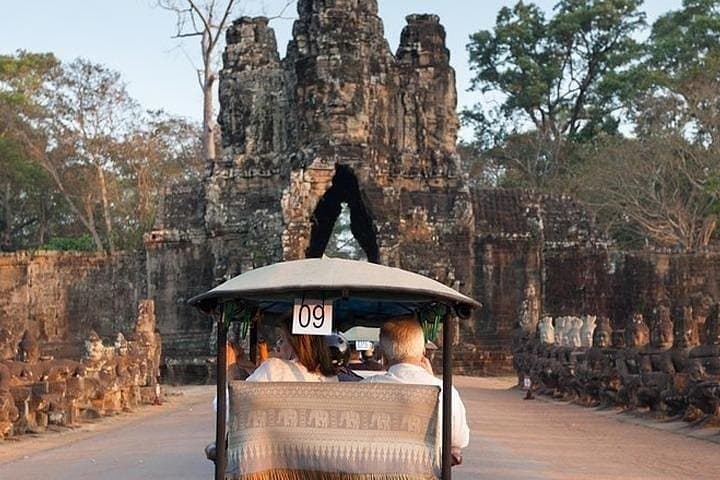
Morning light thins across laterite walls as a tuk‑tuk threads the first dusty lane toward Angkor Thom. The motorized trolley bobs and hums, delivering travelers through a living landscape of rice paddies and village life before the stone faces of Bayon fill the view. It’s a day that moves between close-up texture and wide, architectural scope.
Verified experiences and guided adventures in the surrounding area.
Operated by Angkor Focus Travel · Siem Reap, Siem Reap Province
Morning light thins across laterite walls as a tuk‑tuk threads the first dusty lane toward Angkor Thom. The motorized trolley bobs and hums, delivering travelers through a living landscape of rice paddies and village life before the stone faces of Bayon fill the view. It’s a day that moves between close-up texture and wide, architectural scope.
This full‑day private tour traces Cambodia’s 12th‑century Khmer apex: Angkor Wat’s central causeway and bas‑reliefs, the city plan of Angkor Thom, and Ta Prohm’s strangler fig dramas. Geologically, the complex sits on flat alluvial plains; builders quarried sandstone and crafted intricate narratives in low relief that have weathered monsoon seasons for centuries. Culturally, the temples remain active sites of reverence and local memory — guides translate Hindu cosmology and Khmer history into clear scenes that explain who built what, and why.
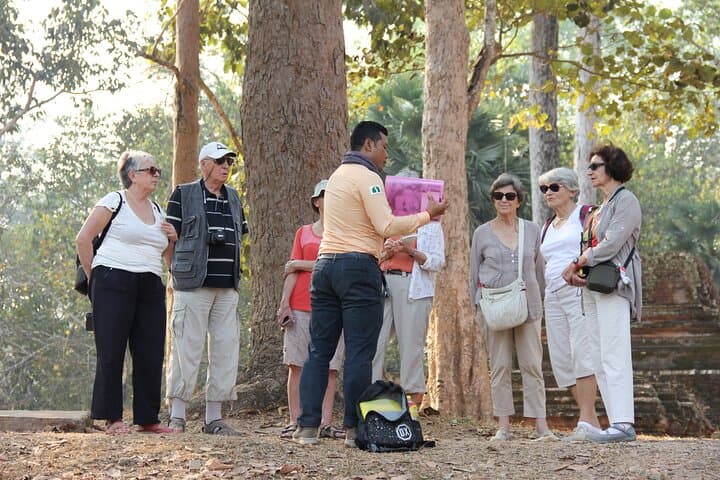
Expect long stretches on foot across uneven stone, brief tuk‑tuk transfers between zones, and stops for commentary and photos. The guide will typically begin near a village to add social context, then move through Bayon’s carved faces, Ta Prohm’s root-woven galleries, and Angkor Wat’s eastern approach before returning to Siem Reap.
Practical notes: buy an Angkor Park pass in advance, carry sun protection and modest clothing (shoulders and knees covered), and plan for 6–8 hours of walking in humid conditions. Hydrate early and often; wet towels and bottled water are usually provided. With a private guide and tuk‑tuk, timing is flexible — ideal for photographers or travelers wanting a measured, interpretive experience rather than a rushed circuit.
easy.
6–8 hours.
Suitable for most fitness levels; requires several hours of walking on uneven stone and climbing short flights of steps.
You can buy it on arrival at the official ticket center, but buying in the morning or in advance reduces queuing; your passport is required for the pass photo.
Yes — the tour is rated easy and tuk‑tuk transfers reduce walking distances, but consider mobility for uneven surfaces and bring rests as needed.
Entrance to Angkor Park is not included in most listings; expect to purchase a separate park pass unless the operator specifies otherwise.
Photography is generally allowed, but avoid drone use without permits and respect areas where photography is restricted for religious reasons.
Angkor Wat was built in the early 12th century under King Suryavarman II as a state temple and mausoleum, reflecting Hindu cosmology before later Buddhist influences reshaped parts of the complex.
Visitor numbers and humidity accelerate stone decay; stick to marked paths, avoid touching bas‑reliefs, and support guides who follow preservation best practices.
Angkor Focus Travel operates guided outdoor trips and adventures with an emphasis on safety, stewardship, and memorable experiences.
Morning light thins across laterite walls as a tuk‑tuk threads the first dusty lane toward Angkor Thom. The motorized trolley bobs and hums, delivering travelers through a living landscape of rice paddies and village life before the stone faces of Bayon fill the view. It’s a day that moves between close-up texture and wide, architectural scope.
Morning light thins across laterite walls as a tuk‑tuk threads the first dusty lane toward Angkor Thom. The motorized trolley bobs and hums, delivering travelers through a living landscape of rice paddies and village life before the stone faces of Bayon fill the view. It’s a day that moves between close-up texture and wide, architectural scope.
This full‑day private tour traces Cambodia’s 12th‑century Khmer apex: Angkor Wat’s central causeway and bas‑reliefs, the city plan of Angkor Thom, and Ta Prohm’s strangler fig dramas. Geologically, the complex sits on flat alluvial plains; builders quarried sandstone and crafted intricate narratives in low relief that have weathered monsoon seasons for centuries. Culturally, the temples remain active sites of reverence and local memory — guides translate Hindu cosmology and Khmer history into clear scenes that explain who built what, and why.
Expect long stretches on foot across uneven stone, brief tuk‑tuk transfers between zones, and stops for commentary and photos. The guide will typically begin near a village to add social context, then move through Bayon’s carved faces, Ta Prohm’s root-woven galleries, and Angkor Wat’s eastern approach before returning to Siem Reap.
Practical notes: buy an Angkor Park pass in advance, carry sun protection and modest clothing (shoulders and knees covered), and plan for 6–8 hours of walking in humid conditions. Hydrate early and often; wet towels and bottled water are usually provided. With a private guide and tuk‑tuk, timing is flexible — ideal for photographers or travelers wanting a measured, interpretive experience rather than a rushed circuit.